110 resultsfor “impact of US Israel war on oil prices”
Israel launched strikes on Iran, has caused a worldwide energy crisis and sent fuel prices soaring. On April 8, a temporary ceasefire was reached, but a durable peace agreement remains elusive. Furthermore, the Strait
prices Democrats should get louder in championing clean energy’s affordability and resilience from global shocks, according to some of the party’s leading voices on the climate. As the [Iran](https://www.theguardian.com/world/iran) war
war on Iran was “close”, saying there were “no sticking points” left between Washington and Tehran. ## Iran Foreign Minister Abbas Araghchi posted on X that the strait was “declared completely open” and would remain open
Israel’s war on [Iran](https://www.theguardian.com/world/iran) is taking a toll on the most vulnerable people, by slowing or blocking food and medical aid from reaching them. Now aid organisations are calling
prices are spiking again as efforts to resolve the [Iran war](/news/liveblog/2026/5/1/iran-war-live-tehran-says-us-ports-siege-intolerable-trump-mulls-action) remain at an impasse, with Tehran continuing to block the Strait of Hormuz and the United States Navy blockading Iranian ports and exports
Israel abided by the ceasefire, warning that the whole deal was contingent on its application to Lebanon. 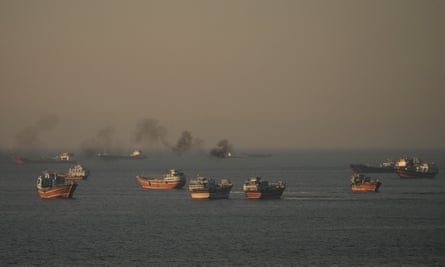 Trump insisted that
Israel attacked Iran in late February, says [Denton Cinquegrana](https://www.opis.com/blog/post-author/denton-cinquegrana/), chief oil analyst at Dow Jones Energy. “For retail prices to drop $1.50, I think we could kiss that number goodbye
oil price. The most significant development this week was the collapse of Trump’s Project Freedom on Tuesday after just 50 hours. The unilateral US proposal had sought to create a safe zone for merchant
Israel's policies in Gaza. "They're trying to differentiate between security cooperation and cooperating with this government," said Guzansky, who previously worked for the national security council within the Israeli prime minister's office
US-Israel attacks on Iran, the second such crisis within five years, after the price rises that followed Russia’s invasion of Ukraine. Households across the world are [spiralling into debt](https://www.theguardian.com/business/2026/apr/30/rising-costs-forcing-3m-uk-households-skip-meals-which-report), farmers
Israel on 28 February without any evidence of an imminent threat. Trump has claimed victory several times but the Iranian regime remains entrenched and radicalised, its nuclear ambitions still intact, [emboldened by its ability
oil and gas supplies – as well as Iran’s nuclear and ballistic missile programme. Talks have largely not progressed and the strait remains mostly closed, despite the ceasefire and mediation efforts. On Saturday, the US
oil is part of the New Year's ceremony in mid-April for Buddhists and Hindus in Sri Lanka. **Gayan Sameera/Xinhua News Agency via Getty Images** Gayan Sameera/Xinhua News Agency via Getty Images The milk
impact of the US-Israel war with Iran, which has put up energy and fuel costs around the world. The Bank moves interest rates up and down to try to keep inflation on track
US government for a 10-year loan - hit 4.63% at one point, its highest level in more than a year, before falling back. Yields on Japanese bonds also jumped after Reuters reported the government there
Israel, but this time Tehran focused on US bases across the region. The UAE, Bahrain, Kuwait, Qatar, Saudi Arabia and Jordan were placed directly on Iran’s target list. ## 3- Miscalculating Iran’s military
US and Israel started bombing Iran in late February. That recent strength accentuates the slowdown in the latest figures. After expanding by 0.9% in the December quarter, real GDP growth faltered to just
Israel first struck Iran, triggering a ripple effect across global energy markets. Energy prices have [risen sharply](/economy/2026/6/10/us-inflation-hits-new-three-year-high-amid-energy-price-surge) in the US in recent months, increasing 7.7 percent over the last two months alone
Israel by closing the strait of Hormuz. That price remains well below historic highs, and because it has not surged into the stratosphere, it can look as though markets have settled into an uneasy stasis
oil and gas prices would certainly feed through to prices. But other factors made a decision on rates "very, very difficult", he said ahead of the next decision on 30 April. The [IMF warned