
How India’s CBSE exam scandal set off student outrage against PM Modi
Students outraged over CBSE exam results, alleging unfair evaluation.
Al Jazeera English1 min read
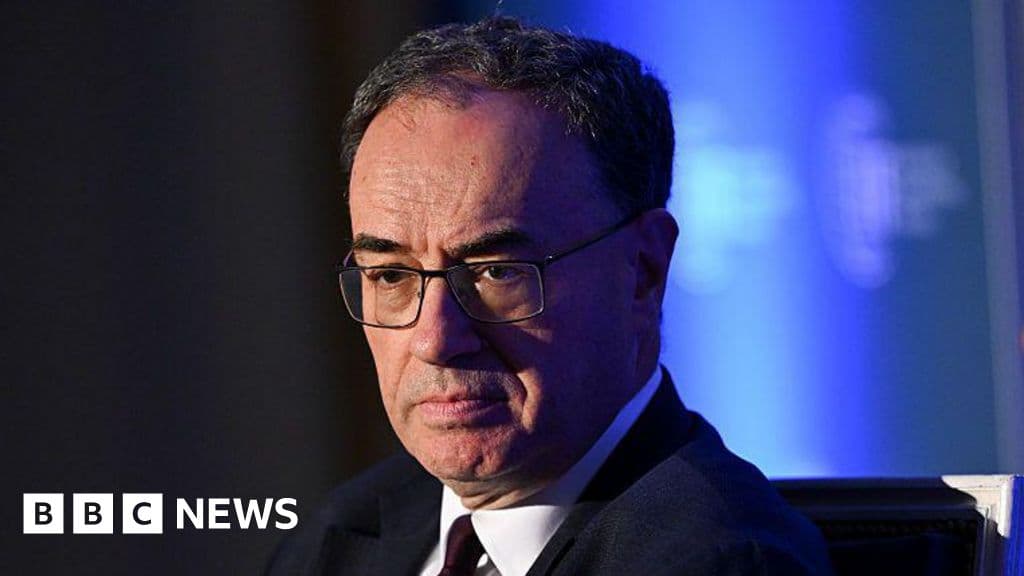
Bank of England governor Andrew Bailey stated that the central bank will not hastily raise interest rates despite a significant energy shock. He emphasized that various factors complicate the decision ahead of the upcoming review on April 30.
Mentioned in this story
Bank of England governor Andrew Bailey says the UK's central bank will not rush to make a decision on interest rate rises, despite the world facing what he described as a "very big energy shock".
Speaking to the BBC at the meeting of the International Monetary Fund (IMF) in Washington, he said higher oil and gas prices would certainly feed through to prices.
But other factors made a decision on rates "very, very difficult", he said ahead of the next decision on 30 April.
The IMF warned on Wednesday that central banks should not rush to hike borrowing costs in the wake of the Middle East conflict.
Bailey said the Bank of England was taking into account the IMF's "serious advice".
Before the US-Israeli attacks on Iran six weeks ago, the Bank of England was widely expected to lower rates over the course of this year. However the threat of higher prices, due to rising energy costs, has prompted speculation rates will be held steady or even rise this year.
When inflation runs higher central banks usually raise interest rates to choke off demand. But when economic activity slows they will lower interest rates to encourage borrowing and spending.
The impact of higher energy prices could be both to boost prices and knock growth, making the Bank's job harder.
"There's really difficult judgments to be made," said Bailey. "We're not going to rush to judgments on those things, because there are a lot of uncertainties around this, not just how it's going to play out, but also how it's going to pass through into the UK economy."
Before the conflict there had been signs that the labour market was softening and that businesses were finding it harder to pass on price rises to customers, Bailey said, factors suggesting that inflation is less likely to become a persistent problem.
However, the Bank was still waiting for any "meaningful data" or evidence on how the conflict was feeding through to the UK economy, or how it was going to affect prices or activity, Bailey said.
"It's really too early to form strong judgments on that," he said.
The UK's "strong dependency on gas" as a source of energy meant there would be a significant impact, but" the real determinant here is the duration of [the conflict]," he said.
"The faster there is a resolution to this situation - I particularly mean in terms of the supply of energy coming out of the out of the Gulf - the easier and better the outcome will be. And that's really critical at this moment," he added.
On Wednesday, UK chancellor Rachel Reeves voiced outspoken criticism of the war on Iran, pointing to rising prices and the impact on growth, in a media interview on the sidelines of the IMF meeting.
Andrew Bailey indicated that the Bank of England will not rush to raise interest rates due to various complicating factors.
The next decision on interest rates by the Bank of England is scheduled for April 30.
The Bank of England is considering a significant energy shock and advice from the IMF, which cautions against hasty rate hikes.
The IMF warned that the Middle East conflict may lead central banks to reconsider rushing to increase borrowing costs.
Students outraged over CBSE exam results, alleging unfair evaluation.

NSW argues police can use force during strip-searches in appeal

FIFA prohibits reusable bottles at 2026 World Cup stadiums due to safety concerns.

Protests erupt in Albania against luxury resort linked to Trump family

President Trump announces Todd Blanche as his nominee for attorney general.
Explore Marcelo Bielsa's obsessive preparation for football matches.
See every story in News — including breaking news and analysis.
But US Treasury Secretary Scott Bessent said on Tuesday that a "small bit of economic pain" was worthwhile for long-term international security.
He raised the idea of Iran threatening the UK with nuclear missiles, sayign that security was a greater concern.
UK government spokesperson said: "There is no assessment Iran is trying to target Europe with missiles.
Bessent's comment came as the International Monetary Fund (IMF) warned the US-Israel war with Iran could plunge the global economy into recession, with the UK expected to be hardest hit of the large economies.