
Tense governor’s race in California unsettled as vote-counting continues
California governor's race remains unsettled as vote-counting continues, with Steve Hilton leading.
The Guardian World1 min read

States are anxious about upcoming cuts to the NDIS as Treasurer Jim Chalmers emphasizes they will be crucial for budget savings. Health Minister Mark Butler is set to address these changes at the National Press Club this week.
Mentioned in this story
The states are increasingly on edge about Labor’s efforts to cut NDIS spending in next month’s budget, with officials asking the health minister, Mark Butler, to explain planned savings before a major speech this week.
It comes as the treasurer, Jim Chalmers, flagged on Monday morning that cuts to the NDIS will be “easily the most important part of the savings package that we will present on budget night”.
Butler will use an address to the National Press Club in Canberra on Wednesday to detail changes to the scheme’s growth rate, amid efforts to shore up its sustainability for Australians with a disability and their families.
But government sources in multiple states told Guardian Australia they were worried about the breadth of the changes and possible new costs for the states, after written requests for information to Butler’s departmental chief, Blair Comley, were rebuffed.
Western Australia, as the chair of the Council of the Australian Federation, the body that represents the states in negotiations with the federal government, communicated concerns from disability ministers about structural changes in recent days.
Multiple states reported being “blindsided” when Butler spoke at the Press Club last August, revealing without warning that a national scheme for foundational supports for children with autism and developmental delays would replace plans for state-led programs.
The Thriving Kids program, due to launch in October, is subject to joint agreements between state premiers and the federal government.
Victoria’s agreement is close to being finalised, while Queensland is yet to sign on.
Sign up for the Breaking News Australia email
Butler this month said any changes would be through a process of co-design, and stressed all states and territories had agreed to a “package deal” of increased hospital funding in exchange for NDIS reforms.
Flagging major cuts to the budget, Chalmers said he would brief state treasurers, not disability ministers, on Tuesday.
“The NDIS is growing too fast for Australians to afford,” the treasurer said on Monday.
“This has been a really big part of our pre-budget deliberations. It is easily the most important part of the savings package that we will present on budget night.
The planned cuts to the NDIS are expected to be a significant part of the budget savings, as indicated by Treasurer Jim Chalmers.
States are worried that the NDIS cuts may lead to new costs for them and affect the sustainability of support for Australians with disabilities.
Mark Butler will announce changes to the NDIS growth rate aimed at ensuring its sustainability during his address at the National Press Club.
State officials have requested clarification from Health Minister Mark Butler about the planned NDIS cuts and expressed concerns about their implications.
California governor's race remains unsettled as vote-counting continues, with Steve Hilton leading.
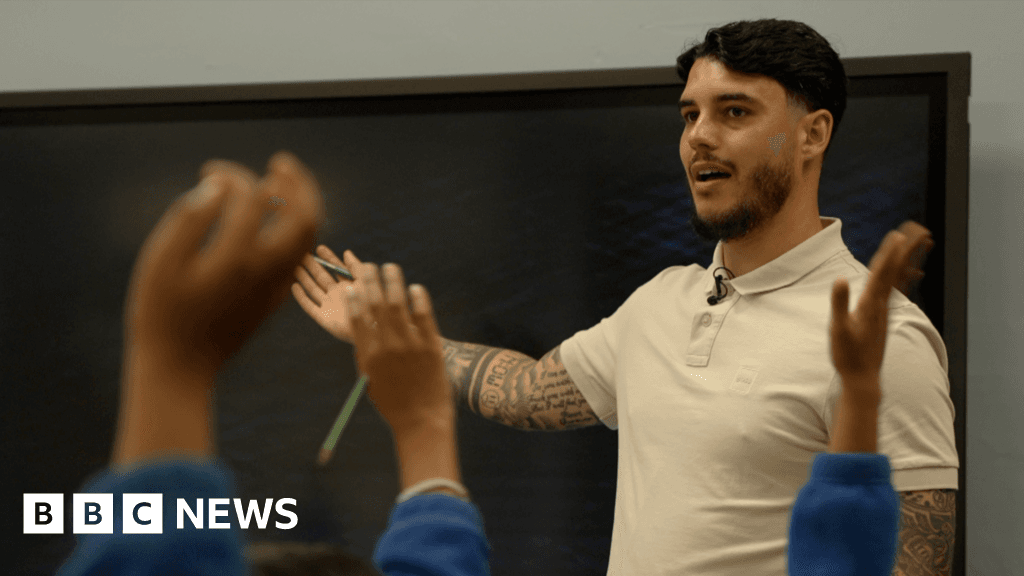
Falling pupil numbers in England should lead to smaller class sizes, says NEU.

US House takes a stand against Trump's Iran war, but what does it mean?

Germany's bid for a UNSC seat fails, possibly due to support for Israel.

Penny Wong believes Australian women were abused by Israeli soldiers during Gaza flotilla

Cenk Uygur's UK ban deemed 'Kafkaesque' as free speech concerns rise.
See every story in News — including breaking news and analysis.
“There have been many, many hours of deliberations.”
As part of broader savings, the federal government and the states have agreed to spend $4bn on Thriving Kids, delivered through a 50/50 cost split.
“We all have a stake in reforming the NDIS, so it can provide a decent level of care that people need and deserve and for us to be able to pay for that in a sustainable way,” Chalmers said.
The $52bn NDIS grew by more than 10.3% last year, and is on track to cost $63bn by 2028-29. Butler and the NDIS minister, Jenny McAllister, want to bring growth down to between 5% and 6% annually, while preserving essential services for people with a permanent and significant disability.
That trajectory has led to concerns in the disability community, among state government ministers and even Bill Shorten, who helped build the scheme in the last Labor government and held the NDIS portfolio until quitting parliament last year.
Guardian Australia reported earlier this month that Labor had quietly established a razor gang to drive budget savings. The NDIS Sustainability Taskforce, established within the health department earlier this year, is being led by former Treasury official Anthea Long.
Last week the prime minister, Anthony Albanese, ruled out introducing new means testing for the NDIS, and said Labor remained committed to universal access rules.
Labor could strengthen registration requirements for NDIS providers, which would improve compliance and probity in the scheme and could help drive out dodgy operators.
Mandatory registration rules for supported living service providers begins on 1 July.