
Amazon expands ultra-fast deliveries in UK and adds same-day fruit and veg
Amazon adds same-day delivery for fresh groceries in the UK
The Guardian World1 min read

Oil prices surged over 7% amid rising tensions following attacks on vessels in the Strait of Hormuz and mixed signals regarding US-Iran peace talks. Brent crude futures reached $94.69 a barrel after US forces seized an Iranian-flagged vessel.
Mentioned in this story
Oil prices have risen sharply following attacks on commercial vessels in the Strait of Hormuz and conflicting messages about the prospect of renewed negotiations between the United States and Iran.
Brent crude futures, the primary benchmark for global prices, jumped more than 7 percent in Asia on Monday as the outlook for peace between Washington and Tehran darkened.
Prices eased somewhat later in the morning, with the benchmark at $94.69 a barrel as of 02:05 GMT, up from just under $90.40 on Friday.
The latest price surge came after US President Donald Trump said US forces seized an Iranian-flagged cargo vessel that had attempted to evade the US blockade of Iran’s ports.
Trump’s announcement followed reports by the United Kingdom Maritime Trade Operations (UKMTO) Centre over the weekend that two vessels came under attack on Saturday while transiting the strait.
Gunboats belonging to Iran’s Islamic Revolutionary Guard Corps fired on a tanker, while a container ship was struck by an “unknown projectile,” according to the UKMTO.
After declaring the strait “completely open” on Friday, Tehran reversed course less than 24 hours later, citing the ongoing US blockade.
Earlier on Sunday, Trump said that a US delegation would travel to Pakistan on Monday to hold a second round of ceasefire talks with Iranian officials.
Iranian state news outlet IRNA later reported that Tehran would not participate in the talks, citing the US blockade and Washington’s “excessive demands” and “unrealistic expectations”.
A two-week ceasefire between Washington and Tehran is set to expire on Wednesday if the sides cannot agree on an extension.
An initial round of talks held in Islamabad earlier this month broke down without any agreement between the sides.
Iran’s effective closure of the strait, which usually carries about one-fifth of global oil and natural gas supplies, has driven a surge in fuel prices worldwide, forcing governments to tap emergency supplies and roll out energy-saving measures.
Nineteen vessels crossed the strait on Saturday, up from 10 the previous day, but far below the historical average of 138 daily transits, according to the UKMTO.
Asia’s main stock markets opened higher on Monday despite the dimming prospects of de-escalation.
Japan’s Nikkei 225 rose more than 1 percent in morning trading, while South Korea’s KOSPI gained about 1.3 percent.
Hong Kong’s Hang Seng Index rose about 0.5 percent, while the SSE Composite Index in Shanghai gained more than 0.4 percent.
The surge in oil prices was caused by attacks on commercial vessels in the Strait of Hormuz and conflicting messages about US-Iran peace talks.
Brent crude futures rose more than 7% on Monday, reaching $94.69 a barrel.
The US seized an Iranian-flagged cargo vessel that attempted to evade the blockade of Iran’s ports.
Amazon adds same-day delivery for fresh groceries in the UK

Proposed planning law changes threaten green space access for England's poorest communities.

Tarantino calls Hollywood a 'flavourless sausage factory'

Discover the top contenders for the World Cup Golden Boot in 2026, including Mbappe and Kane.
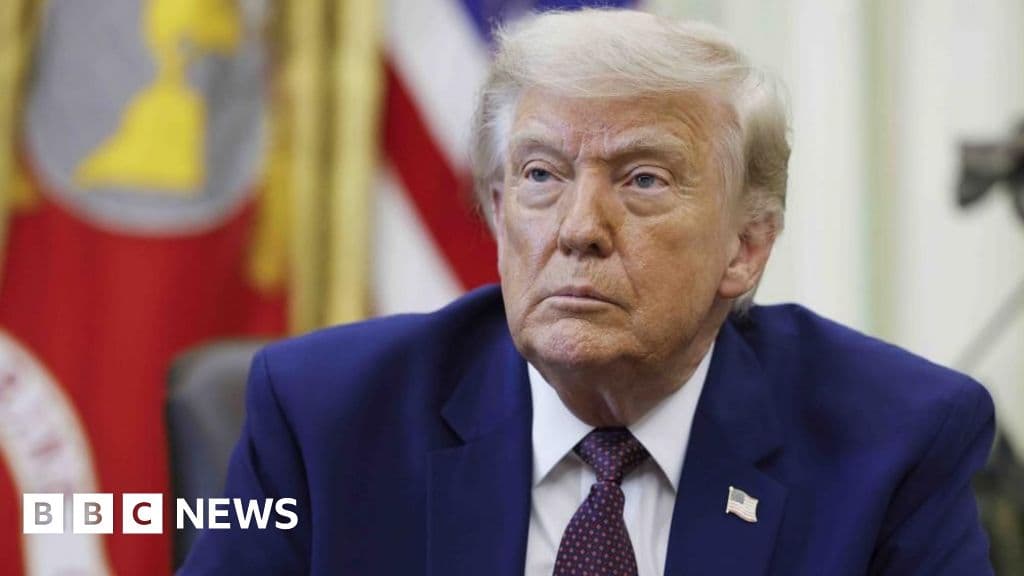
Trump calls House vote on Iran 'unpatriotic' amid negotiations

Senate debates ICE funding as Israel and Lebanon agree to ceasefire.
See every story in News — including breaking news and analysis.