
Taylor Swift makes tearful 21-minute speech as she joins Songwriters Hall of Fame
Taylor Swift makes emotional speech as she joins Songwriters Hall of Fame
BBC News1 min read

Super Typhoon Sinlaku is approaching the Mariana Islands with sustained winds of 150mph, expected to strengthen to 165mph. Guam is unlikely to be directly hit, but Saipan and Tinian may face severe conditions and hazardous weather.
Mentioned in this story
The Mariana Islands archipelago in the western Pacific, home to the US territories of Guam and the Northern Mariana Islands, are bracing for extreme weather early this week as Super Typhoon Sinlaku approaches.
The system originated as a cluster of thunderstorms over the seas of Micronesia before strengthening into a tropical storm and then a typhoon on Friday and Saturday.
Over the weekend, it began to push north-west while rapidly intensifying, with sustained winds reaching 150mph on Sunday. As the storm moves through the western Pacific islands early this week, it is forecast to strengthen rapidly with 165mph winds.
A slight northward shift in its track makes a direct hit on Guam – the most populous island and westernmost territory of the US – unlikely. Instead, Saipan and Tinian are expected to bear the brunt of the most severe conditions.
The National Weather Service in Guam has issued several warnings for the Mariana Islands. Sinlaku’s powerful winds, combined with forecast rainfall totals exceeding 300mm between Monday and Thursday, are expected to whip up hazardous seas and storm surges before the storm’s arrival. These are likely to be followed by flash flooding, mudslides and wind damage.
While typhoons can occur at any time of year in this region, the peak season typically runs from June to November, making a typhoon of this intensity in April particularly unusual.
With winds exceeding 130 knots (150mph), the Joint Typhoon Warning Center classifies Sinlaku as a super typhoon. If it were located over the North Atlantic, it would be classified as a category 4 hurricane, with the potential to rise to category 5 at its peak. The terms “typhoon”, “hurricane” and “cyclone” describe the same meteorological phenomenon – the terminology varies by region.

The path of Cyclone Maila as it tore through the Pacific Islands last week. Photograph: Susie Dodds/AAP
Meanwhile, in the South Pacific, shortly after struck Papua New Guinea last week, another weather system developed. Tropical Cyclone Vaianu formed on 5 April and moved south-eastwards, passing close to Fiji without making landfall. It was then reclassified as an extratropical cyclone – not due to weakening, as average winds still reached 65mph, but because of a change in its structure.
Super Typhoon Sinlaku has sustained winds of 150mph and is forecast to strengthen to 165mph as it approaches the Mariana Islands.
Saipan and Tinian are expected to experience the most severe conditions from Super Typhoon Sinlaku, while Guam is likely to avoid a direct hit.
The National Weather Service in Guam has issued several warnings due to expected hazardous seas, storm surges, flash flooding, and mudslides associated with Super Typhoon Sinlaku.
Taylor Swift makes emotional speech as she joins Songwriters Hall of Fame

Oil prices plummet after Trump claims he's close to a US-Iran peace deal.

As Brexit's 10-year mark nears, key figures remain silent on its success.

Children with autism receive unapproved stem cell treatments, supported by RFK Jr.
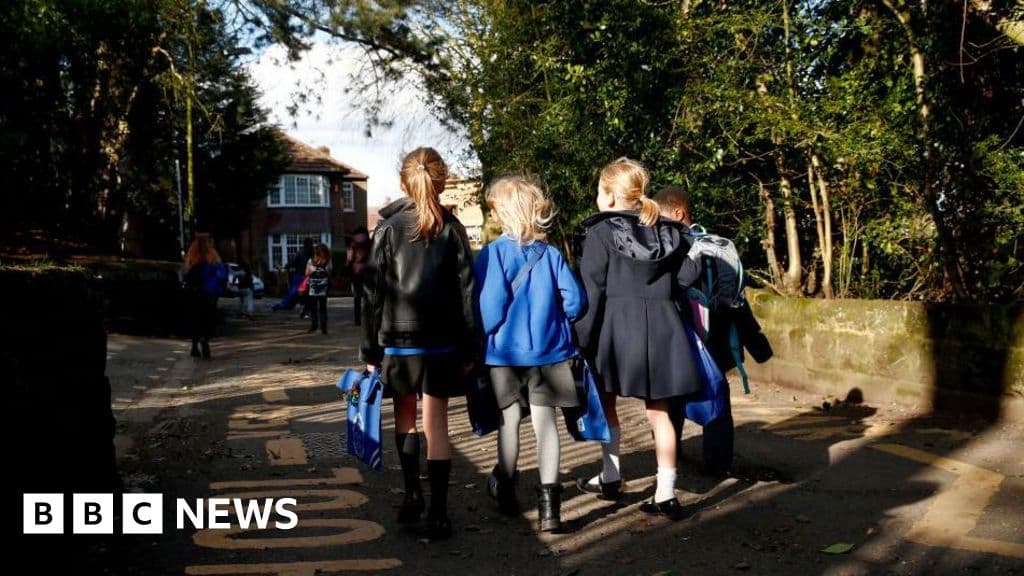
UK government targets 60% of children walking or cycling to school by 2035 with £4.5bn investment.

UK government signals potential block on compensation to Jingye Group, owner of British Steel.
See every story in News — including breaking news and analysis.
As Vaianu passed over New Zealand, red warnings for strong winds were issued over the weekend. In some regions, gusts peaked at 80mph, leading to widespread power outages and evacuations. The storm also generated massive ocean swell that battered the north coast of New Zealand, where one buoy recorded an 11-metre wave.