
Scientists warn Trump plan to axe US ocean monitoring system will leave world ‘flying blind’
Scientists warn Trump's plan to cut ocean monitoring will leave us 'flying blind' on climate and weather.
The Guardian World1 min read

Camp East Montana in Texas faces severe criticism for its harsh conditions, including dust, freezing temperatures, and health hazards for detainees. The facility, which holds over 2,500 immigrants, has been labeled a health and human rights scandal.
Mentioned in this story
Dust was everywhere, covering people’s blankets and clogging their airways inside Camp East Montana, the huge tent facility for immigration detention in west Texas, said D, a young Venezuelan man who was held there.
The air conditioning blasted constantly, keeping the living areas inside tents the length of two football fields at what felt like near-freezing temperatures despite the balmy weather outside, and rain leaked through the tarps, so people awoke on wet mattresses, he recalled.
“Everyone was coughing a lot – and with the same problem to breathe,” said D, whohas since been released and spoke with the Guardian via video interview.
Camp East Montana is the facility with the largest number of immigration-related detainees in the US, with a capacity of 5,000 and an estimated daily average of 2,505 locked up. After just nine months in operation it has become a health and human rights scandal – and also an environmental hazard that affects the inhabitants and the area, while fueling the climate crisis.
Reports of harsh conditions, abuse, sickness and death have accumulated since the camp was erected last summer on the Fort Bliss army base in El Paso. And flying thousands of people often hundreds of miles to be locked up in an encampment run on electricity generators in the desert gobbles energy and produces emissions that are heating the planet.
“I think the environmental impact is pretty apparent,” said Danielle Jefferis, associate professor of law at the University of Nebraska College of Law. “I don’t think it takes an expert to see that if you don’t have a brick-and-mortar building that is properly plumbed and has appropriate medical units and all of the basic infrastructure [relating to] human rights, you’re going to have a serious environmental impact.”
Living conditions at Camp East Montana are harsh, with dust covering blankets, freezing temperatures inside tents, and leaking rain causing wet mattresses.
Camp East Montana has a capacity of 5,000 and an estimated daily average of 2,505 detainees.
Reports indicate that detainees at Camp East Montana suffer from respiratory issues, sickness, and have experienced deaths since the camp's opening.
The camp's operation contributes to energy consumption and emissions, exacerbating the climate crisis while posing environmental hazards to the area.
Scientists warn Trump's plan to cut ocean monitoring will leave us 'flying blind' on climate and weather.

Kanya King, founder of the Mobo Awards, has passed away at 57 after battling colon cancer.

US visa rejections and war on Iran keep fans away from World Cup.
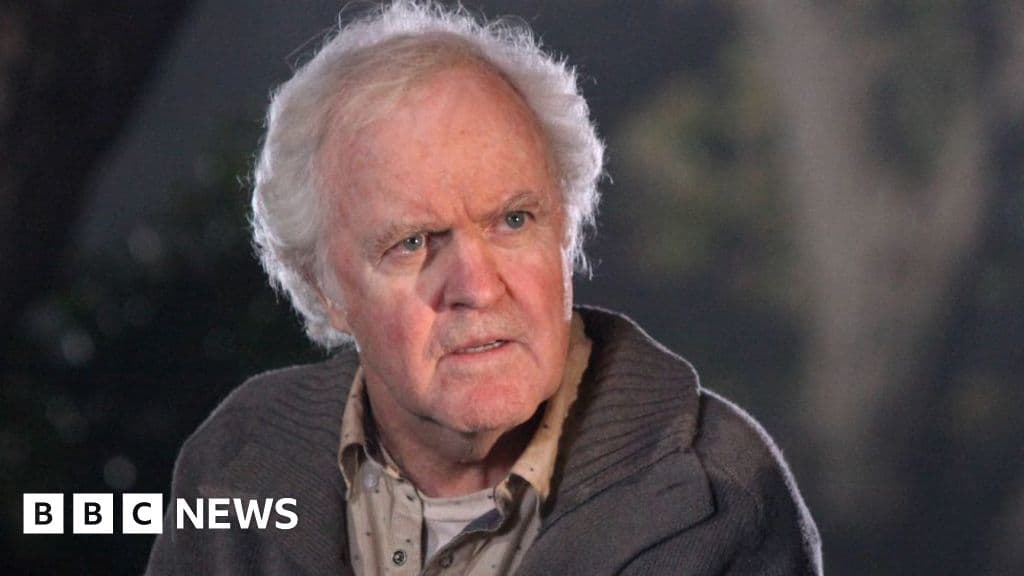
Actor James Handy, known for Jumanji, stabbed to death; girlfriend's son arrested.

Tragedy in the Sahara: 49 die of thirst after truck breaks down

FIFA World Cup 2026: Exciting Features and Key Talking Points!
See every story in News — including breaking news and analysis.
When D was in custody at Camp East Montana last fall, he was constantly uncomfortable in his 75-person living section “pod” within the giant tents. He got sick himself and witnessed people being refused medical care, he said.
“He lost 25lb, and he came back with this really strong cough,” said T, D’s wife, who is a US citizen. “Everything that he described to me when he was going through it felt like all his rights had been taken away.”
The Guardian is identifying D and T by only their first initials because of fears of retaliation by the Trump administration.
D came to the US in 2022, in part because he believed Venezuelans fleeing their country’s autocratic regime would be welcome to stay legally. He met T while working at a mini-market where she was a regular customer, and after months of conversations, he plucked up the courage to ask her out.
They got married on D’s birthday that winter, surrounded by friends and family who joined by video call from Venezuela, Peru, Colombia, Spain and Hungary.

The tents at Camp East Montana. Photograph: Morgan Lee/AP
The newlyweds were living in the midwest last fall when they attended what they thought would be a routine but exciting milestone: their marriage interview for D’s green card. Instead, T recalled how she hyperventilated as immigration officials suddenly led her husband away – claiming he had a court date neither she nor their attorney had ever heard of – then handcuffed and searched him.
Then Immigration and Customs Enforcement (ICE) flew him over a thousand miles from home to Camp East Montana.
The facility’s monitored communication channels wouldn’t let T’s message go through when she tried to send her husband a wedding photo, she said. He told the Guardian that sometimes his food tasted rotten and would make him unwell. Once he didn’t get a meal because they ran out, he said, and he witnessed others in close proximity to him have the same experience.
He personally did not request medical care while detained but directly witnessed others in his section ask to see a doctor because they were in pain and being told treatment was only for big emergencies, he said. And he watched a diabetic man in his pod become very sick without insulin supplies for a week.
D received his green card in October but said he was kept in detention for an additional five days. When he returned to the midwest with T, he recalled his cough lasted for about six weeks.
“It should have never happened,” T said. “But he was still in there for one month, under circumstances that nobody deserves.”
Confined together indoors, detainees have caught serious illnesses, including tuberculosis, Covid and measles, according to various reports. Three detainees at the camp have died, out of at least 26 deaths in ICE custody so far this fiscal year, or 46 since Donald Trump returned to the White House and hugely expanded detention amid his anti-immigration agenda.
Charlotte Weiss, a staff attorney at the Texas Civil Rights Project, who is given access to Camp East Montana weekly to meet with detainees, said she had interviewed people there who said they rarely got to leave the tents and did not see the sun for weeks. “One of the declarants I spoke with described it as psychological torture,” she said, the feeling of being stuck, confined and isolated.
“I speak to a lot of people who are so broken down by the conditions of detention that they are asking for a deportation order from the immigration judge, even [with] having a pending asylum claim, even having family members in the US, because the conditions are so horrific that they would do anything to get out,” she said.
The Department of Homeland Security (DHS), the parent agency of ICE, sent a number of statements by email in response to detailed questions about conditions at the camp.
“Allegations [that] staff at Camp East Montana have not provided detainees with meals are unequivocally FALSE. Every detainee receives three nutritious meals a day, specialized diets meals, including religious diets. Menus are reviewed and approved by a registered dietitian to ensure appropriate nutrition is provided. All detainees are provided water, medical treatment, and have opportunities to communicate with their family members and lawyers,” one statement said.
The homeland security department also said: “Allegations [that] detainees do not receive medical treatment are unequivocally FALSE. It is a longstanding practice to provide comprehensive medical care from the moment an alien enters ICE custody. This includes medical, dental, and mental health services as available, and access to medical appointments and 24-hour emergency care. This is the best healthcare that many aliens have received in their entire lives.”
It added: “Detainees are not being denied access to sunlight or fresh air.”
The second Trump administration had the camp erected quickly, as a “soft-sided” detention center rather then buildings. However, tents can result in more exposure to the elements.
Imelda Maynard, legal director of Estrella del Paso, an immigration legal services organization, said in the part of the camp that she has visited with her job, she noticed gaping holes in tents. That would lower protection from local conditions exacerbated by the climate crisis, including dangerous heat, and dust storms that whip up particulate matter, a health hazard that can cause inflammation and exacerbate respiratory issues.
During dust storms earlier this year, an individual who was detained at Camp East Montana showed Weiss dust on his sweatshirt that had come into his tent, she said, while she also recalled seeing guards disposing of clear plastic bags of sand brought from the tented legal intake area, where it had seemingly collected.
DHS said that “claims facilities at Camp East Montana are unsafe or exposed are FALSE”.
The camp was supposed to only hold people short-term, but Maynard said many had been detained there for months at a time.
“It’s just a powder keg. I mean, that’s the best way to explain it,” said Maynard. In her observations, she said: “You’re overworking the staff that you have, which makes them grumpy, and they’re taking it out on detained folks, who themselves, because of the conditions, are also, you know, maybe not on their best. And so it’s just explosive.”

The Camp East Montana immigrant detention center on the outskirts of El Paso, Texas. Photograph: Morgan Lee/AP
Meanwhile, various advocates and local Congresswoman Veronica Escobar have said the tents have relied first and foremost on generators – which are an archetypal producer of noise, particulate matter and emissions.
“Even just having that be the principal source of powering any facility, including a facility like this, likely exposes people to really high levels of localized air pollution,” said Wyatt Sassman, associate professor of law at the University of Denver Sturm College of Law.
With a combination of reportedly poorly insulated tents and generators, detainees either endure the frequently extreme outside temperatures, or the facility uses more energy – and emits more greenhouse gases – than a traditional brick-and-mortar building to heat and cool its holding cells.
“If you wanted to air-condition or heat your camping tent, you would use a lot more energy than a building that’s built to code, if that tent has no insulation and is just made of a membrane,” said Holly Samuelson, associate professor of the department of architecture at the Massachusetts Institute of Technology.
The DHS defended the use of generators, saying via a spokesperson that “is standard practice across federal emergency and contingency operations and is consistent with DHS logistics protocols. Generators ensure uninterrupted power for lighting, climate control, and operational needs.”
In February, inspectors from ICE’s office of professional responsibility identified 22 deficiencies – violations of detention standards, operational procedures, or policies – related to use of force and restraints at the tent camp, part of a larger 49 total deficiencies they documented that ranged from medical care to sexual abuse and assault prevention and intervention, facility security and control. The report gave the facility a rating of acceptable/adequate. It also recorded zero deficiencies relating to environmental health and safety.
However, the environmental law non-profit Earthjustice has long warned that parts of the sprawling million-plus acres that make up the Fort Bliss base are believed to be contaminated from historical rubble dumps and industrial spill sites, despite past cleanup efforts.
Land on the base reported to be around half a mile from Camp East Montana has been documented as having arsenic levels in the soil almost 19 times what is considered safe by the Environmental Protection Agency, according to a 2019 report from Earthjustice and soil sample results from testing, at a maximum of 12.9 parts per million. Arsenic is a carcinogen and excessive exposure to the poison over time is linked to a number of health risks.
Earthjustice has also raised concerns about soil potentially contaminated with petroleum components, asbestos and other toxic substances. Staff at the organization told the Guardian that to their understanding, after research and public records requests last year, little or no remediation had occurred since the 2019 report’s findings in the area closest to Camp East Montana. Prevailing winds blow from that area towards the camp.
Jessica Rovero, director of public affairs for the army’s 1st Armored Division and Fort Bliss, said in an emailed response to questions: “The location currently being overseen by DHS for their facility is not on a contaminated site, nor impacted by sites cited in the referenced report. Fort Bliss is committed to environmental stewardship and ensuring compliance with all applicable environmental laws and regulations.”
Then there are ICE’s flights, bringing people from across the US to be detained at Camp East Montana, and later often returning them to their native countries after being ordered deported or consenting to repatriation. Those flights pump carbon dioxide into the atmosphere, which heats the planet.
ICE enforcement flights jumped 156% year-over-year to 1,630 in the month of February, 2026 including removals to politically unstable countries such as Haiti and Venezuela, according to the non-profit Human Rights First (HRF). February’s data continues a trend from the first year of the second Trump administration, when the number of enforcement flights and countries ICE traveled to soared.
Two of the thousands flown to the camp were Francisco Gaspar Cristóbal Andrés and his wife Lucía Pedro Juan, who ran a plant nursery in Florida. He became the first detainee to die in the custody of Camp East Montana. She was deported without being allowed to see her dying husband and was flown to their native Guatemala – a country at the forefront of environmental migration as drought, heatwaves, storms, hurricanes and mudslides contribute to food insecurity exacerbated by the climate crisis.
And these examples of human and environmental cost only come at a time of expansion for ICE, with more tent facilities on the horizon alongside hastily purchased warehouses meant to serve as mega-detention centers even larger than Camp East Montana.
“In a very demoralizing way, it seems like we know what the likely impacts of these facilities are going to be,” said Sassman. “And we’re just barreling towards them.”
This article was produced as a project for USC Annenberg’s Center for Health Journalism and Center for Climate Journalism and Communication 2025 Health and Climate Change Reporting Fellowship.