
Reform UK raising millions more than other parties, donation figures show
Reform UK raises £9m in donations, surpassing Labour and Conservatives.
The Guardian World1 min read

Georgia swing voters express strong dissatisfaction with the Iran war, using terms like 'afraid' and 'angry.' They are concerned about the war's management and its economic impact at home.

President Trump is seen speaking about the Iran war on a TV in the White House on April 1. Polls have found the war to be unpopular with Americans. Julia Demaree Nikhinson/AP
Julia Demaree Nikhinson/AP
Swing voters in Georgia say the Iran war is going poorly.
When asked how the conflict makes them feel, a group of 13 of these voters used words like "afraid," "angry," "concerned," "sad" and "despair." Many said they were worried that the war was being mishandled and was likely to continue causing more economic pressures back home.
The voters participated in two online focus groups Tuesday night conducted by messaging and market research firms Engagious and Sago as part of the Swing Voter Project. NPR is a partner on the project and observed both groups.
All 13 participants live in Georgia and voted for Joe Biden in 2020. They each then supported President Trump in 2024. Seven identified as independents, five as Republicans and one as a Democrat.
And not a single voter said they would describe the military action in Iran as going well so far, despite Trump's claims that the U.S. has decimated Iran and that the war is "very close to over."
"They are very anxious, some angry, upset when they hear about the war," said Rich Thau, president of Egagious, who moderated the focus groups. "They are not happy that we are there."
Georgia swing voters are expressing feelings of fear, anger, and concern regarding the Iran war.
Many swing voters believe the Iran war is being mishandled, leading to increased economic pressures.
Voters in Georgia describe their emotions about the Iran war as 'afraid,' 'angry,' 'concerned,' 'sad,' and 'despair.'
Georgia voters are worried that the Iran war will continue to cause economic pressures at home.
Reform UK raises £9m in donations, surpassing Labour and Conservatives.
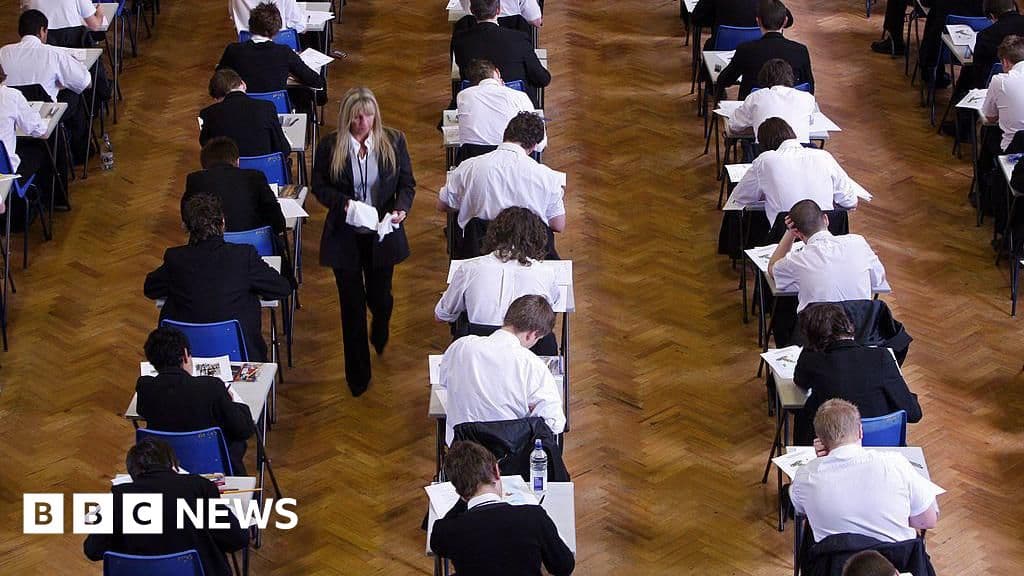
Exams watchdog warns of rising high-tech cheating in schools

California governor's race remains unsettled as vote-counting continues, with Steve Hilton leading.

Falling pupil numbers in England should lead to smaller class sizes, says NEU.

US House takes a stand against Trump's Iran war, but what does it mean?

Germany's bid for a UNSC seat fails, possibly due to support for Israel.
See every story in News — including breaking news and analysis.

While focus groups are not statistically significant, they do provide insight into how voters are thinking about a range of issues. In this case, it's an insight into how some key voters are feeling about military action in Iran, which is broadly unpopular with the American public.
Nick H. is a 28-year-old independent voter who thinks Trump did a bad job gaming out how the war would play out. (Participants agreed to be part of the focus groups on condition that they be identified by their first names and last initials only.)
"It's about calculation, his inability to calculate," Nick said. "It's clear that he completely underestimated the opponent here."
Nick said he's concerned about the fact that Iran has bombed U.S. military bases and taken over the Strait of Hormuz, which is a key passage for global energy supply.
"He couldn't look at the Ukraine war and see the drones and have the foresight to go, 'Oh, maybe Iran could use drones and drone technology,'" Nick told Thau.
Bryan M., a 24-year-old independent voter, said he is concerned that the U.S. has lost a lot of expensive military equipment in the process, as well.
"They're destroying our most advanced weapons," he said. "And our weapons shouldn't be destroyed that easily because they're more advanced than Iran's."
Most participants said overall they disapprove of Trump's performance in his second term so far. And the main factor underlying their unhappiness is what they perceive as a wide gap between their priorities and Trump's priorities.
"It seems like he's prioritizing taking over as much of the world as possible," said Corey W., a 55-year-old independent voter.
Howard R., another independent, 31, said the president was mostly focused on enriching himself, like through "crypto scams." Xaveria T., a 44-year-old Republican, also said Trump was focused on "his own personal gain," instead of the economic needs of Americans.
"How is he going to make us whole again from the job losses and the [economy] and just not being able to buy a home," she said. "Because that's kind of my biggest concern right now, is people being able to provide for their families."
While three of the focus group participants approve of Trump's job performance, pointing, for instance, to immigration enforcement, Thau said there is a "misalignment between the president's priorities" and the priorities of almost all these voters.
"They are frustrated … the president isn't paying attention to what matters most to them," he said.
And what matters most is the economy.
Twelve of the 13 respondents said they are more anxious about the economy now than they were before Trump took office again — and they pointed primarily to rising prices.
"Everything is higher now," said Dawn H., a 46-year-old Republican. "It's not going down like he said. Cost of living of everything — food, oil, housing, health care, you name it."
Joe J., a 56-year-old independent voter, said Trump's failure on the economy is exactly the opposite of what he promised.
"He said, day one, he was going to bring the prices down on eggs and other things. He's cut subsidies to health insurance, so that's gone up," Joe said. "I see my pocketbook being hit and he's building a new ballroom for some reason that we don't need. How about you put some money toward us?"
And Bryan M. said he fears things will only get worse as the war goes on.
"No one can predict where this economy's going to go with the oil prices rising and the food prices rising," he said.
— While the country of Israel itself drew support, only one voter out of the 13 said they view Israel's government positively. Four said they viewed it negatively. The rest had neutral positions on the Israeli government.
— Nine of the 13 participants said they are "very likely" to vote in the November midterms, and most were undecided on which party they'd back. Only two voters said they plan to vote for Democrats to send a message to Trump. None said they plan to vote Republicans in support of the president.
— A majority of these voters also said they were concerned about data centers being built in their communities — mostly because of the water and energy resources it takes to run them.
