
How ISWAP and Boko Haram are reshaping the Lake Chad Basin
The resurgence of ISWAP and Boko Haram complicates security in the Lake Chad Basin.
Al Jazeera English1 min read
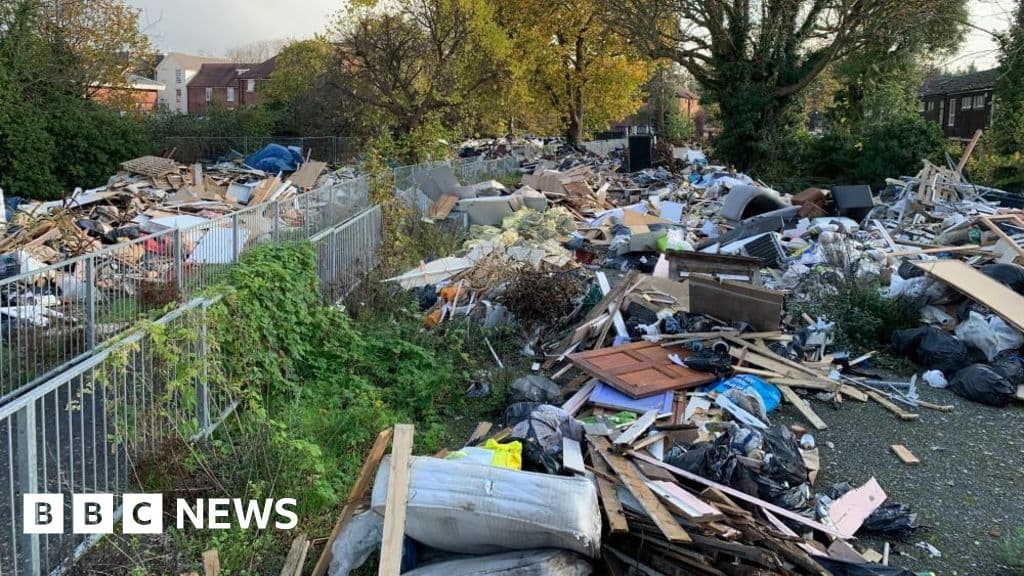
New waste licensing rules in England will require waste carriers to prove qualifications to prevent illegal dumping. Starting in 2027, custodial sentences of up to five years will be introduced for illegal waste transportation.
New waste licencing rules will be laid out this week aimed at stopping waste carriers from exploiting loopholes and illegally dumping rubbish in England, the government has said.
Laws laid this week will require waste carriers to prove they are qualified to do so, rather than just filling in an online form, the Department for the Environment, Food and Rural Affairs (Defra) said.
Under the new rules, which will take effect in 2027, custodial sentences of up to five years will be introduced for the illegal transportation of waste.
Campaigners have said the current system is too easily exploited. Waste industry body, the Environmental Services Association, welcomed the changes.
Chief executive Philip Duffy said with stronger powers they will be able to "move faster to shut down rogue operators and protect communities".
Approved licences allow the holder to either transport waste, buy, sell or dispose of it, or arrange to do so on behalf of someone else.
Currently, a user can fill out a form online, paying £191.02 to register to become a waste carrier, broker or dealer.
Ministers say this means "rogue operators" who dump waste and leave large clean-up bills can enter the system.
Under the proposed changes, operators will move to a permit system.
Applicants will have to undergo identity and criminal record checks and demonstrate they meet the requirements, as opposed to just inputting their details.
The changes stipulate that their permit number will have to be displayed in advertising and on their vehicles.
The Environment Agency (EA) will also have stronger powers to revoke permits and issue enforcement notices.
Waste minister Mary Creagh said: "Waste cowboys have abused the system for too long, blighting our countryside and cities alike.
"Through our Waste Crime Action Plan, we're introducing rigorous background checks for waste traders, shutting down corrupt operators and kicking them out of the industry for good."
The changes come after Ann Maidment, director of Country Land and Business Association (CLA), managed to obtain a licence for her cow Beau Vine to legally dispose of household rubbish.
She told BBC Radio Wiltshire in April that it "was very easy" for the cow to gain the qualification - she said she got the certificate in seconds and it cost around £200.
She welcomed the changes but said "good law depends on good implementation".
Creagh said under the new system "Beau Vine would fall at the first hurdle because she doesn't have a digital identity.
"She'll have to prove her identity and then prove that she is a technically competent person."
It is understood that the Department for Environment, Food and Rural Affairs had been working on the changes for several years, before Beau Vine's registration.
The new rules require waste carriers to prove their qualifications instead of just filling out an online form.
The new rules will take effect in 2027.
Custodial sentences of up to five years will be introduced for illegal transportation of waste.
The rules aim to close loopholes that allow waste carriers to exploit the system and illegally dump rubbish.
The resurgence of ISWAP and Boko Haram complicates security in the Lake Chad Basin.

UK Government announces early intervention and tougher actions against parents to tackle youth crime.

Why does Amazon have so few rivals in the Western e-commerce market?

Join the National Conversation: Share Your Vision for a Better UK!

Are late baby boomers the luckiest generation in history?

Two military jets collided during the Gunfighter Skies Air Show in Idaho, crashing to the ground. All crew members are reported to be in stable condition.
See every story in News — including breaking news and analysis.
The planned changes form part of the government's waste crime action plan, which includes a wide range of crackdowns on waste criminality, including rubbish left on streets and large illegal waste sites.
Earlier proposals include giving local authorities in England new powers to force fly-tippers to clean up waste they have dumped and pay fines without having to go through the courts.
The government also proposed that drivers caught fly-tipping could be given penalty points on their licence and the EA could gain police-style powers to search premises without a warrant and arrest those suspected of fly-tipping.