
Trump to attend delayed White House Correspondents’ Dinner after shooting
Trump confirms attendance at the rescheduled White House Correspondents’ Dinner on July 24.
Al Jazeera English1 min read

US-led talks between Lebanon and Israel concluded without resolution, amid ongoing tensions and rocket attacks from Hezbollah. Both sides expressed hope for future negotiations despite the complexities involved.
Mentioned in this story
From
The talks ended without a resolution, but both sides expressed hope for future negotiations.
Lebanon's president Joseph Aoun expressed hope that the talks would mark the beginning of the end of suffering for the Lebanese people.
Hezbollah launched rocket attacks on 13 northern Israeli towns shortly after the talks began.
Marco Rubio described the Israel-Lebanon talks as a 'historic opportunity' for both parties to move forward.
Trump confirms attendance at the rescheduled White House Correspondents’ Dinner on July 24.

Thailand is cracking down on nearly 500 foreign-owned businesses falsely claiming local ownership to bypass laws. These businesses, including a nail salon fronting for an adult content site, were registered by one accounting firm.

Discover how weight training can help you live longer!
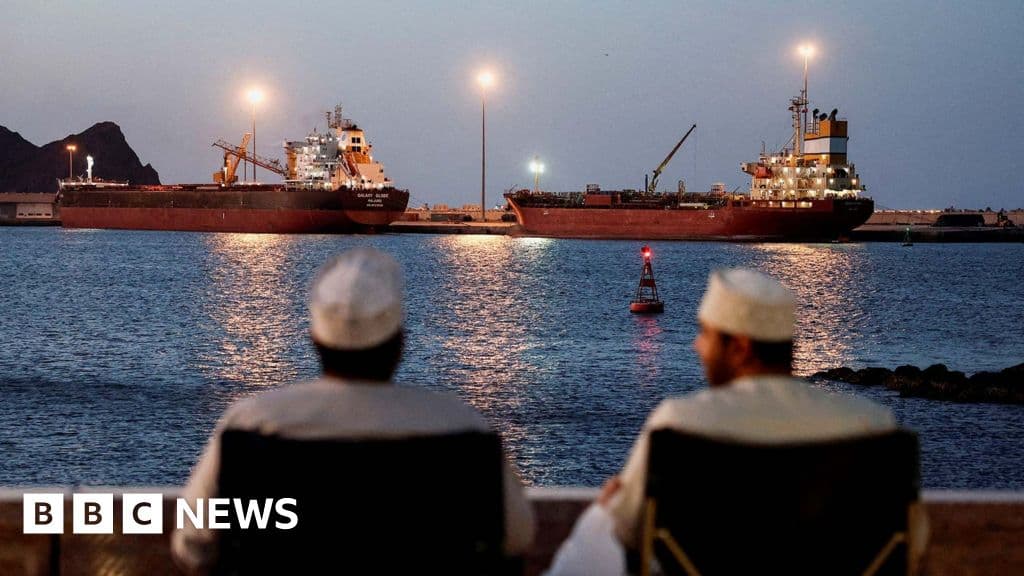
Sailors trapped for months in Strait of Hormuz report stress and exhaustion amid conflict.

UK summer forecast indicates warmer weather and more heatwaves ahead.

US military disables tanker M/T Lexie attempting to reach Iran amid tensions
See every story in News — including breaking news and analysis.
This live blog has now closed. You can read the latest on the fragile ceasefire between Israel and Iran here.
Canada, the UK, Australia and others have condemned the killings of UN peacekeepers in Lebanon and called for an end to hostilities.
“Australia, Brazil, Canada, Colombia, Indonesia, Japan, Jordan, Sierra Leone, Switzerland and the United Kingdom remain deeply concerned by the worsening humanitarian situation and displacement crisis in Lebanon,” the countries said in a joint statement issued on Tuesday.
The statement comes after the deaths of three peacekeepers last month that the UN said in preliminary findings were due to an Israeli tank projectile and an improvised explosive device most likely placed by Hezbollah.
Just 24% of American’s believe that the Trump administration’s decision to go to war with Iran has been worth it.
A poll conducted by Ipsos after the ceasefire came into effect found that, when weighing both the costs and the benefits of the conflict, 51% say it has not been worth it.
double quotation mark54% say U.S. military action in Iran has had a mostly negative impact on their personal financial situation. This view is expressed by majorities of Democrats (65%) and independents (56%), as well as 40% of Republicans.”
In terms of the impact the conflict could have on America’s long term security, 41% believe the military action will leave US security worse off, compared to 26% who think it will improve security.
US treasury secretary Scott Bessent has said the underlying US economy remains strong and that growth could still exceed 3% or 3.5% this year despite the impact of the US-Israel war on Iran.
Earlier on Tuesday, the International Monetary Fund (IMF) cut its growth forecasts for 2026 based on the impact of the war and said any further escalation in the conflict could trigger a global recession
Bessent however cast cuts in global growth forecasts and higher inflation projections by the IMF and World Bank as an overreaction.
double quotation markI think the underlying economy remains strong … I do think that the growth could easily exceed 3%, 3.5% this year, still.”

Scott Bessent speaks in Washington on Tuesday. Photograph: Evan Vucci/Reuters
The war has raised oil prices and shaken markets globally. It has led to the blockade of the strait of Hormuz through which roughly 20% of global oil and natural gas exports were shipped before the war.
Bessent also commented on US tariffs on other nations, saying they could be back in place to previous levels by July after the US supreme court ruled in February that Donald Trump overstepped his authority in imposing sweeping global duties under an emergency law.
The World Bank could mobilise $80bn to $100bn in funding for countries hit hard by the war in the Middle East in about 15 months, the multilateral development bank’s president, Ajay Banga, has said.
That would include $20bn to $25bn that countries could tap through a crisis response window that allows them to tap up to 10% of funding approved under existing programs, while another $30bn to $40bn could come from repurposing existing programs, Banga said.
If the war continued beyond that, the bank would have to turn to its balance sheet and headroom to find additional funding to reach the $80bn to $100bn, he told an event hosted by the Bretton Woods Committee.
Earlier on Tuesday the International Monetary Fund said further escalation in the Iran war could trigger a global recession.
More than two-thirds of American farmers say they cannot afford to purchase enough fertiliser to get through the year, according to a new survey from the American Farm Bureau Federation.
Of the more than 5,700 farmers who took the survey, representing every US state and Puerto Rico, 70% said fertiliser has become so expensive they will not be able to buy enough for the year. Farmers in the south have been hit hardest, followed by the north-east, west and then midwest.

US farmers are facing a double whammy of soaring fertiliser and diesel prices. Photograph: Grant Baldwin/AFP/Getty Images
“Spring planting decisions depend heavily on access to fertiliser and diesel fuel, both of which have been impacted by geopolitical risks that have disrupted global markets,” the Market Intel states. “Since the escalation of tensions in the Middle East, nitrogen fertiliser prices have risen more than 30%, while combined fuel and fertiliser costs have increased roughly 20% to 40%.”
Ninety-four percent of farmers said their financial situation has worsened or remained the same since last year.
Speaking at the Turning Points USA event in Georgia, JD Vance acknowledged that “a lot of young voters don’t love the policy we have in the Middle East.”
Rather than offering a full-throated defence for the war, the vice-president has urged conservative activists who disagree with the Trump administration on top issues to avoid becoming “disengaged.”
Vance said Trump is pushing to make sure Iran never has a nuclear weapon, but added, “I’m not saying you have to agree with me on every issue.”
“What I’m saying is, don’t get disengaged because you disagree with the administration on one issue,” Vance said. He added of conservatives staying united, “that’s ultimately how we take the country back.”
At a Turning Point USA event in Georgia US vice-president, JD Vance, discussed the 20-plus hours of negotiations with Iran in which he led the US delegation, telling the audience Donald Trump “doesn’t want to make, like, a small deal. He wants to make the grand bargain.”
Vance added, “That’s the trade that he’s offering,” and that Trump is telling Iran, “If you guys commit to not having a nuclear weapon, we are going to make Iran thrive.”
double quotation markWe’re going to make it economically prosperous, and we’re going to invite the Iranian people into the world economy in a way they haven’t been in my entire life.”

JD Vance speaks at a Turning Point USA tour stop at the University of Georgia on Tuesday. Photograph: Erik S Lesser/AP
Vance said there was a lot of mistrust between Washington and Tehran that cannot be resolved overnight, but added that Iranian negotiators wanted to make a deal and that he felt “very good about where we are.”
Talks to end the Iran war could resume in Pakistan over the next two days, Trump said on Tuesday, after the collapse of weekend negotiations prompted Washington to impose a blockade on Iranian ports. The fragile two-week ceasefire between the US and Iran still has a week to run.
Lebanon’s top envoy to the US says the first high-level diplomatic engagement between her country and Israel was “constructive,” but urged an end to the ongoing conflict between Israel and Iran-backed Hezbollah militants that has displaced thousands of Lebanese.

Lebanon’s ambassador to the US Nada Hamadeh Moawad during the meeting at the state department in Washington. Photograph: Jacquelyn Martin/AP
After participating in Tuesday’s talks with US secretary of state Marco Rubio and Israel’s ambassador to the US, Nada Hamadeh Moawad said she had “underscored the need to preserve our territorial integrity and state sovereignty”.
“I called for a ceasefire and the return of displaced persons to their homes,” she said in brief comments released by the Lebanese embassy in Washington.
Pakistan finance minister Muhammad Aurangzeb has told the Associated Press that “our leadership is not giving up” on efforts to help the US and Iran negotiate.
“We would very much like to see if we can continue to pursue the dialogue,” he said, speaking on the sidelines of the spring meetings of the International Monetary Fund and World Bank. “We’ll keep at it, and our leadership is at it.”
Aurangzeb said he also this week met with US officials including trade representative Jamieson Greer and commerce secretary Howard Lutnick to discuss trade and finance concerns. He plans to meet treasury secretary Scott Bessent on Friday.
US warships blocked six vessels departing Iranian ports and forced them to turn back, the US military said Tuesday, as the second day of the US’s blockade continues.
The US blockade, which took effect Monday, involves thousands of troops, more than one dozen US ships and dozens of aircraft.
“US forces are supporting freedom of navigation for vessels transiting the Strait of Hormuz to and from non-Iranian ports,” US Central Command, which oversees US military operations in the region, said on social media.
The International Monetary Fund (IMF), World Bank and International Energy Agency will likely be having calls every two weeks to discuss the US-Israel war on Iran and its disruption of the global energy markets, the IMF chief said on Tuesday.
Reuters reports that Kristalina Georgieva, the IMF chief, announced today that the three global bodies will be having the regular calls to discuss the markets on the sidelines of a meeting in Washington.
Georgieva also urged countries to avoid building up their own oil reserves and blocking exports of oil products.
“Don’t make the supply shocks worse,” she said.
US senator Chuck Schumer further criticized the war in Iran, in response to news that Russian oil revenues have increased.
It was reported on Tuesday that Russian oil revenues nearly doubled in March, allowing for a windfall of cash for the country. The spike in revenue is resulting from instability resulting from the US-Israel war on Iran.
“Putin and his oligarch buddies are laughing all the way to the bank thanks to Trump’s war,” Schumer said on X.
Russian oil revenues nearly doubled in March, according to a report from the International Energy Agency. The US-Israel war on Iran has raised the price of Russian crude oil, allowing for a windfall of cash for Russia.
Previously, Russian crude oil was at $46 per barrel. In March, it clocked in at $78 per barrel. This led to $19 billion worth of Russian crude exports in March, up from $9.7 billion in February.
This came at a good time for Russia, which reported a budget deficit exceeding $60 billion in early 2026.
The Russian economy had grown due to its war in Ukraine, which increased military spending and industrial production. But it later entered a period of stagnation.
More than 20 commercial ships have passed through the strait of Hormuz in the past 24 hours, the Wall Street Journal reported, citing US officials.
Earlier on Tuesday, the US military’s Central Command said no ships have made it past a US naval blockade of Iran’s ports and coastal areas, and six merchant ships have followed orders to turn back.
The US will not renew a 30-day waiver of sanctions on Iranian oil at sea that expires this week officials told Reuters, as the U.S. imposes a blockade on shipments from Iranian ports.
Tuesday’s move signals that “Treasury is going full force on Economic Fury” on Iran, an apparent reference to Operation Epic Fury, the US-led military campaign against the country, one of the officials said.
The waiver, which the Treasury Department issued on March 20, allowed some 140 million barrels of oil to reach global markets and helped relieve pressure on energy supply during the war on Iran, treasury secretary Scott Bessent said last month. The waiver is set to expire on Sunday.
European countries are putting together a plan for a coalition of countries to help free up shipping through the Strait of Hormuz after the conflict, including sending mine - clearing and other military vessels, the Wall Street Journal reported.
French president Emmanuel Macron said the plan is for an international defensive mission that doesn’t include the “belligerent” parties which sources said could include the US, Israel and Iran.
The US state department said Tuesday that Israel and Lebanon have agreed to launch direct negotiations at a mutually agreed-upon time and place, following today’s meeting in Washington.
The US state department “expressed hope” that the talks between Israel and Lebanon would “lead to peace agreement”.
Israel and Lebanon concluded their first direct diplomatic talks in Washington today, hosted by US secretary of state Marco Rubio.
“This is about bringing a permanent end to 20 or 30 years of Hezbollah’s influence in this part of the world and the – not just the damage that it’s inflicted on Israel, the damage that it’s inflicted on the Lebanese people,” Rubio said today.
According to a statement from the US state department, Israel affirmed its commitment to working with Lebanon to “disarm” non-state “terror” groups and their infrastructure, Reuters reports.
Lebanon also reportedly called for a ceasefire and measures to address the humanitarian crisis. Israel also “expressed commitment” to direct negotiations to “resolve outstanding issues.”
Explore more on these topics