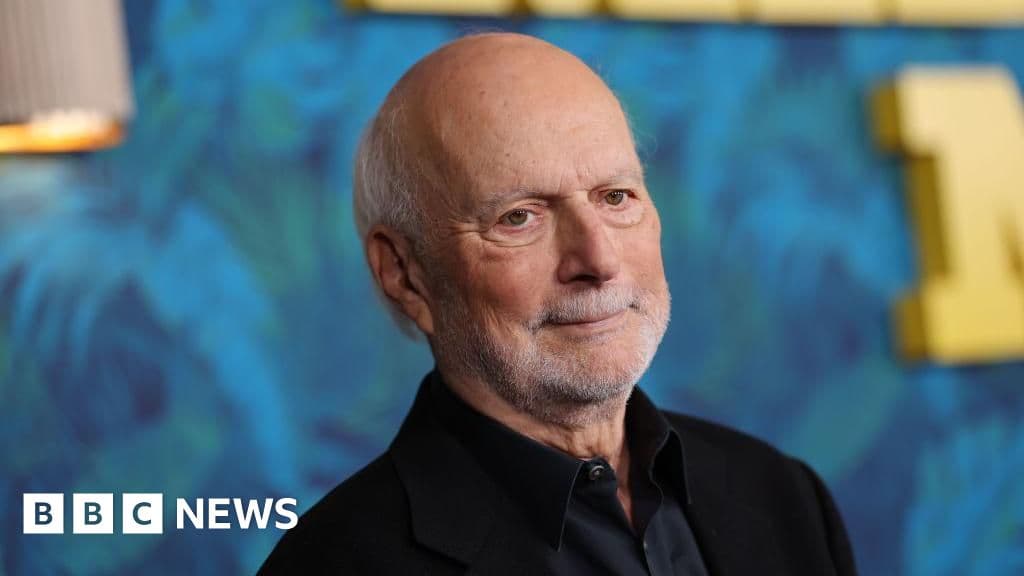
James Burrows, legendary director of Cheers and Friends, dies aged 85
James Burrows, the legendary director of Cheers and Friends, has passed away at 85.
BBC News1 min read

Pressure is mounting for Lebanese President Joseph Aoun to meet Israeli Prime Minister Benjamin Netanyahu, which could increase internal tensions in Lebanon. Aoun is expected to visit the White House in May amid ongoing battles in southern Lebanon and divided public opinion.
Mentioned in this story
Beirut, Lebanon – As the battles rage on in southern Lebanon, pressure is mounting on President Joseph Aoun to meet directly with Israel’s Prime Minister Benjamin Netanyahu, in an event that could further incite internal tensions in the country.
While no date has been set, Lebanon’s Aoun will reportedly visit the White House later in May, a month after Israel and Lebanon’s first direct negotiations in decades, which have divided Lebanese people.
The decision to enter into direct negotiations with Israel especially angered Hezbollah, the Iranian-backed political and military group. Hezbollah does want an end to the war, but prefers indirect negotiations to achieve that goal, as well as the withdrawal of Israeli troops from Lebanese land.
Analysts told Al Jazeera that internal tensions in Lebanon mean there is little likelihood of Aoun meeting Netanyahu in Washington, as such a meeting would not have widespread, cross-communal support in Lebanon.
“The push for an Aoun–Netanyahu summit is being driven by the calendar and by Washington’s appetite for a visible deliverable,” Dania Arayssi, a senior analyst at New Lines Institute for Strategy and Policy, told Al Jazeera. “The April 26 ceasefire expires on May 17, the US Embassy in Beirut has now publicly conditioned American support on the meeting taking place, and the Trump administration is looking for an Abraham Accords-style photo opportunity that frames Lebanon as the next domino after the Iran ceasefire.”
Israel began its war on Lebanon in October 2023, the day after the beginning of the war on Gaza. A ceasefire was agreed between Israel and Hezbollah in November 2024, but Israel continued to attack Lebanon periodically, violating the ceasefire more than 10,000 times in 15 months.
Hezbollah eventually responded on March 2, following the killing of Iranian Supreme Leader Ayatollah Ali Khamenei two days earlier.
Israel invaded Lebanon, where it has gone about systematically destroying southern towns and villages, and since March 2, its attacks have killed almost 2,700 people, including more than 100 healthcare workers. More than 1.2 million people have been displaced by Israel’s attacks, with displacement orders ongoing.
Despite a ceasefire announced by United States President Donald Trump on April 16, Israel and Hezbollah have continued to fight, mostly on Lebanese territory occupied by the Israelis.
In an effort to halt the war and end Israel’s occupation of southern Lebanon, the Lebanese government has agreed to direct negotiations with the Israeli government, with the US acting as mediator – but those negotiations have been between the Israeli and Lebanese ambassadors to the US, and not more senior officials.
A meeting could exacerbate internal tensions in Lebanon and is seen as a response to U.S. pressure for visible diplomatic progress.
The direct negotiations with Israel have sparked anger among groups like Hezbollah and have not garnered widespread support across Lebanese communities.
The expiration of the ceasefire could escalate military actions in southern Lebanon, increasing the urgency for diplomatic meetings.
The U.S. is conditioning its support on the meeting occurring, aiming for a diplomatic milestone similar to the Abraham Accords.
James Burrows, the legendary director of Cheers and Friends, has passed away at 85.

Why UK election candidates are dressing up in costumes and what it means for democracy.

Enjoy a cooler Saturday in the UK before heat returns on Sunday!
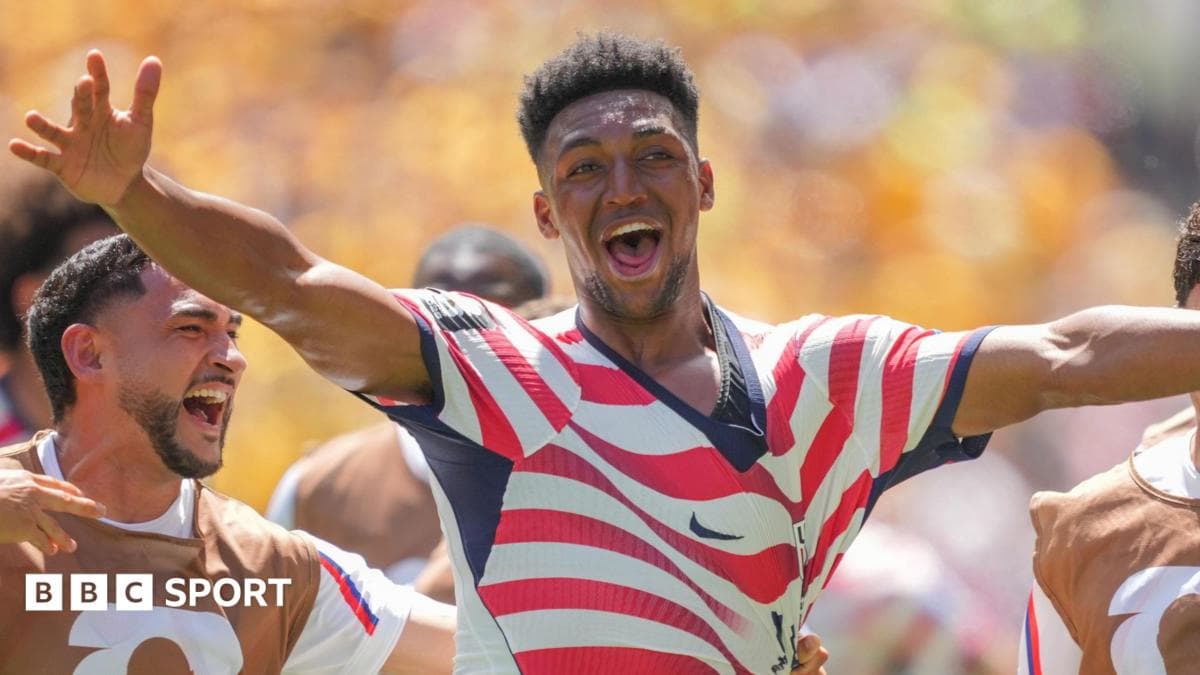
USA qualifies for World Cup knockouts with Alex Freeman's goal against Australia!

Tragic train crash in Bedford: driver dead, 89 injured in major incident

US judge rules against Biden, allowing memoir recordings release
See every story in News — including breaking news and analysis.
For their part, the Israelis say they want the Lebanese government to disarm Hezbollah to keep northern towns in Israel safe from attacks.
Some in the Lebanese government say their efforts to disarm Hezbollah have been undermined by Israel’s ceasefire violations and attacks on Lebanon. The Lebanese government declared Hezbollah’s military activities illegal on March 2.
Israel has tried to stir existing sectarian divides in Lebanon during its attacks this year, partially by attempting to cause tensions between Lebanon’s Shia community, from which Hezbollah draws most of its support, and its other religious groups.
Those sectarian tensions have been simmering of late. In one incident, a Lebanese television station played a cartoon disparagingly depicting Hezbollah fighters and their leader Naim Qassem as characters from the mobile video game “Angry Birds”. Some Hezbollah supporters responded by sharing images insulting the Maronite Christian patriarch.
For Aoun – a Maronite Christian – to shake hands with Netanyahu, a man who recently posted a video of a demolition carried out by Israeli forces in southern Lebanon, would be interpreted as a further provocation by many in Lebanon, analysts said.
“The sight of President Aoun shaking hands with Netanyahu would have very negative ramifications in Lebanon,” Nicholas Blanford, a nonresident fellow at the Atlantic Council and the author of a book on Hezbollah, told Al Jazeera.
The likelihood of such a meeting happening seems to be waning, however.
For his part, Aoun has said it is not the right time to meet Netanyahu.
“We must first reach a security agreement and stop the Israeli attacks on us before we raise the issue of a meeting between us,” Lebanon’s president said in a statement on Monday.
Domestically, the issue has little support. Parliament Speaker Nabih Berri, a staunch Hezbollah ally, has said negotiations with Israel cannot begin before the end of the war, while Druze leader Walid Jumblatt has said Lebanon cannot negotiate while under fire.
“Aoun’s hesitation reflects that he does not have the domestic consensus required to legitimise a presidential summit while Israel still occupies positions inside Lebanon, while strikes are ongoing, and while a million people remain displaced,” Arayssi said.
The situation might have been different “if the ceasefire had held better and if images of destruction had not continued, including the destruction of churches and Christian villages”, Nadim Houry of the Paris-based Arab Reform Initiative said.
But without a wider consensus, Houry said he did not believe Aoun would agree to meet Netanyahu.
“Aoun doesn’t have clear regional backing, and it is not just Hezbollah that is opposed,” Houry told Al Jazeera. “I don’t see [Aoun] committing political suicide at this point when nothing is to be given. The conditions aren’t there.”
The push, however, seems to be coming from the US side, where, despite launching a war on Iran that has engulfed the better part of the region, Trump regularly refers to his supposed peacemaking credentials.
“The Trump administration risks moving too quickly trying to secure the optics of President Aoun meeting Netanyahu and shaking hands in the White House,” Blanford said. “The Americans should dial back a little bit on this. They have to understand the very complex realities in Lebanon. And optics are important.”
Recently, when US Ambassador to Lebanon Michel Issa was asked about a direct meeting between Aoun and Netanyahu, he dismissed the sensitivity around the issue. Issa said he felt it would be beneficial for Aoun to lay out his terms and for Netanyahu to listen.
Analysts said, however, that some in the US administration recognise the sensitivity of forcing such a meeting between Israel and Lebanon.
“Some folks in the US administration realise that such a meeting will destabilise Lebanon, and they realise that it is not such a good idea to have it right now, considering the ongoing situation, attacks and destruction in Lebanon,” Houry said.
The lack of support for such a move is not just domestic, but also regional.
Saudi Arabian officials have held meetings in recent weeks with Aoun and Berri, in an effort to find a consensus among Lebanese figures and a unified Lebanon position. Saudi Arabia has tried to bring Lebanon in line with a wider Arab position of not normalising relations with Israel until a clear roadmap for a Palestinian state is established.
“Saudi Arabia and others in the Arab region are not so keen on [a direct meeting between leaders] right now,” Houry said. “They definitely want a ceasefire in Lebanon, but they don’t want Lebanon moving toward direct negotiations with Israel through a meeting between Benjamin Netanyahu and Joseph Aoun while they are opposed to it.”
Ultimately, Houry and others said the domestic and regional factors are pushing against a direct meeting that could inflame internal tensions in Lebanon. Any such meeting could only take place after the resolution of a number of factors.
“It’s a multiple-level puzzle,” Houry said. “I don’t see in the current context Aoun going to meet Netanyahu one-on-one at this stage.”