
Is VAR being used differently at the World Cup vs the Premier League?
How is VAR being used differently at the World Cup compared to the Premier League?
BBC News1 min read
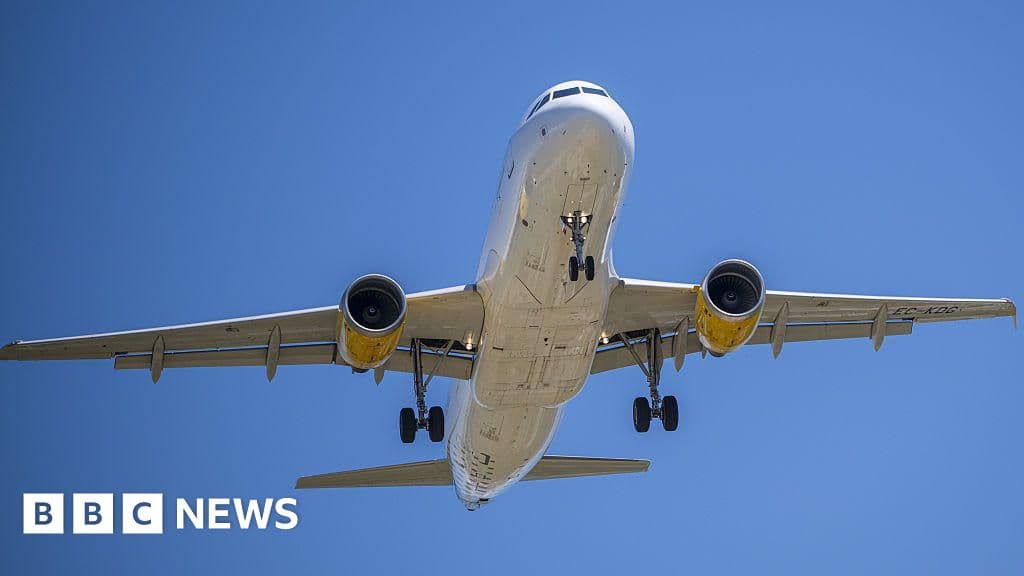
European airlines are advised to use US-made jet fuel to address rising prices and potential shortages linked to the US-Israel war with Iran. The International Air Transport Association and the European Aviation Safety Agency are involved in facilitating this transition.
European airlines should use US-made jet fuel to combat soaring prices and limited supply caused by the US-Israel war with Iran, two major international airline bodies have suggested.
The International Air Transport Association (IATA) has suggested that wider international acceptance of US-grade jet fuel could help to ease potential shortages caused by the conflict.
Meanwhile, the European Aviation Safety Agency (EASA) has drawn up safety guidance, setting out how US supplies could be introduced into the European market, as well as information on the risks involved.
The price of jet fuel most European airlines currently use has jumped by half since the start of the war.
In a blog post, IATA's director of flight and technical operations, Stuart Fox warned that if the conflict in the Middle East continues "it won't be long before we see fuel shortages in some parts of the world".
There are two main types of fuel used in commercial aviation. Jet A-1 is the global standard used in most international operations, while Jet A is primarily used in North America.
The two are both forms of kerosene and are essentially similar. However, Jet A-1 has a lower freezing point than Jet A. According to Fox, that means it can be used more flexibly on long haul and polar routes.
Since the crisis erupted, supplies of Jet A-1 from the Gulf region have slowed to a trickle. This has been a particular problem for Europe, which normally relies heavily on imports from the region.
Increased shipments from the US have been making up some of the shortfall. However, many US refineries are not set up to produce jet A-1, limiting the extra that can be brought across the Atlantic.
Fox said in his post: "European fuel supply could come under pressure if the war in the Middle East continues. Using Jet A, which is produced at scale outside the Gulf, could be a practical way to help ease some pressure on existing supply chains."
He added that airlines in North America use Jet A every day, but still manage to serve communities in very cold regions, such as parts of Alaska, by using fuel additives, as well as by planning and monitoring flights to ensure aircraft operate within safe limits.
Meanwhile, the EASA has issued a "safety information bulletin" providing guidance for fuel suppliers and aircraft and airport operators.
It said: "A potential introduction of Jet A in Europe or in other parts of the world would not generate safety concerns provided that its introduction is properly managed".
US jet fuel may alleviate soaring prices and supply shortages faced by European airlines due to ongoing conflicts.
The price of jet fuel in Europe has increased by 50% since the start of the US-Israel war with Iran.
EASA has issued safety guidance on how US jet fuel can be introduced into the European market, including associated risks.
If the conflict continues, it could lead to fuel shortages in various parts of the world, as warned by IATA's director of flight and technical operations.
How is VAR being used differently at the World Cup compared to the Premier League?

Ex-Wimbledon champion Vondrousova banned for four years after refusing drug test.

Keir Starmer resigns as UK prime minister amid pressure; Andy Burnham likely successor.

Inside Jeffrey Donaldson's Four-Week Court Trial

JD Vance announces Iran will allow nuclear inspectors back in, signaling progress in US-Iran talks.

Tragic shooting at San Jose National High School in Tacloban leaves 3 dead and 7 injured.
See every story in News — including breaking news and analysis.
However, it also warned that if it were introduced without careful management, it "could result in an aircraft flying outside of its safe operating limits".
"These risks may be further exacerbated by inconsistent fuel grade availability across airports, increasing the likelihood of mixing fuel grade and associated assumption mismatches", EASA said.
British Airways' owner IAG said on Friday that it currently had "no issues with fuel availability in our main markets", but suggested there could be problems if the war carries on.
"If the current conflict continues to restrict flows of both crude oil and jet fuel from the Middle East, there is the potential for supplies of jet fuel to be restricted on a global basis," it said.