
Hungary’s former PM Orban re-elected party leader despite election loss
Viktor Orban re-elected as Fidesz leader despite recent election defeat.
Al Jazeera English1 min read

The UAE has quit OPEC to prioritize national interests and increase its oil production capacity. This decision poses challenges for the oil cartel amid a global energy crisis linked to the US-Israel war on Iran.
Mentioned in this story
After decades of membership, the United Arab Emirates has decided to quit the oil producers’ group, OPEC, in order to focus on “national interests” and forge its own path, it has said. The move is seen as a major blow to the Vienna-based oil cartel – but will not spell the end of it altogether, observers say.
The UAE’s decision to quit comes after years of open dissatisfaction with the oil cartel’s policy of capping members’ production as a way to control prices and stabilise the market.
The country has invested billions of dollars in increasing its oil production capacity from 3 to 5 million barrels per day (bpd) by 2027. As it has grown its ability to produce more oil, it has demanded a larger quota than has been assigned to it.
The moves also come at a particularly tricky moment as the region, and the rest of the world, grapples with an energy crisis triggered by the US-Israel war on Iran, which began on February 28. Tehran responded by hitting back at Israel, US military assets and other infrastructure in Gulf countries. It also closed off most access to the Strait of Hormuz, through which 20 percent of the world’s supplies of oil and liquefied natural gas (LNG) are shipped from Gulf producers.
Before the start of the war, the UAE’s production capacity had grown to 4.8 million bpd, but under its OPEC agreement, it was only allowed to produce 3.2 million bpd.
Experts say its departure from the cartel is unlikely to have an immediate impact on the market because the UAE’s exports, like those of all its neighbouring countries, are currently constrained by Iran’s control of the Strait of Hormuz.
The UAE has been able to sell some of its oil via the Fujairah terminal, which sits on the Gulf of Oman, allowing it to circumvent the waterway. Last year, it exported 1.7 million bpd of crude oil and refined fuels this way – not enough to meet its ambitions.
This could all change, however, if the conflict ends with an agreement between Iran and the US that allows for the resumption of free navigation through the strait. For now, that is up in the air, as the US continues its naval blockade of Iranian ports and Iran, in return, refuses to allow any foreign-flagged ships to transit the strait.
Iran has also indicated that it may wish to maintain its leverage over the strait post-conflict through a system of tolls.
Should traffic return to pre-war levels, however, the UAE could potentially flood the market with its 1.6 million bpd of extra production – equivalent to about 1.5 percent of global oil supply – enough to give it a serious edge in the global energy market, experts say.
Kingsmill Bond, an energy strategist at think tank Ember Future, says the UAE’s move is a clever one.
“They are clearly preparing for the period after the war, because now that we have reached peak oil demand and we are entering a new environment – they want to be free from the constraints of OPEC,” Bond said.
The UAE left OPEC to focus on its national interests and to increase its oil production capacity beyond the limits set by the cartel.
The UAE's departure is seen as a significant blow to OPEC, potentially leading to increased oil production and price volatility in global markets.
After leaving OPEC, the UAE aims to increase its oil production capacity from 4.8 million barrels per day to 5 million barrels per day by 2027.
The energy crisis has heightened tensions in the Gulf region, affecting oil supply routes, particularly through the Strait of Hormuz, which is crucial for global oil and LNG shipments.
Viktor Orban re-elected as Fidesz leader despite recent election defeat.

Ukraine continues drone strikes on Russian energy infrastructure, killing one.

Trump says Iran deal to be signed tomorrow, contradicting Iranian official
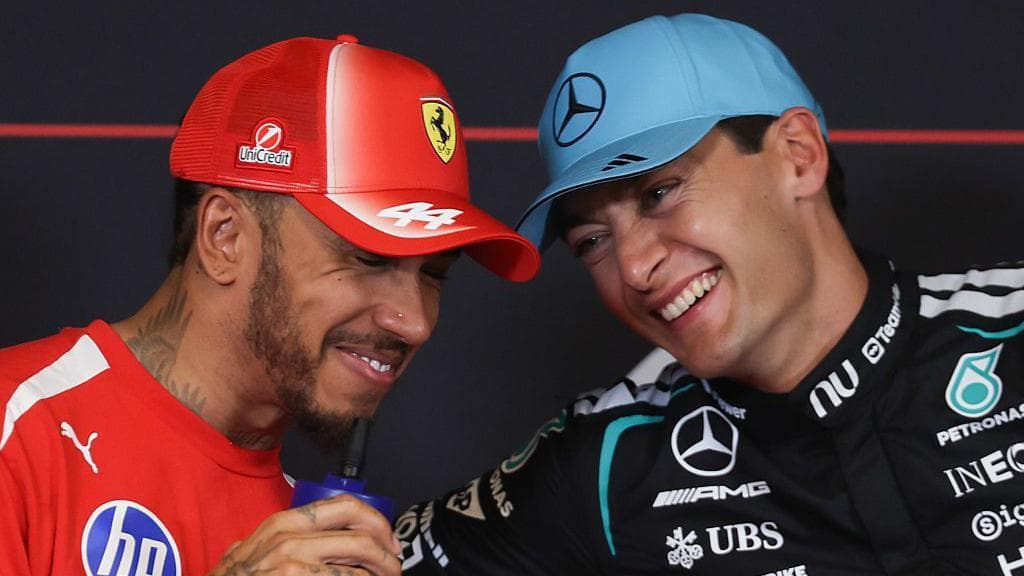
Hamilton shines with second place at Barcelona-Catalunya GP
Molly Russell's father calls PM's social media restrictions 'deplorable'

Clashes erupt between far-right and anti-racist protesters in UK cities after Belfast riots.
See every story in News — including breaking news and analysis.
“The UAE is preparing for a world after the Iran war where oil demand is in decline, and OPEC’s power to maintain control and discipline will be weaker,” he added, referring to Abu Dhabi’s strategy of maximising its oil production to sell as much of its oil as possible before energy markets move beyond fossil fuels.
This is in contrast to Saudi Arabia’s goal of keeping oil production by OPEC members capped in order to maintain high oil prices in the longer term.
Officials close to Saudi Arabia were swift to downplay the move this week.
“It’s not a major blow, especially for OPEC+ [which] consists of 23 countries, and one country going out doesn’t mean anything,” Mohammad al-Sabban, Saudi Arabia’s former senior oil adviser, told Al Jazeera.
The UAE’s move was more a political decision, he said, under the influence of the West, which has long sought to stoke division within the cartel.
Indeed, US President Donald Trump is known for his hostility to OPEC and has previously accused the cartel of “ripping off the rest of the world” by inflating oil prices.
“But this is nonsense because the UAE knows that OPEC adjusts production to maintain an equilibrium and nothing else,” al-Sabban said.
OPEC has shown itself to be adaptable in the past. Founded in the 1960s by Saudi Arabia, Kuwait, Iran, Iraq and Venezuela, it has survived challenging times and other withdrawals in past years, including by Qatar, Indonesia, Ecuador and Angola.
“It will be less influential than before, but it won’t disappear,” said Robin Mills, a non-resident fellow at Columbia University’s Center on Global Energy Policy and CEO of Qamar Energy in Dubai.
The cartel hit the headlines in 1973 when an alliance of its Arab members implemented an embargo on countries supporting Israel. It was the first time that Arab states had exercised this sort of collective action and it had enormous consequences on the world stage.
Back then, the group accounted for half of the global oil market. Today, as other countries – such as the US and Norway – have become big oil producers themselves, OPEC’s share is lower at 33 percent of the global market. The alliance has also increased its cooperation with 12 other oil producing nations spanning from Latin America to Russia — this larger grouping of OPEC nations and these partners is known as OPEC+.
Despite the UAE’s departure, other members may still see the benefit of sticking to the club. “The ability to act collectively on managing the market and ensure that prices don’t go too high – and not too low – that was the reason to form OPEC+,” said Mills. The strategy has proven effective during a number of crises, including the 2014 oil price crash and the COVID pandemic, when the group maintained a coordinated response.
But some believe the UAE’s withdrawal is not just about markets.
“The UAE’s departure is, above all, the visible sign of a deep regional rupture between Riyadh and Abu Dhabi first, but beyond that, between two incompatible visions of what Gulf order should look like,” writes Anas Abdoun, an international consultant in energy and global affairs, for Al Jazeera.
The UAE has been on the receiving end of Iran’s most intense attacks since joint US-Israel strikes on Iran began. Of Iran’s regional neighbours that have come into the firing line, the UAE has been hit more than Israel and all Gulf Cooperation Countries (GCC) together.
Throughout the war, which is currently at an impasse amid a shaky ceasefire between Tehran and Washington, the UAE has been pushing in private for much more assertive policies against Iran.
While the government has maintained a defensive posture, influencers and public figures have openly called for war. Saudi Arabia, Qatar and Oman, by contrast, have supported a more diplomatic approach.
The dramatic departure from OPEC is just the latest shift by Abu Dhabi along a foreign policy path which diverges from its neighbours.
It was the first Arab country to normalise ties with Israel by signing the Abraham Accords in 2020.
“It seems that the war might have exacerbated the differences that the Emirates felt,” Gregory Gause III, associate fellow at the Middle East Institute, told an online webinar hosted by the institute on Wednesday.
Ultimately, Abdoun says, the “real loser” from the UAE’s decision to quit OPEC now “is the idea of a collective capacity for Arab fuel-producing states to shape the global energy order”.