
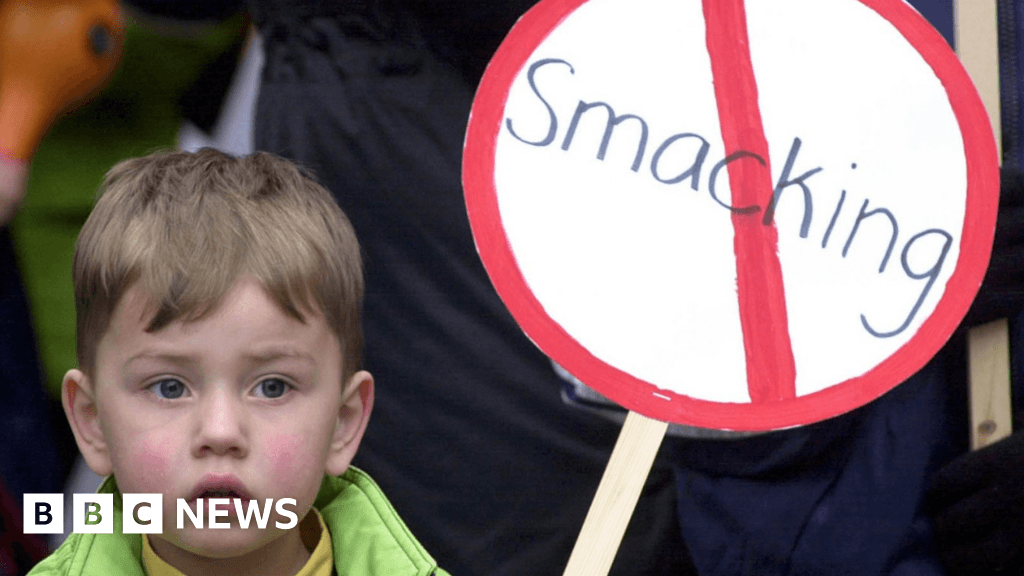
Smacking children could lead to lower GCSE grades, study suggests
Research suggests smacking children leads to lower GCSE grades and risky behavior.
BBC News1 min read

The U.S. military has launched another series of strikes against Iran, marking the second day of renewed attacks. President Trump has warned that Tehran will face consequences for stalled negotiations.
Mentioned in this story

A woman walks past a mural depicting a U.S. aircraft carrier under missile attack in downtown Tehran, Iran, on June 8. Vahid Salemi/AP
Vahid Salemi/AP
DUBAI, United Arab Emirates — The U.S. military said Wednesday it has begun another round of strikes against Iran after President Trump said more were coming. The escalating attacks threatened to derail efforts to end the war, with Trump warning that Tehran would "pay the price" for stalled negotiations.
U.S. Central Command said in a social media post that the military was striking "multiple targets in Iran," attacks that were "in response to Iran's unwarranted and continued aggression."
The strikes were initiated after President Trump indicated that more military action was forthcoming due to stalled negotiations with Tehran.
The U.S. military strikes against Iran have been ongoing for two days.
President Trump warned that Tehran would 'pay the price' for the stalled negotiations, indicating a strong U.S. response.
The escalating attacks could derail ongoing efforts to end the conflict and may lead to further military escalation in the region.
Research suggests smacking children leads to lower GCSE grades and risky behavior.

Patrick Bruel, French pop star, charged with rape and sexual assault in major #MeToo case.

Discover which World Cup stars hail from your area!
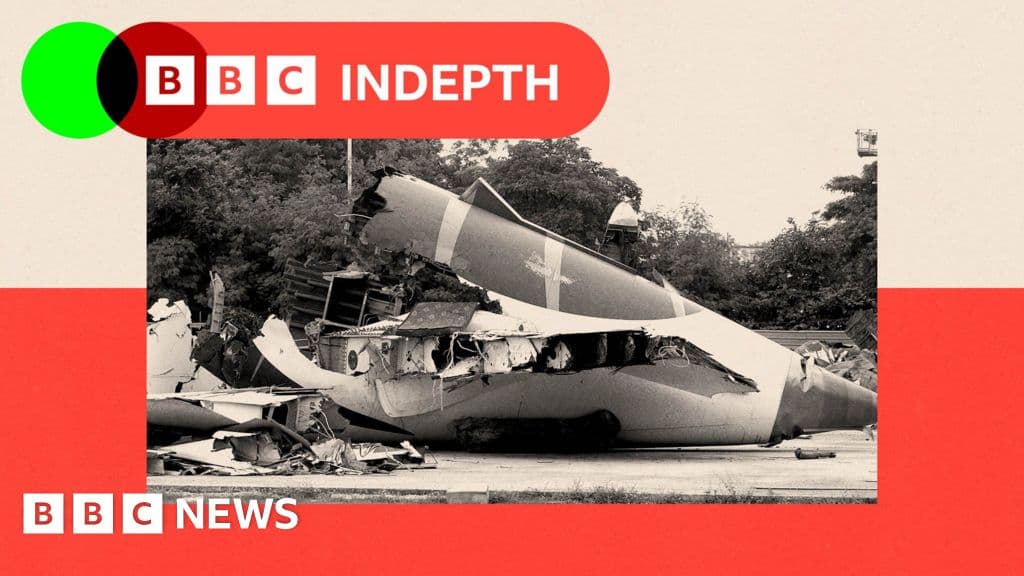
Intense controversy surrounds the investigation of Air India flight 171 crash.

Olivia Rodrigo braves the rain while finalizing her new song 'Maggots For Brains'.

Dozens of female playwrights unite for 'All the Rage' in London, expressing anger over Epstein.
See every story in News — including breaking news and analysis.
The second day of American strikes came hours after Bahrain, Kuwait and Jordan — all of which host U.S. troops — came under Iranian fire. It was the third time this week that back-and-forth strikes have tested a two-month ceasefire. They also came a day after the U.S. struck Iran following the crash of an Army helicopter near the Strait of Hormuz that Trump blamed on the Islamic Republic.
Trump has urged Iran to sign a deal to end the war and suggested earlier this week that an agreement could be reached in a matter of days.
Iranian media reported that explosions were heard in Bandar Abbas, Sirik and Minab in the south of the country.
Iran has proved resilient despite weeks of heavy bombing. It is betting that its ability to effectively close the Strait of Hormuz — a crucial passageway for oil and natural gas — gives it a strong bargaining chip.
Iran's United Nations envoy said the U.S. should refrain from threats of force if it wants a deal.
"Iran has never negotiated under threats and pressure and will never submit to pressure or question," Ambassador Amir Saeid Iravani told the U.N. Security Council on Wednesday.
Still, both countries seem to be looking for a way to end the conflict — if they can manage to sell it as a win at home.
Israeli Prime Minister Benjamin Netanyahu appears intent on pursuing goals that make compromise harder: the collapse of Iran's theocratic government, the elimination of its nuclear program, and the destruction of the Iranian-allied Hezbollah militant group in Lebanon. On Monday, Iran and Israel targeted each other.
Since the U.S. and Israel started the war with Feb. 28 attacks on Iran, the conflict has shaken the global economy, driven up energy prices worldwide, and made food and other basics more expensive.
The international benchmark for crude oil traded above $93 a barrel on Wednesday, up more than 25% since the start of the war.
Trump said Wednesday the U.S. military has since last month undertaken a "secret mission" to sneak oil shipments past Iran's forces in the Strait of Hormuz. He said ships were slipping through at night, aided by the destruction of Iranian radar equipment.
Trump said as a result more than 100 million barrels of oil have evaded Iran's chokehold on the strait. There was no immediate confirmation of that figure, which roughly equals five days of oil shipments through the waterway before the war began.
The military's role was not immediately clear. Capt. Tim Hawkins, a Central Command spokesman, said U.S. forces "communicate and coordinate" with commercial ships in the area, but gave no details on military support being offered.
Earlier Wednesday, the U.S. military said an American aircraft fired "precision munitions" into the engine room of the Palau-flagged vessel M/T Settebello as it attempted to breach the naval blockade with a shipment of Iranian oil. It was the eighth merchant vessel disabled by U.S. forces in waters off Iran.
India's foreign ministry said three Indian sailors were missing after the Settebello was struck, while 21 others were rescued. Its statement did not mention the U.S. military or the blockade.
Hawkins of U.S. Central Command said American forces warned the crew before firing on the ship.
The U.S. military said strikes earlier Wednesday targeted "air defense, ground control stations, and surveillance radar sites."
Iran said U.S. strikes hit two water reservoirs in the southern city of Sirik, temporarily cutting off water to thousands of people. U.S. Central Command had no immediate comment.
Tehran later claimed attacks in Kuwait, Bahrain and Jordan.
Jordan said it shot down five incoming missiles, which Iran said targeted an air base hosting American military aircraft.
Bahrain and Kuwait said they intercepted incoming fire.
Iranian Foreign Minister Abbas Araghchi condemned the American attacks as a violation of Iranian sovereignty. Foreign Ministry spokesperson Esmail Baghaei said in televised comments that, following the new attacks, Iran would review its stance on negotiations to end the war.
Efforts to mediate a deal continued. Following consultations with the U.S., a delegation from Qatar arrived in Tehran for talks on Wednesday, according to an official with knowledge of the visit who requested anonymity due to the sensitivity of the talks.
The exchanges of fire came a day after a U.S. Army attack helicopter crashed near the Strait of Hormuz. The helicopter collided with an Iranian drone, according to a U.S. official speaking on condition of anonymity to discuss an ongoing investigation. It wasn't clear whether the collision was intentional.
A drone boat rescued the helicopter's two crew. Trump said they were uninjured.
Wary of high gas prices in the run-up to congressional elections in November, Trump seems to be looking for a quick win. But he is also making demands that will be tough for Iran to swallow.
The U.S. wants to see Iran give up its stockpile of highly enriched uranium. While Iran insists its nuclear program is peaceful, that uranium is a short technical step from weapons-grade levels.
Iran is refusing to give up the uranium and demanding relief from sanctions. It also wants the release of frozen assets even before a final agreement is in place, something Trump rejected.
It's not clear how those differences can be bridged. In a Truth Social post Wednesday, Trump said Iran was taking "too long to negotiate a deal" and "now they will have to pay the price!!!"
Iran has insisted that any deal to end the war must also end fighting between its ally Hezbollah and Israel. Israel has instead intensified its military campaign against the Lebanon-based militant group.
An airstrike on a village east of Tyre killed at least six people, Lebanon's state-run National News Agency reported. It said two others were killed by an Israeli drone strike on a car in the southern city of Sidon.
