
Aukus is among Australia’s worst foreign policy decisions and requires ‘heroic’ optimism, Gareth Evans says
Gareth Evans calls Aukus one of Australia's worst foreign policy decisions.
The Guardian World1 min read

The 2026 men's World Cup starts this week in the US, Mexico, and Canada, featuring players from England and Scotland. A postcode lookup reveals which World Cup stars have local roots across the home nations since 1950.
The 2026 men's World Cup kicks off this week across the US, Mexico and Canada, with excited football fans preparing to cheer on England and Scotland.
But which World Cup players have roots near you? Our postcode lookup includes present day superstars and past greats from all four home nations since 1950 – discover how many have come from your local area.
England stars hail from Torquay to Blyth, with many players still closely tied to where they grew up.
Manchester's Nico O'Reilly has the city's 0161 dialling code tattooed on his arm, while Sunderland-born Jordan Pickford was awarded his own parking space at his local Lidl after his World Cup exploits in 2018.
Scotland's long-awaited World Cup return is led by players from Glasgow and the central belt.
Captain Andy Robertson once worked on the tills at Marks & Spencer on Sauchiehall Street, while Lawrence Shankland was employed in a Hillington plumbing factory before turning professional.
Despite being spread across the country, England's squad has a strong London feel.
In total, a record 10 players come from the capital, surpassing the Golden Generation of the 2000s – a crop of talented players led by Londoners like David Beckham, John Terry, Rio Ferdinand, Ashley Cole and Frank Lampard.
The North West, which has supplied more England World Cup players than any other region, has seven representatives in Thomas Tuchel's squad.
Goalkeepers Dean Henderson and James Trafford hail from Cumbria. Henderson spent years making a two-and-a-half hour round trip with his father from Whitehaven to Carlisle United's academy, while Trafford was raised on his family's farm near Cockermouth.
There is also a cluster of four players from the North East in the squad, including Sunderland's Jordan Henderson, who has been selected for a joint England-record fourth World Cup.
The smallest of England's nine regions in terms of population, the North East punches well above its weight as a World Cup talent pool, having provided more players per million residents than any other part of the country.
In Scotland, Glasgow's football culture has shaped generations of players.
As well as producing stars such as Robertson and McGinn, the city also gave opportunities to Nathan Patterson, who was scouted playing for Rossvale in north Glasgow, and Aaron Hickey, who became the youngest player to start a Scottish Cup final in 2019.
Since 1950, Glasgow has produced more World Cup players than any other UK council area, topping a list dominated by major cities such as Belfast, Liverpool, Edinburgh and Manchester.
Yet World Cup stories can emerge from unlikely places too.
Scott McKenna is the first player from Kirriemuir – a small Angus town of around 6,000 people – to reach football's biggest stage.
For half of UK councils, however, the wait for a first World Cup player goes on.
Many England stars come from various locations, including Torquay and Blyth.
You can use a postcode lookup to discover World Cup players from your local area.
Sunderland-born Jordan Pickford received a parking space at his local Lidl for his World Cup performance in 2018.
Scotland's World Cup team features players primarily from Glasgow and the central belt.
Gareth Evans calls Aukus one of Australia's worst foreign policy decisions.

Trial begins for Jonathan Rinderknecht, accused of LA wildfire arson.
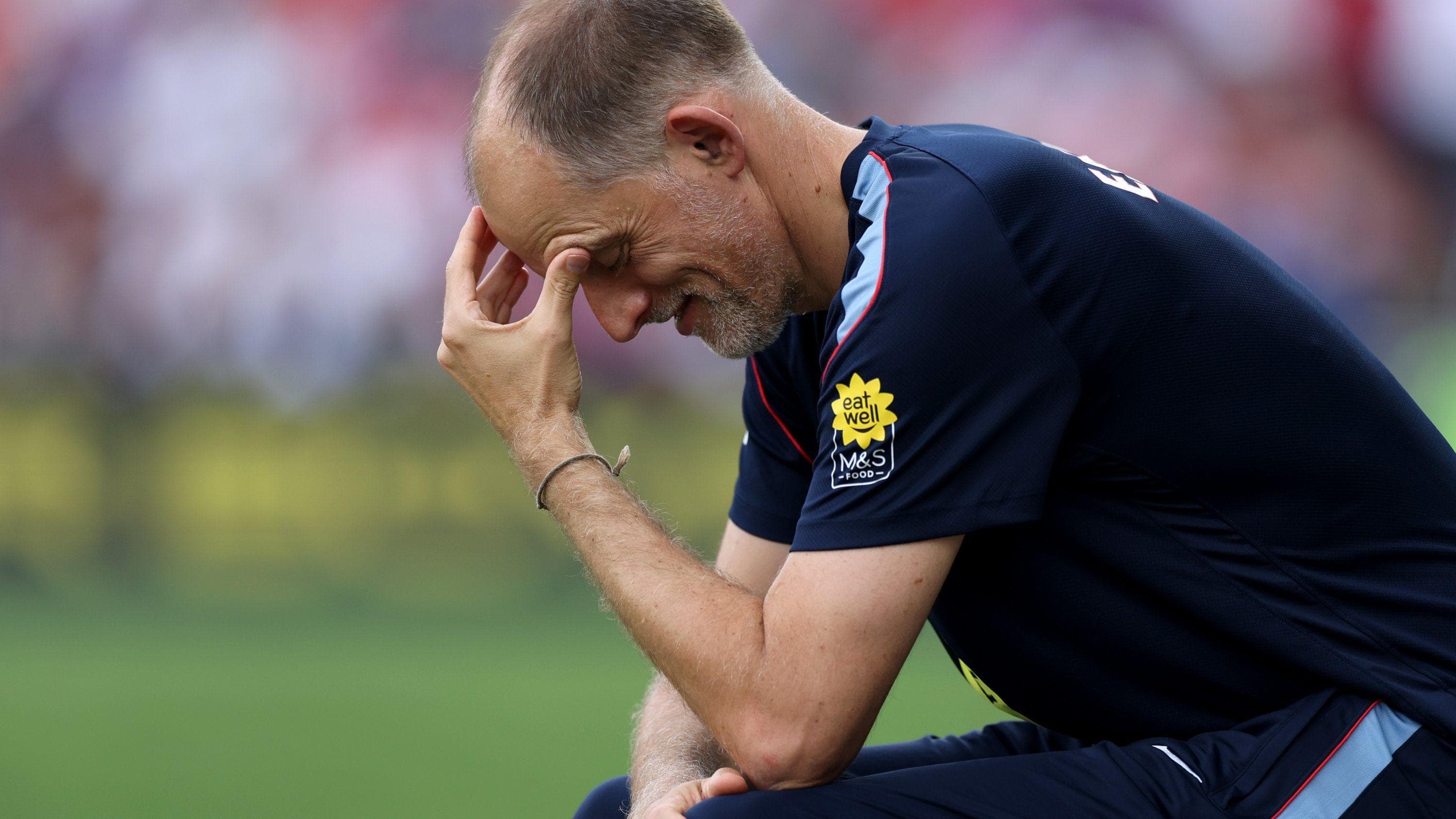
Tuchel weighs lineup decisions after England's friendlies.

Protests threaten World Cup celebrations in Mexico City as tensions rise

US bombs Iran after Trump threat; Tehran closes Hormuz Strait to all ships.
Research suggests smacking children leads to lower GCSE grades and risky behavior.
See every story in News — including breaking news and analysis.
The data used in this analysis covers the 536 players who have been selected for England, Scotland, Wales and Northern Ireland squads at men's World Cups since 1950.
This includes all players in squad lists submitted to FIFA before each World Cup. In some cases, particularly in the 1950s and 1960s, reserve players did not travel to the tournament.
World Cup squad lists and player stats were initially gathered from the Fjelstul World Cup Database and then checked against other sources such as FIFA and national Football Associations.
Players' birthplaces are based on where they were born (if known), or alternatively where they grew up.
Facts about 2026 squad members are drawn from past media interviews with the players, or people connected to them or their local area.
Player photos where available are taken from Getty Images.
Some players were born abroad but moved to the UK as a child, in which case their birthplace is listed as their UK childhood home.
Six players – England's Owen Hargreaves, Graeme Le Saux and Tony Dorigo, plus Scotland's Lyndon Dykes, Richard Gough and John Hewie – spent their entire childhoods abroad and are excluded from the analysis.
Additional reporting by Libby Rogers, Deirdre Finnerty, Marie Jackson and Lauren Woodhead.