
Czech police detain Russian priest over ‘white substance’ find
Czech police detain Russian Orthodox Bishop Hilarion over white substance found in his car.
Al Jazeera English1 min read

Pro-Israel advocates are cautioning President Trump against a potential deal with Iran, fearing it may not sufficiently weaken Iran's leadership. However, some critics have softened their stance after Trump mentioned the possibility of more Arab nations normalizing relations with Israel.
Mentioned in this story
Since reports of a possible deal with Iran started to emerge, pro-Israel advocates in the United States have been warning President Donald Trump against signing the agreement.
Hawkish figures, including some prominent senators, have voiced opposition to any deal that fails to remove or at least severely weaken Iran’s political leadership and destroy its military powers.
But after Trump floated the prospect of more Arab countries establishing formal relations with Israel as part of the agreement, some of the critical voices softened their tone.
US Senator Lindsey Graham was among those politicians. On Saturday, Graham — a vocal proponent of the war — warned that ending the conflict in order to reopen the Strait of Hormuz would be a “nightmare” for Israel.
“It is important we get this right,” he wrote in a social media post on Saturday that was shared by the American Israel Public Affairs Committee (AIPAC), a US lobbying group.
Two days later, on Monday, Trump said it “should be mandatory” for countries including Saudi Arabia, Qatar and Pakistan to set up diplomatic relations with Israel as part of a US agreement with Iran.
Graham then praised the push, calling Trump’s diplomatic manoeuvre “simply brilliant”.
“With Saudi Arabia and others like Pakistan making peace with Israel, the region will know a level of stability never dreamed of before President Trump,” the senator wrote on the social media platform X.
Normalisation with Israel, Graham added, “will eventually lead to regional integration, making the Middle East a powerhouse for economic opportunity and good instead of a powder keg”.
Pro-Israel political commentator Mark Levin, who is close to Trump, similarly praised the normalisation push on Monday after criticising the potential deal with Iran on Saturday.
“This would be a truly massive accomplishment!” Levin said, commenting on Trump’s proposal.
The turnaround came on Monday, after Trump laid out his vision for expanding the Abraham Accords, a series of normalisation deals between Israel and nearby Arab states.
“It should be mandatory that all of these Countries, at a minimum, simultaneously, sign onto the Abraham Accords,” he wrote on Truth Social, listing six countries, including Turkiye and Egypt, which already have formal diplomatic relations with Israel.
Pro-Israel advocates are warning Trump that the deal should not be signed unless it significantly weakens Iran's political leadership and military capabilities.
Lindsey Graham is a US Senator who has expressed concerns that ending conflict to reopen the Strait of Hormuz could be detrimental to Israel.
Some critics have softened their tone after Trump suggested that the agreement could lead to more Arab countries establishing formal relations with Israel.
AIPAC, the American Israel Public Affairs Committee, is a lobbying group that has shared Senator Graham's concerns about the potential Iran deal on social media.
Czech police detain Russian Orthodox Bishop Hilarion over white substance found in his car.

Netanyahu orders intensified strikes on Hezbollah, escalating conflict in Lebanon.

WiseTech notifies 190 employees of potential job cuts due to AI advancements.
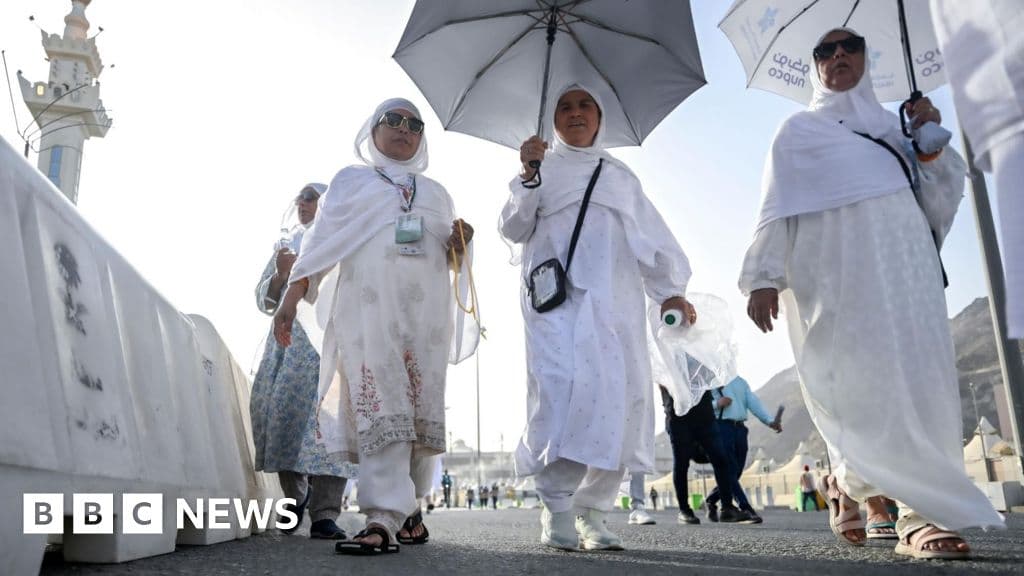
Over 1.5 million pilgrims arrive for Hajj despite fears from the Iran war.

Peter Murrell, ex-SNP chief, admits to embezzling over £400,000.

CBS backs down from copyright claims on Colbert's viral parody show.
See every story in News — including breaking news and analysis.
None of the countries Trump mentioned responded to his call. But for years, many countries refused to normalise ties with Israel, especially after its genocidal war on Gaza.
Saudi Arabia has repeatedly said that it stands by the 2002 Arab Peace Initiative, which calls on Israel to recognise the Palestinian state based on its 1967 borders, with East Jerusalem as its capital.
Trump’s demand on Monday comes as his administration struggles to negotiate a peace deal after the US and Israel launched a war against Iran on February 28.
Critics have questioned Trump’s objectives in the war, which started with the idea of regime change in Iran, ending the nuclear programme, and curbing the country’s missile arsenal. Later, another pressing goal imposed itself as one of the main objectives: to forcibly reopen the Strait of Hormuz, a vital trade route through which more than 20 percent of the world’s oil is shipped.
It is unclear whether Trump has the leverage to mandate policy to other countries in the region as part of the peace negotiations with Iran.
The renewed normalisation push, however, could soften the blow for pro-Israel politicians who oppose ending the war with Iran.
Since his first term as US president, Trump has made normalising Israel’s foreign relations a top priority.
In 2020, with Trump’s backing, Israel signed the Abraham Accords with the United Arab Emirates, Bahrain and Morocco, establishing bilateral diplomatic relations.
But Trump and the predecessor to his second term, former President Joe Biden, have failed to expand the accords. Israeli Prime Minister Benjamin Netanyahu has also continued to reject the idea of a Palestinian state.
Israel has long sought to separate its efforts to build regional ties from its continued occupation of Palestinian land and its mistreatment of Palestinians, which rights groups say amount to apartheid.
Forging more formal ties with Arab and Muslim nations could boost Israel politically and economically, while further isolating Palestinians.
Trump faced rare — albeit indirect — criticism from legislators in his Republican Party over the weekend, when the details of a possible peace deal with Iran leaked.
Its terms reportedly included the unfreezing of billions of dollars in Iranian assets and an end to the war, with the promise of further negotiations.
Senator Ted Cruz, a staunchly pro-Israel Trump ally, said on Saturday that he was “concerned” about reports of the agreement.
“If the result of all that is to be an Iranian regime — still run by Islamists who chant ‘death to America’ — now receiving billions of dollars, being able to enrich uranium & develop nuclear weapons, and having effective control over the Strait of Hormuz, then that outcome would be a disastrous mistake,” Cruz wrote in a social media post.
AIPAC also shared a post by Republican Senator Roger Wicker criticising the deal.
“The rumored 60-day ceasefire — with the belief that Iran will ever engage in good faith — would be a disaster,” Wicker said. “Everything accomplished by Operation Epic Fury would be for naught!”
Mike Pompeo, who served as secretary of state during Trump’s first term, joined in the criticism, likening the rumoured deal to the 2015 nuclear agreement that was negotiated by Democratic officials.
He added that it was “not remotely America First”, a reference to Trump’s campaign pledge to put US interests above all.
“It’s straightforward: Open the damned strait. Deny Iran access to money. Take out enough Iranian capability so it cannot threaten our allies in the region,” Pompeo said. “Overdue. Let’s go.”
The Trump administration was quick to hit back against the former top diplomat, describing him as misinformed.
“Mike Pompeo has no idea what the f*** he’s talking about,” White House Communications Director Steven Cheung wrote on X.
“He should shut his stupid mouth and leave the real work to the professionals. He’s not read into anything that’s happening, so how would he know.”