
Soft toys, memes and a movie villain: Labor tries to simplify the message but selling a budget isn’t child’s play
Labor faces challenges in explaining its federal budget amid public skepticism.
The Guardian World1 min read
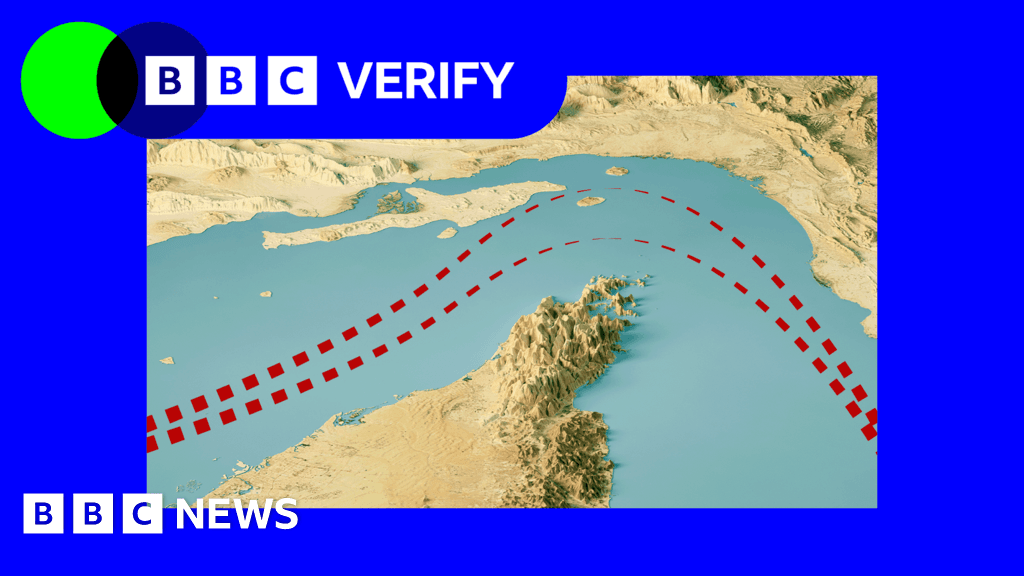
Four vessels linked to Iran crossed the Strait of Hormuz despite a US naval blockade, but two have reversed course. The US-sanctioned tanker Rich Starry and the bulk carrier Christianna have changed direction after initially sailing through the strait.
Mentioned in this story
Four vessels with links to Iran have crossed the Strait of Hormuz despite the start of a US naval blockade, according to ship-tracking data.
But two of those vessels appear to have reversed course, location data published by MarineTraffic shows.
The US-sanctioned tanker Rich Starry, which has reported it is carrying cargo, sailed east from Sharjah in the UAE through the strait overnight, but has since changed direction.
MarineTraffic data shows the bulk carrier Christianna which sailed east through the waterway on Monday after calling at Bandar Iman Khomeini in Iran, has also turned back.
Another tanker, the US-sanctioned Elpis, transited the strait on Tuesday and may have come from the Iranian port of Bushehr, according to MarineTraffic. The tracking data showed the vessel stationary on the eastern side of the strait on Tuesday evening.
US Central Command said on Tuesday that six vessels had complied with US orders to turn around and that "no ships from Iranian ports made it past the blockade".
Tracking data analysed by BBC Verify also shows two Iranian-flagged ships leaving the vicinity of Iran's Chahbahar port - which is east of the Strait of Hormuz on Iran's southern coast - after the start of the blockade.
The cargo ship Ashkan3 and container ship Shabdis both departed from close to the port on Tuesday and have apparently traveled more than 500km (310 miles) out of Iranian waters.
Our understanding of the locations of vessels in the region is complicated by the fact that some may have been "spoofing" their location signals or submitting incomplete or no data.
Tracking data suggests at least four further vessels with no obvious links to Iran have crossed the strait since the start of the blockade on Monday.
The Strait of Hormuz has become a focal point of the US-Israel war with Iran after Tehran effectively choked off one of the world's most important shipping lanes.
President Donald Trump has said the US blockade is in response to Iran "knowingly failing" to reopen the strait.
He also warned the US Navy will "blow to hell" any Iranians that attack them and will take action against any ship found to be paying transit tolls to Iran.
The disruption to shipping since the conflict began six weeks ago has sent shock waves across the global economy, destabilising energy prices and exposing just how reliant international supply chains are on the channel that connects the Gulf with the Indian Ocean.
Jakob Larsen from the Baltic and International Maritime Council, which represents shipowners, told BBC Verify that he is concerned about the "risk of further escalation to involve direct attacks on ships" with the introduction of the US blockade.
BBC Verify tracked 18 vessels transiting the Strait of Hormuz between the breakdown of ceasefire talks and Trump's announcement of a blockade on Sunday evening.
Four vessels with links to Iran crossed the Strait of Hormuz, including the US-sanctioned tanker Rich Starry and the bulk carrier Christianna.
The Rich Starry tanker initially sailed east from Sharjah but later reversed course, as indicated by ship-tracking data.
The US naval blockade aims to restrict Iranian shipping activities, impacting regional trade and security in the strategically important waterway.
The specific cargo of the US-sanctioned tanker Elpis is not detailed, but it transited the strait and was reported to be stationary on the eastern side.
Labor faces challenges in explaining its federal budget amid public skepticism.

New NDIS rules will cut 240,000 participants in four years, documents reveal.

Experience the rich sounds of samba, jazz, and morna in Cape Verde!

Republicans rally behind Ken Paxton following his Texas primary victory over John Cornyn.

Senior Labour party figures criticize Tony Blair's recent advice, stating it overlooks issues of inequality and austerity. Andy Burnham plans to respond, emphasizing that understanding inequality is crucial for addressing Britain's political challenges.

WHO chief urges ceasefire in DRC to combat Ebola outbreak
See every story in News — including breaking news and analysis.
At least 16 of these appeared to have links to Iran. Some were sailing under the Iranian flag and some appeared to have also called at Iranian ports.
An average of 138 ships passed through the strait each day before the conflict started on 28 February, according to the Joint Maritime Information Centre.
If crossings for ships not linked to Iran do resume at a greater pace, experts say stranded tankers that are fully loaded with cargo will be the priority.
"You've had nearly 800 ships stuck in there for several weeks. Most of them are now loaded with cargo so the priority is going to be to get them out," said Richard Meade, editor-in-chief of Lloyd's List
BBC Verify's analysis shows ships that have passed the strait have taken a northerly route close to Iran's coastline and within its territorial waters.
Prior to the conflict, vessels usually took a more southerly route through the middle of the waterway.
Another uncertainty is the possibility of sea mines, says Thomas Kazakos, secretary general of the International Chamber of Shipping.
"We need to make sure that we have clear confirmation that the safety of navigation for the ships and the seafarers are being agreed," he told BBC Verify.
Iran's Islamic Revolutionary Guard Corps (IRGC) Navy published what it states are the permitted routes to be followed when passing through the strait "to avoid possible collision with sea mines".
It has marked a region in the middle of the channel as a "dangerous area" to be avoided.
Centcom has previously announced that two destroyers - the USS Frank E Petersen and USS Michael Murphy - are in the area as part of a mission to clear "sea mines previously laid by Iran's Islamic Revolutionary Guards Corps".
Additional reporting by Kayleen Devlin and Shruti Menon
14 April: This piece is being updated to reflect the latest number of vessels crossing the strait since the ceasefire.