

‘You can stop your war’: Zelenskyy’s open letter to Putin – in full
Zelenskyy calls for a face-to-face meeting with Putin to end the war in Ukraine.
The Guardian World1 min read

The ongoing Iran war has led to a global natural gas shortage, impacting energy supplies significantly. This situation is creating financial opportunities for U.S. companies, particularly in liquefied natural gas exports.
Mentioned in this story

There's a global shortage of natural gas because of the war. That has consequences for the U.S., the world's largest exporter of liquefied natural gas or LNG. Brandon Bell/Getty Images North America
Brandon Bell/Getty Images North America
HOUSTON – Troubles in the Strait of Hormuz continue, with the U.S. now imposing a naval blockade on Iranian ports.
More than six weeks after the war began, one key part of the global energy supply remains locked in the strait—liquefied natural gas, or LNG.
LNG is mainly used for electricity and heating, and about a fifth of the global LNG supply is produced by state-owned QatarEnergy.
Even if the strait opens, it's unclear when Qatar's LNG could reach buyers in Asia and Europe. Early in the U.S.-Israeli war with Iran, attacks hit QatarEnergy's LNG facilities. Energy experts tell NPR it could take several months to repair them. A return to full production capacity could take years. QatarEnergy did not respond to NPR's request for comment.
The Iran war has caused a significant shortage of natural gas globally, particularly affecting liquefied natural gas (LNG) supplies due to blockades in the Strait of Hormuz.
The shortage is benefiting U.S. companies, as the U.S. is the world's largest exporter of LNG, allowing them to capitalize on increased demand.
The U.S. has imposed a naval blockade on Iranian ports, which has resulted in key LNG supplies being locked in the Strait of Hormuz.
The long-term consequences may include increased energy prices, shifts in global energy markets, and potential geopolitical tensions as countries seek alternative energy sources.
Zelenskyy calls for a face-to-face meeting with Putin to end the war in Ukraine.
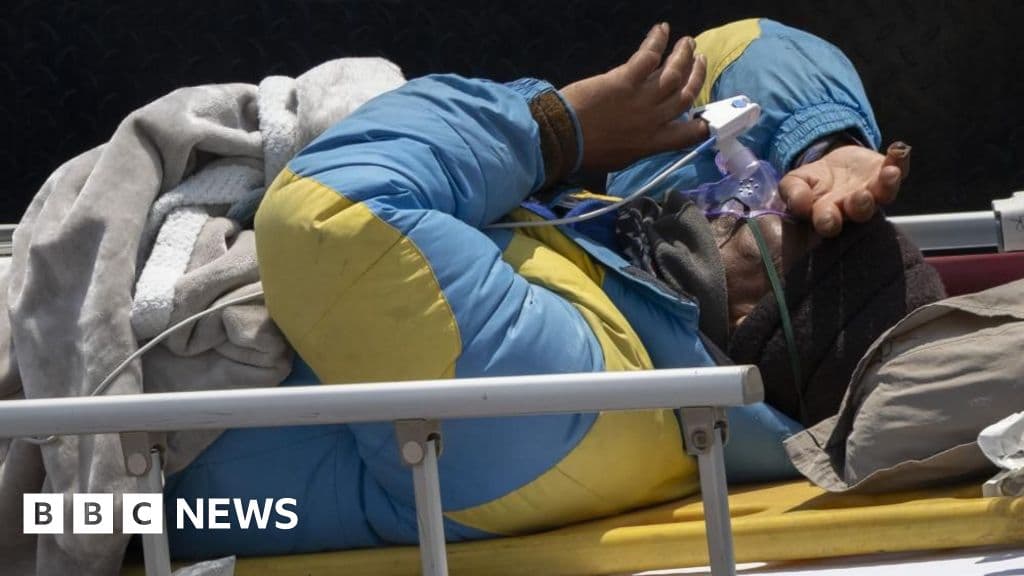
Climber Chris Thrall shares his emotional story of losing guide Dawa Sherpa on Everest, who survived six days alone.

Mogadishu clashes intensify as Somalia faces a political crisis over election tensions.

US officials tackle flesh-eating screwworm outbreak using flies and sniffer dogs.

Barnaby Joyce has retracted his statement about One Nation's housing policy, clarifying that permanent residents will not be forced to leave their homes. Instead, the policy targets foreign owners, requiring them to sell properties within two years.

In a second break with Trump, the House passes a bill to aid Ukraine and sanction Russia.
See every story in News — including breaking news and analysis.
With Qatar largely out of the picture, there's a global shortage of natural gas. That leaves an opening for the world's largest LNG exporter, the U.S.
Last month, the heads of U.S. LNG companies gathered for a reception at CERAWeek by S&P Global, an annual industry conference in Houston.
Mood lights made everyone look blue. But no one looked like they were feeling blue. With drinks flowing and a jazz band playing, the mood was celebratory.
"We have a shortage of natural gas," U.S. Secretary of Energy Chris Wright told the crowd. "Where is that natural gas gonna come from? It's gonna come from continued ramps, continued investments to grow United States LNG exports."

In the center left of the frame, U.S. Secretary of Energy Chris Wright speaks with Cheniere Energy chief executive Jack Fusco. They attended an event celebrating U.S. LNG at CERAWeek by S&P Global, an annual industry conference in Houston in March. Julia Simon/NPR
Julia Simon/NPR
In recent weeks, LNG company executives have framed the U.S. as a reliable supplier in an unstable world. In a panel discussion at CERAWeek, Anatol Feygin, chief commercial officer of U.S. LNG giant Cheniere Energy, called the sudden shortage of LNG from the Strait of Hormuz a "guillotine issue."
The U.S. set a record for LNG exports in March, but the U.S. only has so much capacity for production and exports. Making LNG requires cooling natural gas to negative 260 degrees Fahrenheit so it becomes liquid, and then transporting it on huge ships. There currently aren't enough gas pipelines or LNG terminals in the U.S., so ramping up LNG exports will take time.
But several new LNG projects are under construction in the U.S. In late March, Cheniere completed a new part of its terminal near Corpus Christi, Texas, to add more export capacity. The U.S. LNG supply is forecast to grow by about 84% over the next five years, according to figures from S&P Global Energy.
"U.S. LNG," Feygin said, "continues to rise to the challenge of meeting market disruptions and the tragedy of war."
The recent market disruptions have been good for the U.S. LNG business, says Ira Joseph, international natural gas expert at Columbia University. He notes that U.S. producers have been buying natural gas to make the LNG they export at around $3 per million British thermal units (MMBtu)—that's the unit LNG is priced in. But, because of the war, in recent weeks those companies have been able to sell that LNG for around $20 per MMBtu in Asia and Europe.
"So that spread provides a huge influx of cash for all of these companies," Joseph says.
Natural gas prices in Asia and Europe are lower than they've been in recent weeks, but they still are much higher than when the war began.
This windfall in profits is giving U.S. LNG companies momentum, Joseph says. "It certainly is good for them when they go to the banks and say, 'We would like to expand.'"

Cheniere Energy one of a number of U.S. LNG companies working to expand operations. The U.S. LNG supply is forecast to grow by about 84% over the next five years, according to figures from S&P Global Energy. Brandon Bell/Getty Images North America
Brandon Bell/Getty Images North America
"They're saying, 'Look, Qatar, they may say they're secure. They may say they're reliable. But we actually are secure,'" Joseph says.
Since the war began, Cheniere's stock price has risen about 10%. Woodside Energy, an Australian company with many LNG projects, including in the U.S., has seen its stock price rise about 20% in that period. American LNG company Venture Global has seen its stock price rise about 30% since the war began.
Venture Global recently closed on $8.6 billion of financing for phase 2 of an LNG project in Louisiana that is slated to start delivering gas next year.
"During a time of great global uncertainty driven by the ongoing conflict in the Middle East, the United States—and its liquefied natural gas (LNG) exporters like Venture Global —continues to play a vital role in supporting energy security for allies around the world," Jess Szymanski, a spokesperson with Venture Global, wrote in an email to NPR.
At the LNG reception in Houston, chief executives from competing LNG companies based in the U.S., such as Cheniere and Freeport LNG, schmoozed in a VIP section cordoned off with a red velvet rope.
But the party may not last. In one CERAWeek panel, Mark Abbotsford, chief commercial officer at Woodside Energy, warned if natural prices remain too high for too long, that could potentially lead to "demand destruction." That means switching away from natural gas to cheaper energy alternatives.

The LNG industry is seeing growing competition from renewable energy combined with battery storage. Last year, Pakistan reduced its LNG imports, in part because of the growth of solar and batteries. Farooq Naeem/AFP via Getty Images
Farooq Naeem/AFP via Getty Images
"The reality is...if we think about the Goldilocks of LNG pricing where it's not too hot and too cold – the pricing levels at the moment are going to result in demand destruction," Abbotsford said to the panel.
"We will see developing economies switching towards coal," he added.
In the wake of recent LNG price hikes and shortages, the Philippines, Vietnam and Thailand are boosting coal use. Coal releases more planet-heating carbon dioxide than LNG when burned.
The LNG supply chain also releases planet-heating methane, which is more heat trapping than carbon dioxide over a 20-year time frame, says Daniel Zimmerle, director of the Methane Emissions Program at Colorado State University.
But it's not just coal. The LNG industry is seeing growing competition from renewable energy combined with batteries. Last year, Pakistan reduced its LNG imports, in part because of the country's rapid growth of solar and batteries.
"There could be many future 'Pakistans' out there," Joseph says. He says those include Bangladesh, Vietnam and Thailand, which are investing heavily in renewable energy and battery storage.

