
Martin Scorsese gets backlash after endorsing 'creatively freeing' AI
BBC News

The ongoing conflict in the Gulf involves the US, Israel, and Iran, each facing unique political deadlines. The US's rapid diplomatic approach under Trump has led to a war of attrition, with Iran gaining leverage over the global economy.
Mentioned in this story
In every conflict, the calendar is as consequential as the cannon. The war that has consumed the Gulf between the United States, Israel and Iran is no exception. Beyond their primary adversaries, each of the three protagonists is battling time. Each is operating on a different political clock, facing a unique and potentially lethal deadline.
In January 2025, Donald Trump returned to office with a philosophy of rapid-fire diplomacy, prioritising the art of the deal over the machinery of war. He dispatched Steve Witkoff to Oman and set a 60-day deadline. He genuinely believed that a sharp, decisive shock to Iran’s leadership would produce regime collapse within days, an expectation apparently reinforced by the Mossad and Netanyahu. It did not.
When that quick victory failed to materialise, the US found itself in a war of attrition in which time is on Iran’s side. Professor John Mearsheimer of the University of Chicago was blunt: “Trump committed a colossal blunder.” The problem is structural: Iran holds substantial leverage over the global economy through the Strait of Hormuz and its continued ability to penetrate Gulf states’ and Israeli air defences, leaving the US with no clear exit strategy.
The domestic political cost is already severe. US crude oil jumped past $90 per barrel, up from $67 the day before the war broke out. Inflation climbed at an annual rate of 3.3 percent in March, with gasoline prices rising 21.2 percent, while higher energy costs accounted for nearly three-quarters of the monthly rise in the consumer price index.
Trump’s approval rating on the economy has hit an all-time low of 29 percent, and even 40 percent of Republicans now disapprove of his handling of inflation and rising prices.
The president is in a precarious political position, seven months before the midterm elections, facing his lowest approval ratings and presiding over an unpopular war. Even if the conflict ends soon, voters could still be grappling with pain at the petrol pump deep into the election season, as Republicans struggle to defend razor-thin majorities in Congress.
The cruel irony is that the man who promised to bring prices down may have personally ignited the biggest energy shock in a generation. “All the issues that brought down Joe Biden are now threatening to bring down Trump and Republicans in the midterm,” warned one Republican strategist.
Iran’s calculus is equally time-sensitive, but inverted. Where Trump needs a quick exit, Tehran’s survival strategy depends on endurance. The war, which began on February 28, 2026, inflicted enormous damage on Iran: The killing of Supreme Leader Ali Khamenei and senior military officials, strikes on nuclear infrastructure and a devastating economic shock. Yet the regime has not collapsed.
The midterm clock refers to the political timeline influencing US actions in the Iran war, particularly under Trump's administration, which aims for quick diplomatic resolutions.
The conflict has caused US crude oil prices to surge past $90 per barrel and contributed to a significant rise in inflation, particularly in gasoline prices.
Iran's control over the Strait of Hormuz gives it substantial influence over global oil supply, complicating the US's military and diplomatic strategies.
Trump's strategy involved a rapid diplomatic approach aimed at regime collapse within days, but it failed due to underestimating Iran's resilience and strategic positioning.

The debate on whether AI drones should have the authority to kill intensifies.

Exploring the rise of kidnappings and police extortion in Mexico.

Trump administration seeks to control science funding through new rules
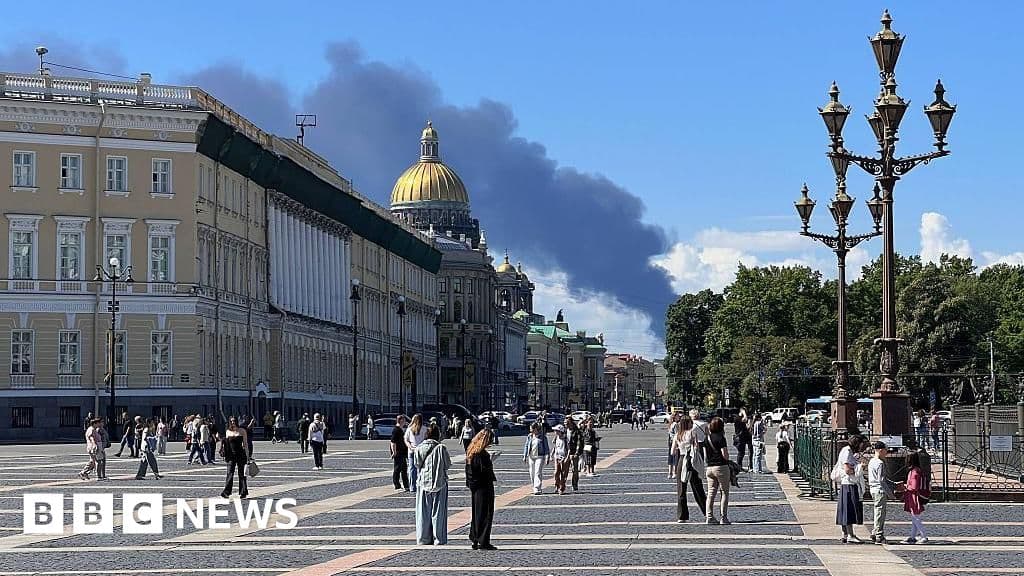
Ukrainian drones hit St Petersburg as Putin's economic forum begins

Trump claims Iran won't pursue nuclear weapons; Khamenei involved in US talks.
See every story in News — including breaking news and analysis.
Mearsheimer argued that Iran’s vast landmass and dispersed military assets made it difficult to weaken decisively through rapid strikes and that even sustained military operations would be unlikely to dismantle its capabilities. Iran retains significant deterrent capacity, including missile systems and a network of regional allies, enabling it to sustain a prolonged confrontation.
Jeffrey Sachs, the Columbia University economist and a sharp critic of the war, argued that the conflict was strategically illiterate from the start. Trump, he says, “ripped up the agreement that already existed” to limit Iran’s nuclear programme. He then killed the Iranian religious leader who had long declared nuclear weapons contrary to Islamic law, before presiding over what is now a regional war.
Iran is holding burning coal. The pain is unbearable, but the hand has not let go. Tehran’s strategy is to absorb punishment long enough for Washington’s domestic clock to run out. Should oil prices hover above $100 and eventually hit $150, Trump’s deal-making power could evaporate as his domestic support crumbles under the weight of rising energy costs.
Sachs warned that a sustained closure of the Strait of Hormuz would trigger an unprecedented energy shock, as the strait carries approximately one-fifth of all oil traded globally and 30 percent of the world’s LNG.
Israel’s temporal interests are the mirror image of Washington’s. Netanyahu, facing domestic legal proceedings and elections in a few months, has every incentive to keep the conflict going indefinitely. War marginalises critics, rallies the electorate around the flag and, crucially, creates political cover to pursue longstanding ambitions in Lebanon and beyond. Even after a US-Iran ceasefire was announced, Netanyahu’s office was explicit: The truce “does not include Lebanon”.
Gideon Levy, the veteran Haaretz columnist and one of Israel’s most relentless domestic critics, has long maintained that militarism is not merely a political tool for Netanyahu, but his defining worldview. “War is always the first option, not the last one in Israel,” Levy told Chris Hedges, pointing to a political culture that consistently defaults to military solutions while sidelining diplomacy.
Inside Israel, Levy observed, “there is no room for any question marks or doubts about this war.” War fever has gripped Israel, with polls showing overwhelming support among the Jewish public.
Former Israeli peace negotiator Daniel Levy provided a sobering assessment of Netanyahu’s long-term strategy: A drive for regional hegemony and expanded dominion. Netanyahu appears to be operating under a “use it or lose it” logic. Netanyahu appears willing to secure this hard-power status even if it hastens the US’s decline and erodes Israel’s traditional support base there.
What makes this conflict so explosive is that the three protagonists are operating on conflicting timelines. Trump needs a resolution before November. Iran needs to outlast him until November. Netanyahu needs the war to continue for as long as possible, or at least long enough to redraw the map of Lebanon, neutralise Hezbollah and enter elections wrapped in the flag.
Mearsheimer, assessing the outcome with characteristic directness, argued that Iran had won the war by surviving the initial assault, avoiding regime collapse and retaining enough military capacity to force Washington to look for an off-ramp. He argued that the final settlement would reflect that reality. Sachs went further, arguing that while Trump was publicly claiming Iran was desperate for a ceasefire, it was the White House that appeared increasingly eager for an off-ramp.
In the end, time may prove to be the only actor in this conflict that cannot be bombed, sanctioned or deceived. The architecture of the “morning after” will be shaped by those who grasp this logic and possess the domestic political capital to endure its consequences. On current evidence, Washington is the only capital where the clock is running out.
The views expressed in this article are the author’s own and do not necessarily reflect Al Jazeera’s editorial stance.