
‘Quieter and cleaner’: Sydney to trial electric ferry after two-year delay, with new fish market route slated for 2029
Sydney's electric ferry trial set for 2028, aiming for cleaner transport
The Guardian World1 min read
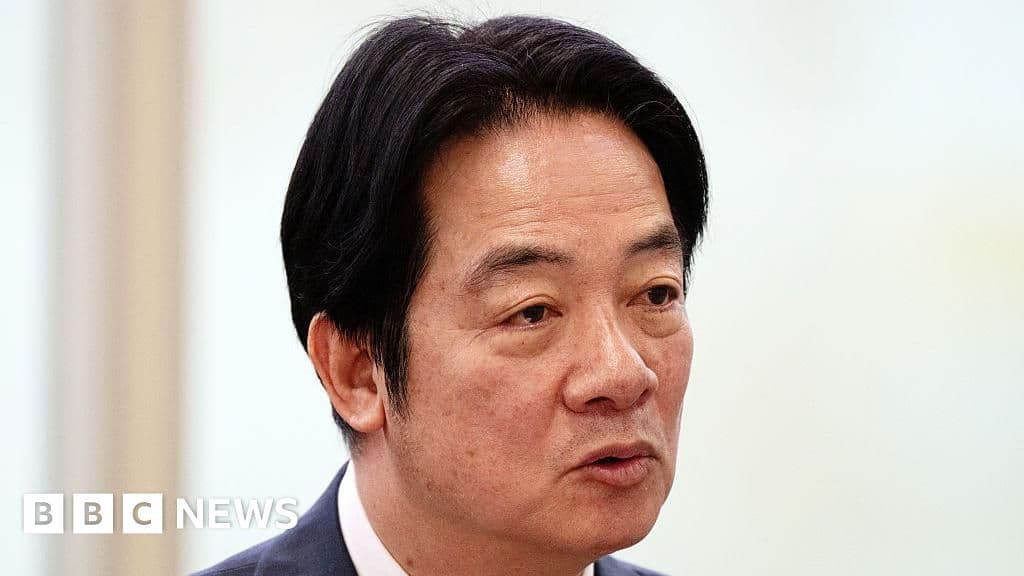
Taiwan's President Lai Ching-te affirmed that Taiwan will not provoke conflict and will maintain its sovereignty. This statement follows a summit between Donald Trump and Xi Jinping, where Taiwan's independence was a key topic.
Mentioned in this story
Taiwan will not provoke any conflict but will also not give up its sovereignty, said its president Lai Ching-te after a high-stakes summit between Donald Trump and Xi Jinping where they discussed the issue of Taiwan's independence.
According to Chinese state media, Xi had told Trump that Taiwan, a self-governed island claimed by Beijing, was "the most important issue" in bilateral ties and mishandling it could lead to conflict.
After his visit to Beijing, Trump issued a warning to Taiwan, telling Fox News: "I'm not looking to have somebody go independent."
The US is a longstanding ally of Taiwan and is bound by law to provide the island with the means to defend itself.
During his interview, Trump said that US policy on Taiwan had not changed, while making it clear he did not seek conflict with Beijing.
Trump also told reporters Xi had felt "very strongly" about Taiwan but Trump had "made no commitment either way".
Under Lai and his predecessor Tsai Ing-wen, the Taiwanese government has for years maintained that there is no need to formally declare independence because it already considers Taiwan as a sovereign nation.
Lai reiterated this stance in his Facebook post, which was his first direct response to the summit, saying "there is no 'Taiwan independence' issue".
"Taiwan, the Republic of China, is a sovereign and independent democratic country," he wrote, adding that "Taiwan's future must follow the will of all the Taiwanese people."
Most people in Taiwan consider themselves a sovereign nation. But many also favour keeping the "status quo" in cross-strait relations: neither unifying with China nor formally declaring independence.
Beijing has been vocal in its dislike of Lai, who it has described as a "troublemaker" and "destroyer of cross-strait peace".
Lai wrote on Facebook that "Taiwan will not provoke, will not escalate conflict, but will not under pressure give up national sovereignty and dignity, as well as the democratic and free way of life".
"Taiwan has always been a firm defender of the status quo on both sides of the Strait, not a party to change it," he wrote.
He also said that that Taiwan was willing to "promote healthy and orderly exchanges and dialogue with China on the premise of equality and dignity", but it rejects China's attempt at using "unification" as a cover to coerce Taiwan into dialogue.
Earlier, the presidential spokesperson had said it was "self-evident" that Taiwan was "a sovereign, independent democratic country", while adding that they were committed to maintaining the status quo.
Beijing has emphasised it wants "peaceful reunification" with Taiwan, but it has not ruled out the use of force to take the island.
President Lai Ching-te stated that Taiwan will not provoke conflict and will not give up its sovereignty.
The summit focused on Taiwan's independence, with Xi Jinping emphasizing it as the most important issue in US-China relations.
Trump warned Taiwan by stating he is not looking for anyone to pursue independence.
US law mandates that the United States provide Taiwan with the means to defend itself as a longstanding ally.
Sydney's electric ferry trial set for 2028, aiming for cleaner transport

The UK’s suspension of refugee family reunions has left hundreds of children at risk of separation from their families each month, according to the British Red Cross. Estimates suggest that between 550 and 1,360 children could remain separated monthly due to this policy.

Xi Jinping welcomes Putin to China, following Trump's recent summit.
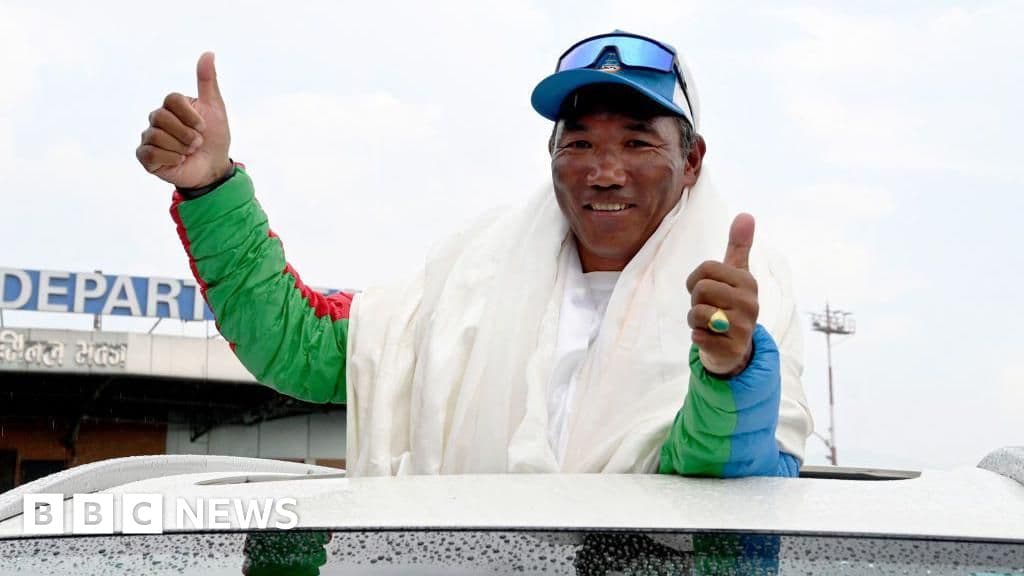
Kami Rita Sherpa and Lakpa Sherpa set new records on Everest!

Neo-Nazi group National Socialist Network fights hate ban, citing tyranny concerns.

Patrick Bruel protests innocence amid multiple sexual assault allegations
See every story in News — including breaking news and analysis.
For decades the US has sold weapons to Taiwan, under the Taiwan Relations Act, so the island could defend itself in the case of an attack. Today the US remains Taiwan's most powerful ally and largest arms supplier.
In December, the Trump administration approved $11bn (£8bn) in arms sales to Taiwan - one of the largest ever.
The move drew ire from Beijing, which has in recent years ramped up pressure over Taiwan with regular military drills - including blockade simulations - around the island.
Trump told reporters on Air Force One, after departing Beijing, that he would decide if that sale would go ahead, adding that he and Xi had discussed it "in great detail".
Since 1982 the US has assured Taiwan that it would not consult Beijing on arms sales to Taiwan. But when asked about that commitment as he flew back from Beijing on Friday, Trump said the 1980s was a "long way".
On Sunday, Lai thanked Trump for his "continued support" for peace in the Taiwan Strait, as well as the increase in arms sales to Taiwan.
"Given that China has never given up the use of force to annex Taiwan and continues to expand its military power to try to change the regional and cross-strait status quo, America's continued sale arms to Taiwan and deeper US-Taiwan security cooperation is necessary and a key factor in maintaining regional peace and stability," Lai wrote.