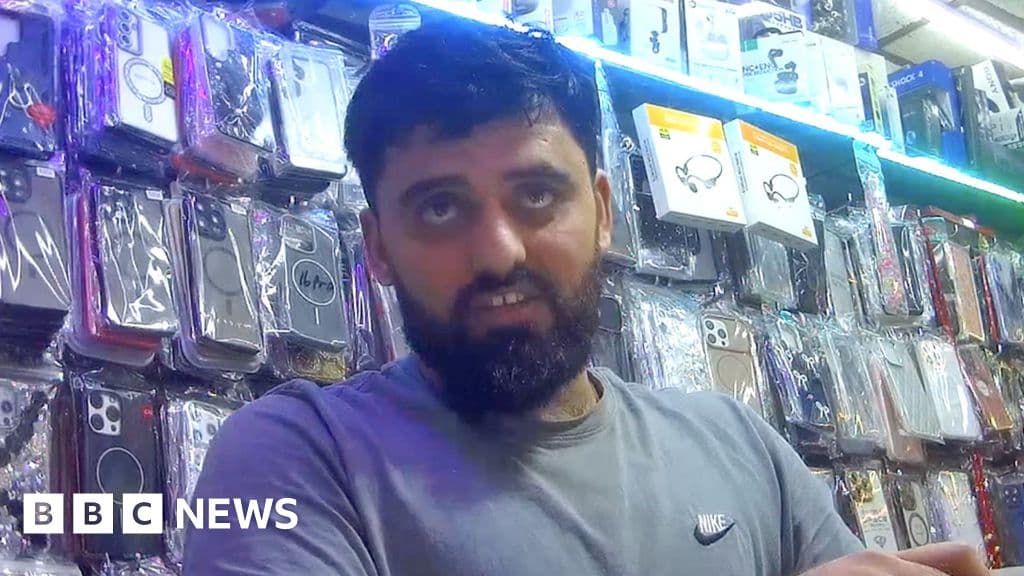
UK-registered firms linked to payments for small-boat crossings, BBC finds
BBC investigation reveals UK businesses facilitating payments for illegal Channel crossings.
BBC News1 min read

The UK’s suspension of refugee family reunions has left hundreds of children at risk of separation from their families each month, according to the British Red Cross. Estimates suggest that between 550 and 1,360 children could remain separated monthly due to this policy.
Mentioned in this story
Hundreds of children every month face being separated from their families since the UK suspended refugee family reunion last September, according to analysis by the British Red Cross.
Based on examination of Home Office data of family reunion grants previously made, the charity estimates between 550 and 1,360 children could remain separated from their families for every month that refugee family reunion suspension continues. Of these, between 180 and 430 each month are likely to be unaccompanied minors.
The data has emerged days after a high court challenge to the suspension, which was heard last week. The case against the Home Office was brought by several refugees who have family members stranded in dangerous parts of the world because of the suspension, along with the charity Safe Passage.
The court heard that last year, the then home secretary, Yvette Cooper, wanted to announce a tough new policy on refugees as part of the government’s push to stop small boats crossing the Channel.
Ministers were looking for evidence to “strengthen the argument” that the arrival of refugee families was placing too heavy a burden on local authorities. In fact, internal government documents disclosed as part of the case warned that the options presented could actually “encourage small boat journeys”.
A written submission to the court on behalf of the home secretary states that the arrival of an increasing number of refugee families imposes a significant burden on the scarce resources of local authorities. It adds: “The suspension was therefore an entirely reasonable and rational response to the ongoing impact on public resources.”
Raza Husain KC, for two of the refugees challenging the suspension of the policy, described the decision to suspend it as “chaotic” and “rushed”. Since the suspension began, the British Red Cross has been contacted by 1,160 families left separated.
Those they are supporting include women and children left in dangerous situations. Only four days’ notice was given before the suspension – leaving many families in a state of panic as they tried to submit applications before the deadline.
People the charity supports are fleeing conflicts and humanitarian disasters all over the world, including in Afghanistan, Sudan, Yemen and Eritrea. The dangers they face when left behind include threats of persecution and violence. Women and girls are at particular risk of gender-based violence.
Mubeen Bhutta, the director of policy and advocacy for the British Red Cross, said: “It is vital to recognise the traumatic circumstances that force refugee families apart. Many flee war, persecution and violence, with no money or means of contacting their loved ones. People we support tell us they cannot begin to rebuild their lives until their children and family members are safely reunited with them.
The British Red Cross estimates that between 550 and 1,360 children are affected each month by the UK's suspension of refugee family reunions.
Between 180 and 430 unaccompanied minors are likely to remain separated from their families each month due to the suspension.
A high court challenge was brought against the Home Office by several refugees and the charity Safe Passage, arguing that the suspension has left families stranded in dangerous areas.
The suspension was part of a government push to implement tougher refugee policies, with concerns that family reunions were placing a burden on local authorities.
BBC investigation reveals UK businesses facilitating payments for illegal Channel crossings.

Residents near RAF Lakenheath notice signal drops during US military activity.

The UK’s next ambassador to Japan, Corin Robertson, may be called to testify regarding Peter Mandelson's security clearance decision. This inquiry is part of a broader investigation into Mandelson's appointment as ambassador to the US.

Survey shows two-thirds of NHS nurses believe understaffing endangers patients.

Sydney's electric ferry trial set for 2028, aiming for cleaner transport

Xi Jinping welcomes Putin to China, following Trump's recent summit.
See every story in News — including breaking news and analysis.
“Family reunion is one of the only safe ways for many children to be reunited with their parents, without having to take dangerous journeys. Without it, they can be trapped in unimaginable situations, alone. We urge the government to reinstate the scheme as soon as possible and ensure any new requirements are fair, achievable and compassionate.”
A Home Office spokesperson said: “Under this government’s reforms to create a fairer asylum system, family reunion will no longer be automatic. Those seeking to bring family members to the UK will need to meet stricter criteria going forward.
“Other routes will be available for eligible individuals to apply to reunite with family.”