
Barclays to buy GoHenry kids’ debit card and money app
Barclays is buying GoHenry, a kids' debit card app, to target young users.
The Guardian World1 min read

A planned displacement centre in Beirut's Karantina neighbourhood was cancelled due to public opposition, driven by sectarian fears and health concerns. The objections were notably led by the area's Christian population, who expressed worries about housing predominantly Shia Muslim displaced individuals.
Mentioned in this story
Beirut, Lebanon – In late March, a government-planned centre in Beirut’s Karantina neighbourhood for people displaced by Israel’s war was cancelled after a public outcry.
A number of politicians and protesters were opposed to setting up the centre, citing a number of reasons, including increased traffic to the area near Beirut’s port and health concerns. But there were also sectarian motivations with some of Karantina’s Christian population leading objections to housing the displaced, who are predominantly Shia Muslims, citing demographic concerns and using sectarian slogans reminiscent of language used during the 1975-1990 Lebanese Civil War.
A major source of tension is that Israel has targeted displaced Lebanese, leading many to fear that hosting their compatriots may bring increased danger to their own homes and families. There is also extreme polarisation over the war inside Lebanon. Supporters of Hezbollah, the Shia armed group that has been fighting Israel, say it avoided war for 15 months while Israel repeatedly violated a November 2024 ceasefire while its critics accuse it of giving Israel an excuse to invade by launching attacks on Israel on March 2, leading to the forced displacement of 1.2 million people.
As Israel’s war on Lebanon exacerbates disputes within Lebanon, some people are afraid the violence may push Lebanese communities into a confrontation or even civil war – even as a 10-day ceasefire is set to begin.
On March 2, Israel intensified its war on Lebanon for the second time in less than two years. After more than a year without responding to Israel’s continued attacks, Hezbollah fired rockets across the border after Iranian Supreme Leader Ali Khamenei was killed on the first day of the US-Israeli war on Iran on February 28.
Israel moved fast, pouring troops across the border and demolishing entire towns. Areas across southern Lebanon and Beirut have been devastated by air strikes, drone strikes and attacks from Israeli warships.
And as the war continues, so too does the fear that Israel is trying to reopen old wounds. The cancellation of the planned displacement centre in Karantina in particular is significant because of the area’s history during Lebanon’s Civil War.
Before the Civil War, Karantina, which gets its name from the French word for Quarantine, was one of Beirut’s poorer districts. It was home to a mix of communities, including Christians and Sunni Muslims, but also Armenian, Kurdish, Syrian and Egyptian labourers, and many from southern Lebanon or the Bekaa Valley who had come to the capital seeking work.
The centre was cancelled due to public outcry, with opposition stemming from health concerns, increased traffic, and sectarian fears.
The tensions arise from the predominantly Christian population in Karantina fearing demographic changes and potential violence, reminiscent of the Lebanese Civil War.
Approximately 1.2 million people have been displaced as a result of the ongoing conflict.
The cancellation may exacerbate sectarian divides and fears of confrontation among Lebanese communities amid the ongoing violence.
Barclays is buying GoHenry, a kids' debit card app, to target young users.

Key FISA provision set to expire as Trump faces backlash over DNI appointment
Watford legend Kenny Jackett passes away at 64
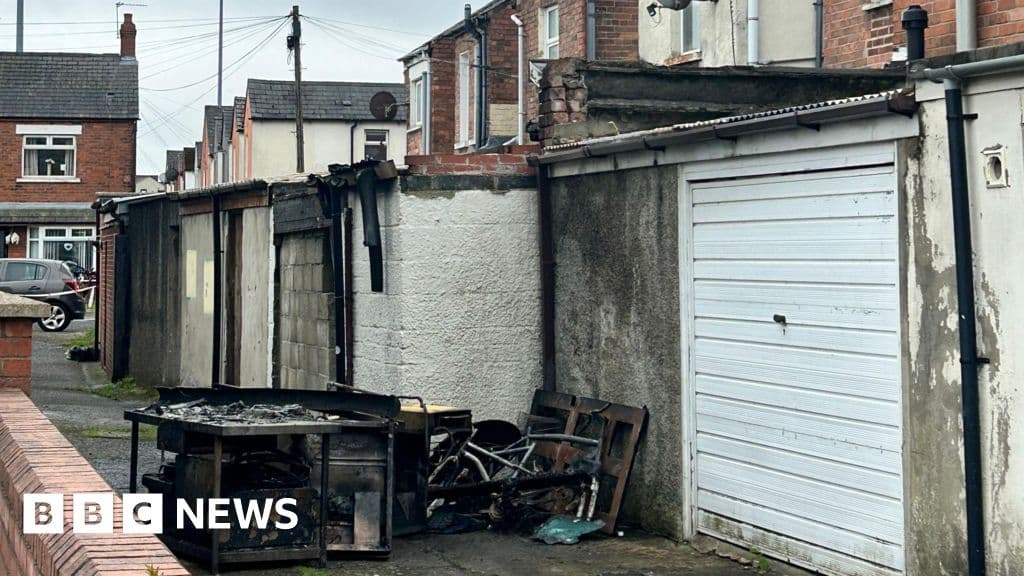
Nineteen people arrested, including a teen, after violence in Northern Ireland and an arson attack.

David Hockney, the iconic British artist known for his diverse work, has passed away at 88.

David Hockney, the revolutionary British artist, has passed away at 88.
See every story in News — including breaking news and analysis.
In the early days of the war, the right-wing Phalange movement waged a campaign to rid the area of Muslim communities that eventually culminated in the 1976 Karantina massacre. Diala Lteif, a research fellow at the Margaret Anstee Centre for Global Studies who is writing a book on Karantina, told Al Jazeera that the exact number of victims is still unknown but thought to be 1,000 to 3,000. Many of the victims who weren’t killed were expelled to areas in what became known during the war as the predominantly-Muslim West Beirut.
Sources familiar with the planned displacement centre, including an aid worker with an international charity who spoke on condition of anonymity, said the controversy over it was part of a campaign that started on social media and was then picked up by Lebanese media and right-wing Christian political parties.
The rhetoric currently being directed towards displaced people in Karantina, Lteif said, is reminiscent of the civil war. “This foundational logic that areas need to be segregated is the logic that motivated the [Karantina] massacre,” she said. “It is particularly fascinating how these right-wing forces bring this up as a danger when the real danger was them. They killed and displaced these people, not the other way around. But it brings back this trauma from this time.”
The civil war pitted communities against one another, and each committed massacres and had massacres committed against them. Today, Karantina is home to mostly Lebanese citizens from Christian and Sunni Muslim faiths. But the trauma of the war is still present among the population.
A further factor complicating matters is that many in Lebanon associate displaced populations from southern Lebanon and Beirut’s southern suburbs with Hezbollah. While support for the group is not universal among Shia Muslims, the party draws the vast majority of its support from that religious community. Hezbollah and its ally Amal also often claim to be the sole legitimate representatives of Lebanon’s Shia Muslims.
“The political sectarian system in Lebanon lends itself to that association [between Shia Muslims and Hezbollah] and [so does] the sectarian rhetoric of basically every single political party, not just Hezbollah, but all of them in Lebanon,” Lara Deeb, an anthropologist at Scripps College in Claremont, California, told Al Jazeera. “The problem then is that a lot of people don’t see the line between the political party or a political perspective and the person and the people, and it all kind of becomes blurred into one.”
The Disaster Risk Management Unit, which reports to the Lebanese prime minister’s office, told local media that the site of the displacement centre was being prepared as a precaution but there were no plans for it to be put in use.
Not far away from that site is another displacement centre in the same Karantina district. It has taken in about 1,000 displaced people from southern Lebanon, Beirut’s southern suburbs and the Bekaa Valley.
On Wednesday, children played football while adults sat on plastic chairs around the property and chatted. This site, run by a Lebanese charity called Offre Joie, first opened in 2024 to receive a number of displaced people who were sleeping in tents in downtown Beirut.
When war returned in 2026, many of those people also returned. Marie Daou, a volunteer with the charity, told Al Jazeera that the centre has had no problems with the local community. Some of the displaced also work with the charity to help manage themselves. Daou said the charity knows the identities of all the displaced and security forces closely monitor the centre’s data to make sure they know who is on site.
Daou said the centre has ample hot water and its residents get decent meals, which is better than many other centres around Beirut and the country. In some of those other locations, displaced people have found conditions so difficult that they decided to return to their homes in areas under blanket evacuation orders from the Israeli military. But Daou said that in the Offre Joie centre, no one has left despite more than 40 days of displacement and war.
Outside Daou’s office, Nadine, 30, corralled a group of children. She was displaced on March 2 from her home in Burj al-Barajneh in Beirut’s southern suburbs and came to the centre in Karantina with her five siblings. She wants to return to her home, she said, but if the war is prolonged, she has little other choice.
“For now, we’re staying here. You can’t go back there [to her home] because there is danger, but now, of course, nowhere is safe,” she said. “But some places are better than others. We’ll be patient. We’ll endure.”