
Dua Lipa and Callum Turner wedding divides Palermo: ‘I could understand if it was for the pope’
Dua Lipa and Callum Turner celebrate their wedding in Palermo, drawing mixed reactions from locals.
The Guardian World1 min read
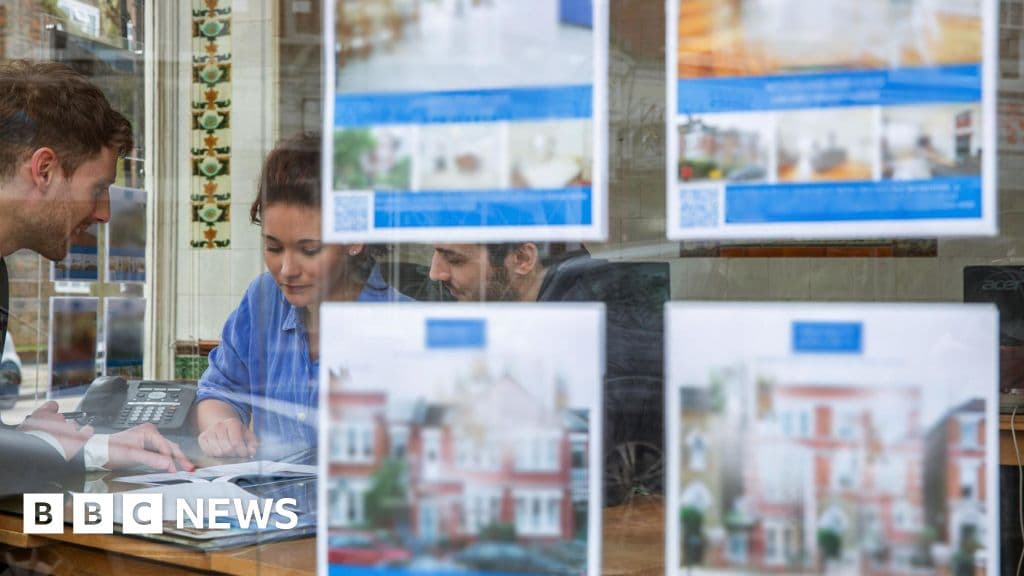
Major mortgage lenders are reducing rates on new deals, providing relief to first-time buyers affected by the economic fallout from the Iran war. Money markets are responding positively to hopes for a long-term truce, though the situation remains fragile.
Major mortgage lenders are making "meaningful" cuts to the rates on new deals, bringing some solace to first-time buyers hit by the economic impact of the Iran war.
Money markets are reacting to hopes of a long-term truce in the war so the recent rapid rise in borrowing costs has halted and is now starting to reverse.
Experts say there is some momentum in mortgage rate reductions, but the situation remains delicate with borrowers still exposed to the possibility of sudden shifts in mortgage costs.
First-time buyers say the change is a relief although the cost of buying a home remains painfully expensive for many at a time when other bills have risen.
Amy Worrell, 26, and her boyfriend Tommy Adeyemi, 30, are buying a first home together in Hertfordshire, having been saving hard for five years.
In the space of days, the mortgage rate they looked like getting rose sharply - but they now hope that could fall back before they finalise their move.
"It makes such a big difference," said Amy. "We've already had to extend our mortgage by five years to 40 years."
Both are in good jobs, still live at home to avoid high rents, have made sacrifices in their 20s to save money and are still finding it a huge stretch.
"Having a home shouldn't be a luxury," she said. "I worry about how someone working in a supermarket could get a home."
She drives to work as an assistant buildings manager five days a week, so is also contending with higher petrol prices caused by the war.
Official data from the Office for National Statistics showed that two-thirds (67%) of adults reported that their cost of living had increased in March, with fuel and food the key factors.
For borrowers, the interest rate on a fixed mortgage does not change until the deal expires, usually after two or five years, and a new one is chosen to replace it.
The last six weeks has been tough for anyone looking for a new deal, and for buyers getting a home loan for the first time. They would have budgeted for lower rates, and expectations of those rates potentially falling further, but that was upended by the economic impact of the Iran war.
When setting mortgage rates, lenders are heavily influenced by a financial market measure called "swap rates" which reflect the market's view of which direction the Bank of England's interest rates will go.
Hopes of an end to the war, or at least the temporary ceasefire, have eased fears of runaway inflation, lowered market expectations of Bank rate rises, so have led to lower swap rates.
In turn, lenders including Halifax, HSBC and Santander have lowered rates on new fixed mortgage deals.
Mortgage rates are showing signs of falling as major lenders make significant cuts, reversing the previous rapid rise in borrowing costs.
The Iran war initially caused a rapid increase in mortgage rates, but recent developments have led to a halt and potential decrease in those rates.
First-time buyers like Amy Worrell and Tommy Adeyemi are experiencing relief from the recent mortgage rate cuts, although home buying remains expensive.
Despite the reduction in mortgage rates, first-time home buyers still face high overall costs and financial pressures from rising bills.
Dua Lipa and Callum Turner celebrate their wedding in Palermo, drawing mixed reactions from locals.

New analysis reveals half of California's waterways are tainted with PFAS pesticides linked to health risks.

Senate passes a $70 billion immigration enforcement bill after 18 hours of debate.

Hamas refuses to surrender arms, stating only police will carry weapons in Gaza.

A 21-year-old man has been charged with attempted murder after a staff member was shot with a crossbow at the University of Surrey. The suspect, Almunthir Daqamah, is a former student and is due in court on Friday.

UN warns US-Iran war is pushing millions into hunger crisis
See every story in News — including breaking news and analysis.
"The price cuts are getting more momentum," said Aaron Strutt, of broker Trinity Financial. "These rate changes will come as a relief for many borrowers keen to get on the property ladder soon."
The average rate on a two-year fixed deal was 4.83% at the start of the conflict, but rose to a peak a week ago of 5.90%, according to financial information service Moneyfacts.
That has now dropped to 5.87%, with more lenders expected to follow recent rate cuts, potentially bringing it down further, albeit not to pre-war levels.
Adam French, from Moneyfacts, said the situation in the Middle East was crucial.
"Markets have welcomed the reported reopening of the Strait of Hormuz. This strengthens the view that mortgage pricing may have peaked," he said.
"However, recent volatility shows how quickly pricing can shift again."
Jo Jingree, from advice firm Mortgage Confidence, said: "Anyone who has secured a rate in the last week or two now may be able to improve on it.
"For anyone who has been waiting for reductions, now might be the time to secure a rate. Although there is a chance rate reductions will continue, the situation is far from stable and waiting further could be a risk."
Financial experts said that, with uncertainty still part of the picture, borrowers needed to build a financial buffer in case of future changes. Katrina Horstead, director of Versed Financial, suggested first-time buyers:
While there are about 1,000 fewer mortgage deals on the market than before the war, there are still thousands to choose from, and lenders are offering bigger loans than previously to new buyers.