

Met police chief calls for law to make stolen phones ‘unusable bricks’
Met police chief proposes law to make stolen phones 'unusable bricks'
The Guardian World1 min read

The U.S. and Iran are set to hold a second round of peace talks to end a nearly seven-week war, with Pakistani mediators arriving in Tehran for discussions.
Mentioned in this story

A woman walks past a large billboard referring to the Strait of Hormuz in Tehran's Vanak Square on April 15, 2026. AFP via Getty Images
AFP via Getty Images
Pakistan's foreign ministry said Thursday that the United States and Iran expected to host a second round of peace talks aimed at finding a permanent end to the nearly seven-week war in the Middle East, as a delegation of Pakistani mediators arrived in Tehran for talks with Iranian officials.
The negotiations aim to establish a permanent ceasefire after nearly seven weeks of conflict, with a second round of talks scheduled in Tehran.
A delegation of Pakistani mediators has arrived in Tehran to facilitate the peace talks between the United States and Iran.
The conflict has been ongoing for nearly seven weeks, prompting the current peace negotiations.
The Strait of Hormuz is a crucial maritime route for oil shipments, making it a significant point of interest in the U.S.-Iran conflict.
Met police chief proposes law to make stolen phones 'unusable bricks'
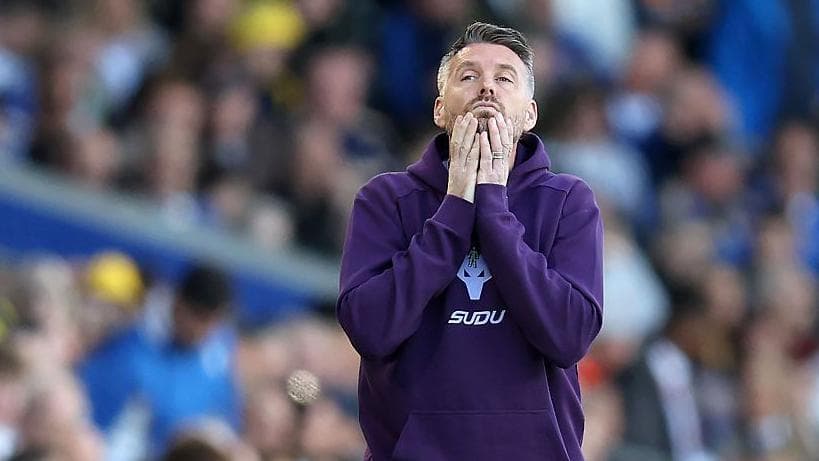
Wolves have sacked head coach Rob Edwards after just seven months.

Patrick Mahomes makes history with a $500m contract extension!

Three Indian sailors killed in US military strike on tanker in Gulf of Oman.
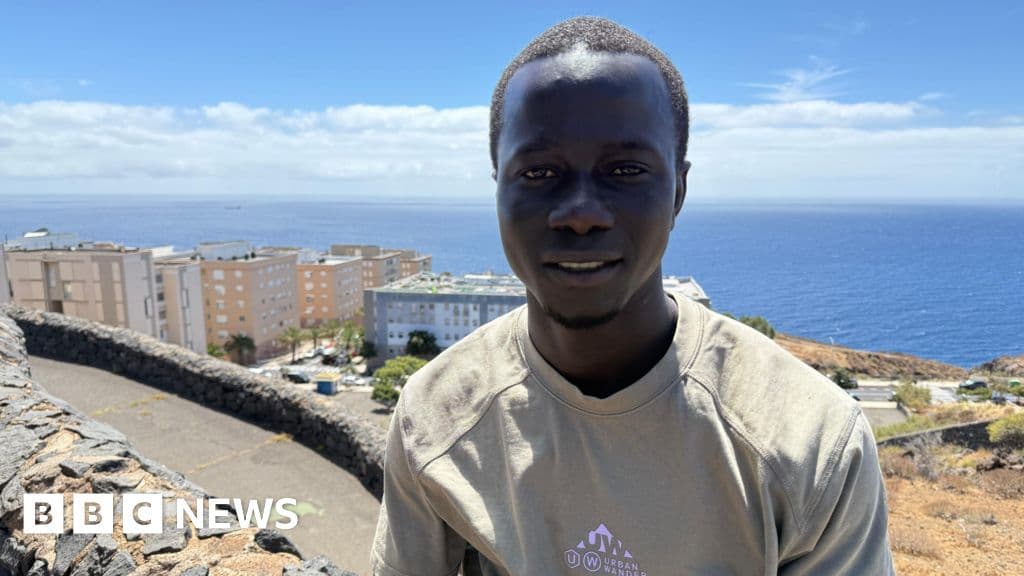
Pope Leo heads to the Canary Islands to highlight the dangers faced by migrants.
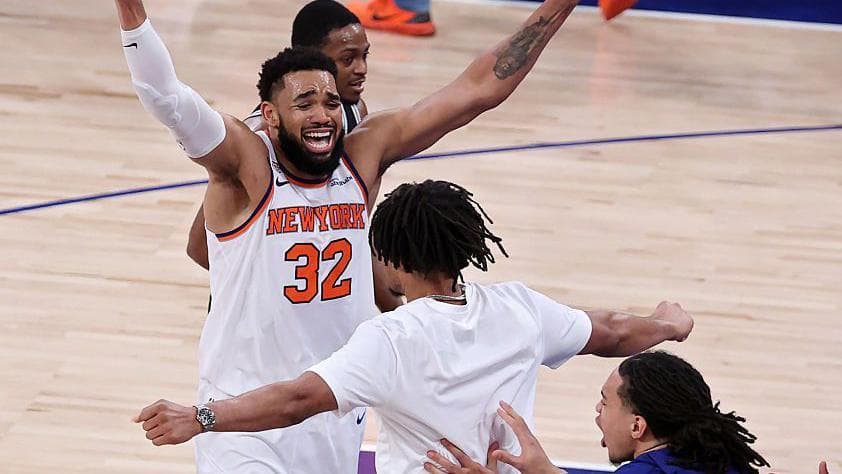
Barkley slams Spurs as the dumbest basketball team ever after Knicks' comeback
See every story in News — including breaking news and analysis.
Pakistani officials said Lebanon remained a part of the two-week ceasefire currently in place.
"Peace in Lebanon is essential for peace talks," Tahir Andrabi, a spokesperson for Pakistan's foreign ministry told Reuters.
Israel, however, continued operations in southern Lebanon Thursday, including an airstrike that destroyed the last bridge linking southern Lebanon to the rest of the country. The strikes resumed as President Trump announced that the two sides were "trying to get a little breathing room" between Israel and Lebanon" and that the leaders of the two countries were slated to speak on Thursday, for the first time in over three decades.
An Israeli official said Prime Minister Benjamin Netanyahu would speak with Lebanon's President Joseph Aoun Thursday, though Lebanon's presidency told NPR it did not have any information about such talks.
Here are more updates from the region:

Lebanese displaced woman Mariam Zein sits with her son inside the classroom of a school transformed into a displaced reception center in the area of Dekwaneh, east of Beirut on April 15, 2026. Joseph Eid/AFP via Getty Images
Joseph Eid/AFP via Getty Images
Pakistan's army chief, Asim Munir, a key mediator in talks between the U.S. and Iran, was in Iran's capital Tehran Thursday to secure a second round of U.S.-Iran negotiations ahead of April 22, the deadline of the tenuous two-week ceasefire.
Pakistan, which holds strong diplomatic relations with both the U.S. and Iran, has emerged as a key mediator in negotiations between the two countries.
White House press secretary Karoline Leavitt stressed the point on Wednesday, saying the Pakistanis "are the only mediator in this negotiation" and the president felt it's important to streamline the process through them.
Vice President JD Vance, Washington's lead negotiator, said a major sticking point that led to the breakdown in Saturday's talks was Iran's refusal to commit to abandoning its nuclear ambitions.

In this photo released by Telegram channel of the Iranian Foreign Minister Abbas Araghchi, Foreign Minister Abbas Araghchi, right, welcomes Pakistan's Army Chief Field Marshal Gen. Asim Munir upon his arrival in Tehran, Iran, Wednesday, April 15, 2026. AP/Telegram channel of the the Iranian Foreign Minister Abbas Araghchi.
AP/Telegram channel of the the Iranian Foreign Minister Abbas Araghchi.
"The simple fact is that we need to see an affirmative commitment that they will not seek a nuclear weapon, and they will not seek the tools that would enable them to quickly achieve a nuclear weapon," Vance said.
Iran, under its 10-point negotiation plan, demanded an end to Israel's attacks against the Iran-backed militant group Hezbollah as part of any permanent agreement. Other demands from the Iranian delegation included the release of $6 billion in frozen assets, guarantees around its nuclear program and the right to charge ships passing through the Strait of Hormuz.
An Israeli official said Prime Minister Netanyahu would speak with Lebanese President Joseph Aoun on Thursday, though Lebanon's presidency said it had no information about any such talks.
Gila Gamliel, a member of Israel's security cabinet, told Israeli Army Radio that the conversation would take place "after so many years of a total disconnect in the dialogue between the two states, and this move will hopefully, in the end, lead to prosperity."
The Lebanese newspaper Al-Modon reported that Aoun was expecting a call this afternoon from Secretary of State Marco Rubio, and that Netanyahu "may join him."
A spokesperson for the Lebanese president, however, told NPR they didn't have any information about the alleged talks.

An Israeli drone flies over the southern port city of Tyre, Lebanon, Wednesday, April 15, 2026. Hussein Malla/AP
Hussein Malla/AP
The conflicting statements came hours after President Donald Trump, in a post on Truth Social, said the two leaders would speak.
Trump's announcement followed a trilateral meeting between the United States, Israel and Lebanon on Tuesday, as both sides sought an off-ramp for the conflict between Israel and the Iran-backed Lebanese militant group Hezbollah.
Israel's continued attacks in Lebanon have posed an ongoing threat to the fragile truce, with Israel disputing that the agreement extended to its operations against Hezbollah. Iran and Pakistan insisted it did.
The talks marked the first direct exchanges between Israel and Lebanon since 1993. While there was no major breakthrough, representatives from both countries spoke positively about the more than two-hour meeting.
Rubio said the talks were about "bringing a permanent end to 20 or 30 years of Hezbollah's influence in this part of the world."
Despite the talks, fighting has continued between Hezbollah and Israel in Lebanon, where more than 2,100 people have been killed by Israeli strikes, according to Lebanese health officials. Hezbollah has also fired into Israel, killing at least 12 soldiers and two civilians, according to Israeli health authorities.
Fighting between Israel and Lebanon began just days after the start of the war with Iran on Feb. 28, when Hezbollah began firing rockets into northern Israel. Israel responded with airstrikes and an invasion of southern Lebanon, which has displaced more than 1 million people, according to Lebanese authorities.
The Lebanese government wants a ceasefire and withdrawal of Israeli troops from southern Lebanon. Israel has said it will not agree to it until Hezbollah disarms, a longstanding Israeli demand, which the Lebanese government has been unable to enforce in the past.
It is also unclear if Hezbollah, which is also a political party that holds significant power in Lebanon, would agree to a ceasefire.
Iran's military warned it will retaliate by blocking other important shipping routes if the US blockade of the Strait of Hormuz continues.
Major-General Ali Abdol-lahi, the commander of Iran's top military command center, renewed threats on Wednesday to halt all trade in the Persian Gulf, the Gulf of Oman and the Red Sea in retaliation for U.S. blockade of Iranian ports.

A man stands onshore with the Greek-flagged crude oil tanker "Asahi Princess" off the coast of the Syrian Baniyas port refinery, along the Mediterranean Sea on April 15, 2026. Bakr Alkasem/AFP via Getty Images
Bakr Alkasem/AFP via Getty Images
Of particular concern is Bab al Mandeb, a narrow waterway in the Red Sea for vessels sailing between Europe and Asia. Iranian-aligned Houthi militias in Yemen control much of the coastline near the Bab al Mandeb. Houthis disrupted shipping in that passage during the height of the Gaza war.
Another route that could be in jeopardy if Iran retaliates is a pipeline that Saudi Arabia has used just after the Iran war began on Feb. 28 to divert crude oil from the Persian Gulf to the Red Sea.
A top aide to Iran's supreme leader said Thursday Iran would sink U.S. ships if Trump tries to "police" the Strait of Hormuz and that he'd welcome a ground invasion as a chance to hold US soldiers hostage.
Mohsen Rezaee, a former commander in chief of Iran's Revolutionary Guard Corps, told the Iranian Fars news agency he is personally opposed to a ceasefire, and that Iran is prepared for a prolonged conflict with the United States.
Feelings are mixed among the Iranian public about the possibility of a ceasefire. Many say they welcome an end to the war, but critics of the regime say keeping a hardline government in place will lead to a harsher crackdown on dissent and personal freedoms.
In this voice note shared with NPR, a carpenter in the city of Rasht, who spoke on condition of anonymity because he fears for his safety, said he thinks it's a good sign that Iran has sat at the negotiating table at all. But many, he says — are fed up with and how long the process has taken. It makes people's hopelessness even worse, he said.