
Trump cancels further Iran strikes. And, U.S. men's soccer takes on Paraguay
Trump cancels planned strikes on Iran, hints at peace deal.
NPR Topics: News1 min read

Kevin Warsh is viewed as a strong candidate to chair the Federal Reserve, backed by Donald Trump. However, Trump's controversial stance on the Fed and ongoing investigations may complicate Warsh's nomination hearing.
Mentioned in this story
On the face of it, Kevin Warsh looks like an ideal candidate to chair the Federal Reserve, the world’s most important central bank. The 56-year-old Ivy League economist, former Wall Street banker and presidential adviser ticks all the boxes. Unfortunately for Warsh, as he faces what could be a fraught nomination hearing, his biggest backer is also his biggest liability.
In his second term, Donald Trump has attacked the Fed in a manner both unprecedented and unseemly. He has called current chair Jerome Powell – whom he also appointed – a “jerk”, “a stubborn MORON”, and repeatedly threatened to fire him.
The tension comes from Trump’s desire for lower interest rates. The problem: the president can’t set interest rates.
But Trump thinks he’s found a saving grace in Warsh. Warsh is set to appear in front of the Senate’s banking committee for his nomination hearing on Tuesday morning, where he is expected to be grilled by Democrats and Republicans alike.
The hearing comes at a tumultuous time for the central bank. Trump’s campaign against Powell, whose term ends on 15 May, has led to a criminal investigation of his handling of renovations at the central bank’s headquarters. At least one Republican senator said he will try to block Warsh’s nomination until the investigation is dropped.
Should he be appointed, Warsh will hold one of the most powerful roles in the US government with great influence over the US economy. Here’s what we know about him.
Warsh’s career as an economist started in his undergraduate days at Stanford, where he studied under economist Milton Friedman, best known for providing the intellectual foundation for the era of free-market shareholder capitalism that took off in the 1970s.
“He had a huge effect on not just me, but generations of students that followed,” Warsh said in an interview, adding that he was “blessed” to study under the economist.
Warsh's nomination could influence interest rate policies, especially given Trump's push for lower rates, but it faces significant political challenges.
Trump's attacks on Powell have created tension within the Fed and led to a criminal investigation into Powell's actions, impacting the central bank's operations.
Kevin Warsh's nomination hearing is scheduled for Tuesday morning before the Senate's banking committee.
Warsh is expected to face tough questioning from both Democrats and Republicans, particularly regarding the ongoing investigation into Jerome Powell.
Trump cancels planned strikes on Iran, hints at peace deal.

Barclays is buying GoHenry, a kids' debit card app, to target young users.

Key FISA provision set to expire as Trump faces backlash over DNI appointment
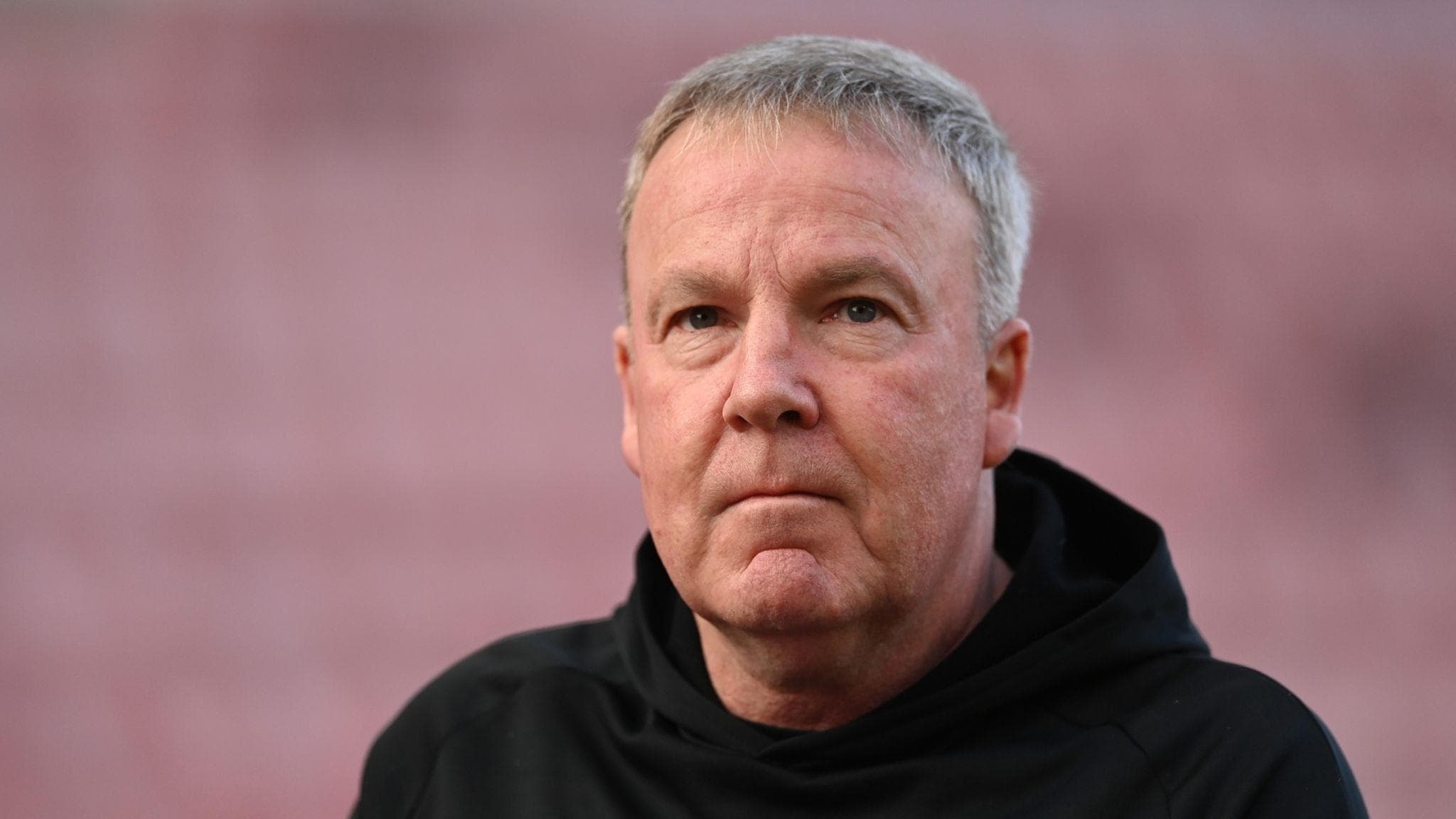
Watford legend Kenny Jackett passes away at 64

Will Iraq's Prime Minister Ali al-Zaidi succeed in disarming paramilitary groups?

Nineteen people arrested, including a teen, after violence in Northern Ireland and an arson attack.
See every story in News — including breaking news and analysis.
Warsh went on to get a law degree from Harvard before starting a career in financial services, working in mergers and acquisitions at Morgan Stanley.
In 2002, he left his Wall Street job to become an economic policy advisor under George W Bush and the executive secretary of the National Economic Council.
Warsh in 2002 married Jane Lauder, the granddaughter of Estée Lauder whose eponymous cosmetics company made the family billions.
Bush appointed Warsh, 35 at the time, to the bank’s board of governors in 2006. As the 2008 financial crisis unfolded, Warsh helped broker the sale of Bear Stearns, the investment firm whose fall ushered in the financial crisis, to JPMorgan Chase.
He also developed a reputation as an “inflation hawk”, a nickname given to economists who staunchly believe in raising interest rates to combat high inflation, even at the risk of higher unemployment.
As a Fed governor, Warsh made it clear that he sees the Fed’s role as one that deals exclusively with monetary policy and cautioned against the central bank slipping into “fiscal” territory – tax and spending decisions usually taken by the government.
“The Fed, as a first-responder, must strongly resist the temptation to be the ultimate rescuer. No matter the congressional calendar or the pleadings of the elected,” Warsh said in a 2010 speech. “The Fed’s credibility is severely undermined if it is perceived to wander from its mission into areas more appropriately handled by other parts of the government.”
Though he was appointed for a 14-year term, Warsh left his post on the board in 2011, partly due to disagreements over the Fed’s post-financial crisis stimulus package.
Since leaving the Fed’s board, Warsh has served as a lecturer at Stanford Graduate School of Business Hoover Institution and as an adviser to billionaire investor Stanley Druckenmiller.
Economists largely agree that an independent central bank is key to having a stable economy. But while previous presidents refrained from publicly criticizing the Fed to respect the central bank’s independence from politics, Trump has treated Fed like a political enemy and made clear what decisions he believed it should take.
Trump has praised Warsh since he was appointed in January, saying that Warsh will deliver the interest rate cuts he’s been wanting since he started his second term.
“You think [interest rates] will go lower this year?” Fox Business’s Maria Bartiromo asked Trump in an interview released last week.
“When Kevin gets in, I do, yeah,” the president said.
Earlier, Trump said that he made a “really big mistake” by appointing Powell in 2018 instead of Warsh, who reportedly interviewed for the job at the time, but was ultimately turned away.
“I have known Kevin for a long period of time and have no doubt that he will go down as one of the GREAT Fed Chairmen, maybe the best,” Trump said in January. “On top of everything else, he is ‘central casting’, and he will never let you down.”
Before his nomination, Warsh made it clear that he believed interest rates should be lowered, saying in a November Wall Street Journal op-ed that the central bank had “broken leadership” that was shirking the economic growth brought on by the surge of artificial intelligence.
“The world is moving faster, yet the Fed’s leaders are moving slower,” Warsh wrote. “They appear stuck in what Milton Friedman called ‘the tyranny of the status quo’.”
Though Warsh has Trump’s full support, his nomination has been caught between the battle between Trump and the central bank.
Thom Tillis, a Republican senator from North Carolina, said he supports Warsh’s nomination, but will block it until Trump’s justice department drops its criminal investigation into Powell.
Tillis’s block will help Democrats who are unified in their opposition to Warsh. Republicans have a narrow 13-11 majority in the Senate banking committee, meaning if Tillis blocks Warsh’s nomination, his confirmation will not advance to the full Senate for a vote.
Democrats indicated they also plan to go after Warsh’s financial disclosures, which they say have not met the transparency standards that were met by other Fed nominees. Documents released before his hearing revealed that Warsh has assets worth at least $100m, which would make him one of the wealthiest Fed chairs in recent history. Warsh disclosed the value of his assets but did not specify what holdings were in his largest investments, citing confidentiality agreements.
Trump said last week that he would fire Powell if the Senate does not confirm Warsh as Fed chair by 15 May, the end of Powell’s term. But it’s unclear if Trump will have the power to do so. Though the supreme court has given Trump broad executive powers in his second term, the court seemed skeptical about Trump’s firing of Fed governor Lisa Cook last summer, a case the court has yet to rule on.
Even if Warsh is eventually confirmed, he alone cannot deliver the rate cuts Trump has been asking for. Though Warsh will have the most visible role on the board, he will have to convince the other 11 board members to cut rates, even as the Iran war has thrown the US economy into chaos.