
US bombs Iran’s water facilities: Why that’s so significant
US bombs Iran's water facilities, escalating tensions amid severe water shortage.
Al Jazeera English1 min read

Kashmiri rights activist Khurram Parvez has been granted bail in a terror funding case but remains imprisoned due to a separate case. He has been in jail for nearly five years amid international condemnation.
Mentioned in this story
New Delhi, India — A prominent Kashmiri human rights activist who has been imprisoned for nearly five years has won a partial legal victory after being granted bail in a “terror funding” case, but remains in jail over a second case.
The Delhi High Court granted Khurram Parvez, 49, bail in a November 2021 case on Wednesday, according to legal website LiveLaw. However, he will remain in jail in a separate case from March 2023.
Parvez was first arrested about five years ago by India’s main counterterrorism law enforcement bureau, the National Investigation Agency (NIA), over accusations of “terror funding”, recruitment of rebels in Indian-administered Kashmir and mobilising protesters during a civilian uprising. The second case is also related to alleged “terror funding”.
International rights groups have widely condemned Parvez’s arrest and continued imprisonment.
His lawyer, Swati Khanna, said she hoped Parvez could be freed from jail soon if there was a “positive result” in the second case.
“We are hoping, in a month or two, he could be out,” she told reporters.
The trial has not begun in either of the cases – an issue highlighted by international rights organisations, which say the process becomes the punishment for political prisoners in India who have to wait years behind bars before even facing trial.
The conviction rate in the counterterror law, the Unlawful Activities Prevention Act (UAPA), remains low at 5 percent nationally. It dips further, to less than 1 percent, when it comes to Indian-administered Kashmir.
Prime Minister Narendra Modi’s Hindu nationalist government has been criticised for persecuting dissent and criminalising expression in Kashmir, the country’s only Muslim-majority region.

Kashmiris protest against the scrapping of the special constitutional status for Indian-administered Kashmir by the government, in Srinagar, September 26, 2019 [Danish Ismail/Reuters]
“Khurram’s arrest proved to be the last nail in the coffin of any meaningful rights activism in Kashmir, one of the world’s most militarised zones,” said a political analyst based in Srinagar, Kashmir, who requested anonymity fearing repercussions from the authorities.
“This bail comes in a completely shallow, and nearly fictitious, trumped-up case after years in jail, and Khurram would still not walk free.”
Kashmir remains disputed between India, Pakistan, and China, which control parts of the region. Pakistan controls the northern and western portions – Azad Kashmir; and Gilgit and Baltistan. India controls the southern and southeastern parts – the Kashmir valley, including its biggest city, Srinagar; Jammu; and Ladakh. China controls the Aksai Chin area in the northeast.
Khurram Parvez is imprisoned on accusations of terror funding, recruitment of rebels, and mobilizing protests in Kashmir.
Khurram Parvez won a partial legal victory by being granted bail in a November 2021 case, but he remains in jail due to a separate case from March 2023.
Khurram Parvez has been imprisoned for nearly five years.
US bombs Iran's water facilities, escalating tensions amid severe water shortage.
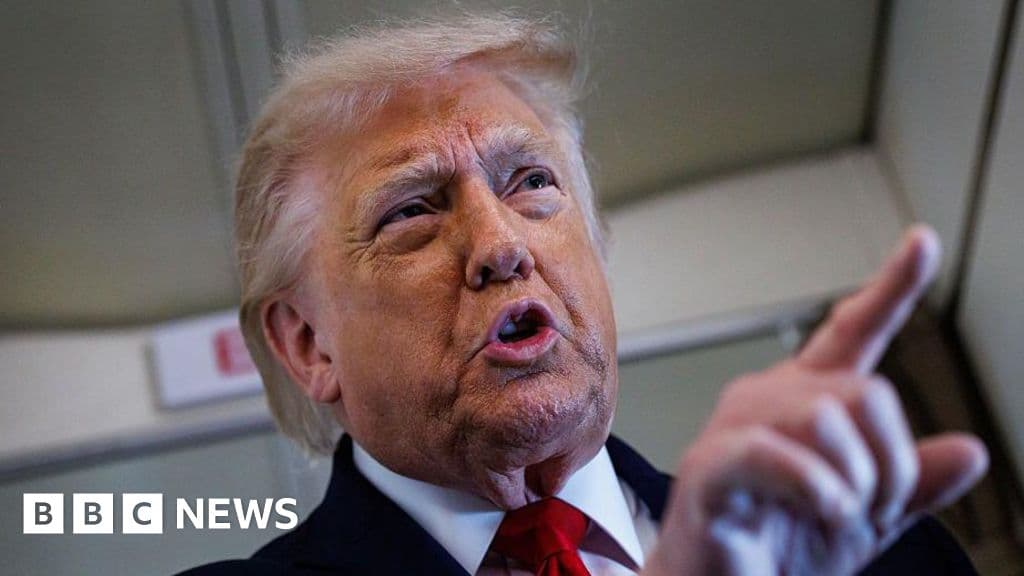
Trump and Iranian officials trade threats after military strikes exchanged.

Fired navy admiral Nancy Lacore moves forward in SC Democratic primary race

Two men sentenced for endangering lives during small boat crossings to the UK.

UK government plans to ease steel tariffs as manufacturers raise cost concerns.

Inflation tops 4.2% for the first time in three years, driven by soaring gasoline prices amid U.S.-Iran tensions.
See every story in News — including breaking news and analysis.
The two neighbours have fought three major wars over Kashmir since the end of British colonial rule and their partition in 1947 led to the creation of Muslim-majority Pakistan and Hindu-majority India. Both countries continue to assert claims to the entire region of Kashmir.