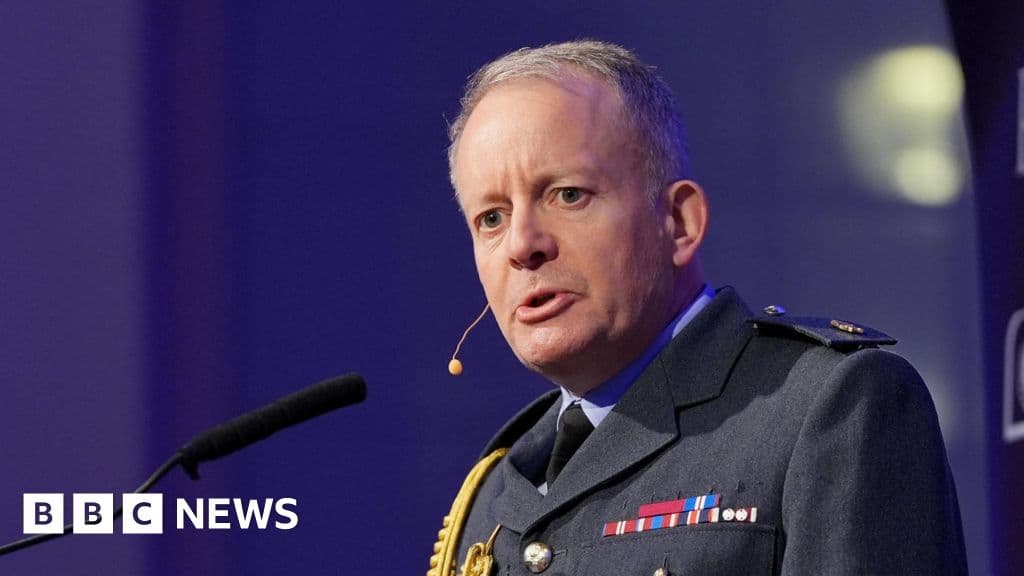
UK forces face operational cuts without more cash, defence chief warns
UK military may cut operations without additional funding, warns defence chief.
BBC News1 min read
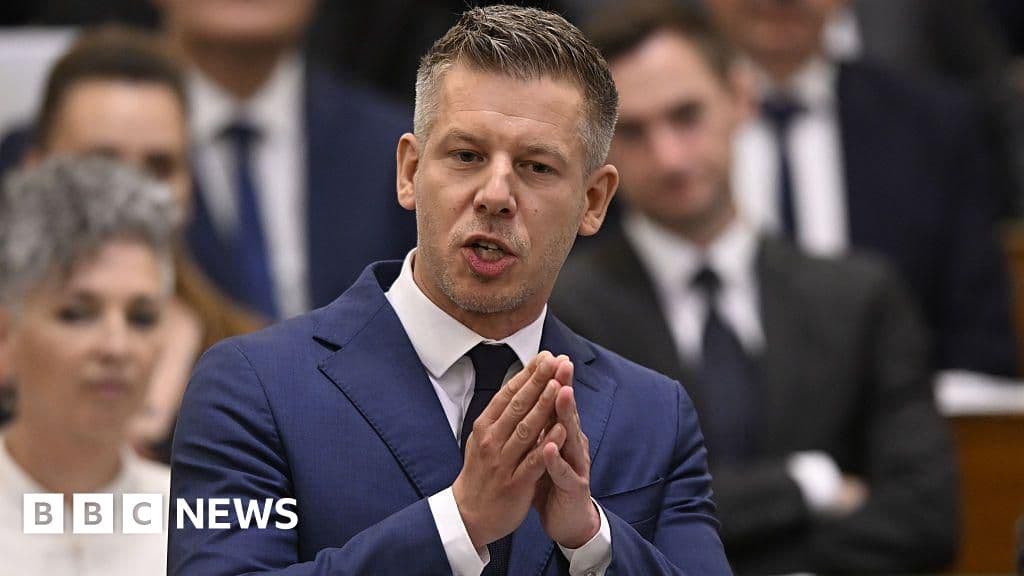
Hungary's parliament has amended the constitution to limit prime ministers to eight years in office, blocking Viktor Orbán's potential return. This change fulfills a promise by Péter Magyar after his party ousted Orbán in April's election.
Mentioned in this story
The Hungarian parliament has backed a change to the constitution that limits a prime minister's term in office to eight years, fulfilling a promise by Péter Magyar to prevent Viktor Orbán becoming prime minister again.
Orbán led Hungary uninterrupted for16 years, until Magyar's Tisza party swept him from power in April's election, winning a two-thirds majority that gives it the power to amend the constitution.
Under the change, no prime minister since 1990 can serve more than two terms in office, even if they are years apart.
Orbán's depleted Fidesz party voted against the measure and the former prime minister, who was re-elected as its leader at the weekend, was highly critical of it.
"The Orban law has just been voted through. That was the most pressing issue. If I'm needed, I'll be here," he wrote on Facebook.
Orbán complained that Tisza had only been in power a month and that it should not be "dreaming of eight years" into the future.
The Tisza government's so-called super-majority meant the amendment sailed through by 135 votes to 50 and the law now just needs the signature of President Tamás Sulyok to go through.
Orbán's former political director, Balázs Orbán, accused Magyar of "using political power to exclude a political opponent from democratic competition".
Although the amendment to Hungary's Basic Law could in theory be changed by a future government with the necessary super-majority, the new provision also means that Magyar would only be able to serve as prime minister until 2034.
He took office last month with a promise to get rid of some of the highly controversial state apparatus that Fidesz put in place during its 16 years in power.
For four years running, the organisation Transparency International has labelled Hungary the most corrupt country in the European Union and the EU withheld billions of euros in funds because of concerns over rule of law, corruption and democratic backsliding.
Last month, the European Commission agreed to unlock €16.4bn (£14.2bn) in funding, subject to a series of reforms to combat corruption that have to go through parliament.
As well as placing a limit on a prime minister's rule, Monday's amendment scrapped a requirement for an independent agency to protect Hungary's "constitutional identity".
That signalled the end of Orbán's Sovereignty Protection Office, created in 2023 to monitor "undue political interference" by "foreign interests".
It also targets so-called "Kekva" public trust foundations created under the previous government through the transfer of state assets such as companies and education institutions.
The government intends to return the assets to the state or cut funding to them, in the case of institutions such as vocational college Mathias Corvinus Collegium (MCC). MCC has close ties to Fidesz and its board of trustees is led by the ex-prime minister's political director, Balázs Orbán.
The new constitutional amendment limits prime ministers in Hungary to a maximum of eight years in office.
Viktor Orbán was the prime minister before the constitutional change, having led Hungary for 16 years.
Péter Magyar is associated with the Tisza party, which won a two-thirds majority in the recent elections.
Viktor Orbán criticized the amendment and indicated he would remain active in politics, despite the change.
UK military may cut operations without additional funding, warns defence chief.

Refugee groups slam Tory plan to remove judges from asylum appeals

Washington, D.C. will elect a new mayor and Congressional delegate soon, marking significant political changes. Candidates are focused on opposing President Trump and addressing local issues, especially regarding law enforcement and immigration.

Working parents face significant challenges balancing their roles, survey finds.

Lebanese rush back to homes in south after US-Iran deal ends war.

Residents in Sirik, Iran, face severe water shortages amid rising temperatures and skepticism about a potential US-Iran peace deal. The announcement of the deal has brought little hope to those struggling with daily challenges.
See every story in News — including breaking news and analysis.
On Tuesday, Hungary's parliament turned its attention to further changes to the law required before some of the billions of euros withheld by the European Commission can be unfrozen.
These include boosting the role of Hungary's anti-corruption watchdog, the Integrity Authority.
Parliament also commemorated the anniversary of the execution of the leaders of Hungary's 1956 revolution against Soviet rule.
The six leaders, including then-Prime Minister Imre Nagy, were each named by Magyar, and MPs also marked the date of their reburial in 1989.
During the session, Balázs Orbán accused Magyar of pushing through reforms that left thousands of Hungarian students facing an uncertain future, prompting a clash with the prime minister.
Magyar said that, in October, Hungarians would mark the 70th anniversary of the 1956 revolution, having turned over a new page in their history to become part of the "free world".