TL;DR
Sir Keir Starmer faces pressure from Labour MPs to resign or set a departure timetable after significant election losses. No formal leadership challenge has been initiated yet.
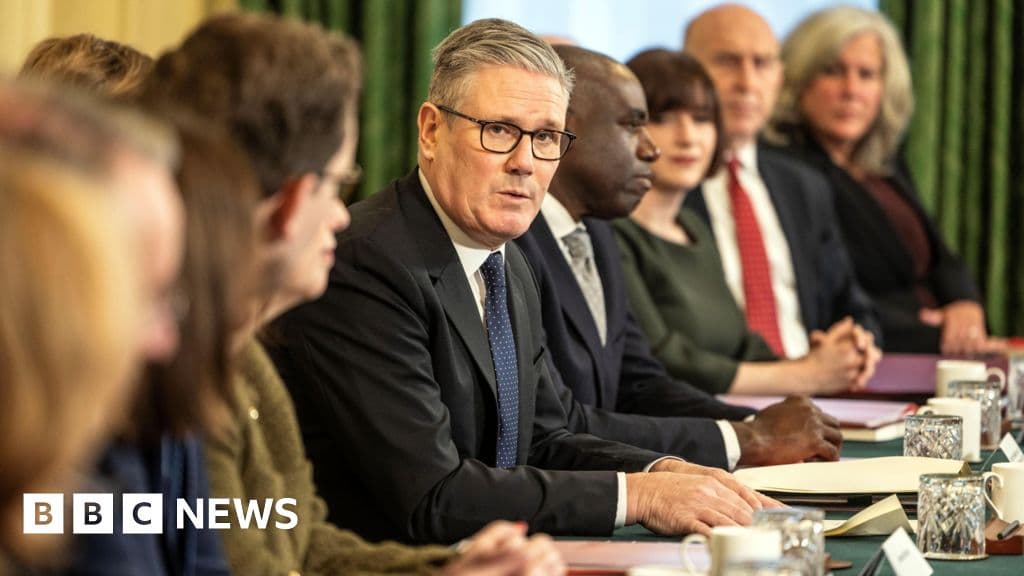
Sir Keir Starmer is fighting to stay on as as prime minister, after dozens of Labour MPs called for him to quit immediately or set a timetable for his departure.
The PM says that he intends to "get on with governing" as no formal leadership challenge has been launched.
But how could MPs who want to see Sir Keir replaced force a leadership contest and how would the winner be chosen?
Labour performed badly in the biggest set of elections to be held since its landslide election victory in 2024. The polls were seen by many as a key test for Sir Keir's leadership.
Labour lost almost 1,500 councillors in local elections across England amid a surge for Nigel Farage's Reform UK, with the Greens also eating into the party's support.
It was also kicked out of power in Wales, where it had enjoyed political dominance for a century. Labour also won just 17 of the 129 seats in the Scottish Parliament, its worst ever result at a Holyrood election.
The BBC is aware of more than 80 Labour MPs who have called on Starmer to leave his post, or set out a timetable for his resignation.
Jess Phillips has resigned as safeguarding minister, telling Keir Starmer that "deeds, not words matter". Communities Minister Miatta Fahnbulleh and Victims Minister Alex Davies-Jones have also resigned.
Home Secretary Shabana Mahmood is also among those calling for him to set a date for leaving. And backbencher Catherine West has said she is collecting names of fellow MPs who want the PM to leave by September.
MPs unhappy with Sir Keir remaining in post could try to force a leadership election.
This would require 20% of the party's MPs to back a replacement candidate. There are 403 Labour MPs, so the support of 81 would be needed.
Once a Labour leadership election is triggered, other candidates could join the contest if they also have 81 backers.
Sir Keir would not be required to gather support as he would be automatically on the ballot paper if he chose to contest the leadership election.
He would continue as prime minister during any contest.
No Labour prime minister has ever faced a formal leadership challenge from their MPs.
Party members and affiliated trade union supporters vote by ranking the candidates in order of preference – putting a one next to their favourite, two for their second choice and so on.
If one candidate receives more than 50% of first preferences then they will be declared the winner.
If not, then the candidate who finishes bottom will be eliminated and the voters who put them as their number one will see their vote moved to their second choice.
This process of elimination continues until one candidate receives more than half of the votes.
The timetable for the leadership ballot would be decided by Labour's decision-making body known as the National Executive Committee (NEC).