
Staying strong, then falling apart: How a military family grapples with the Iran war
How a Military Family Navigates the Challenges of the Iran War
NPR Topics: News1 min read
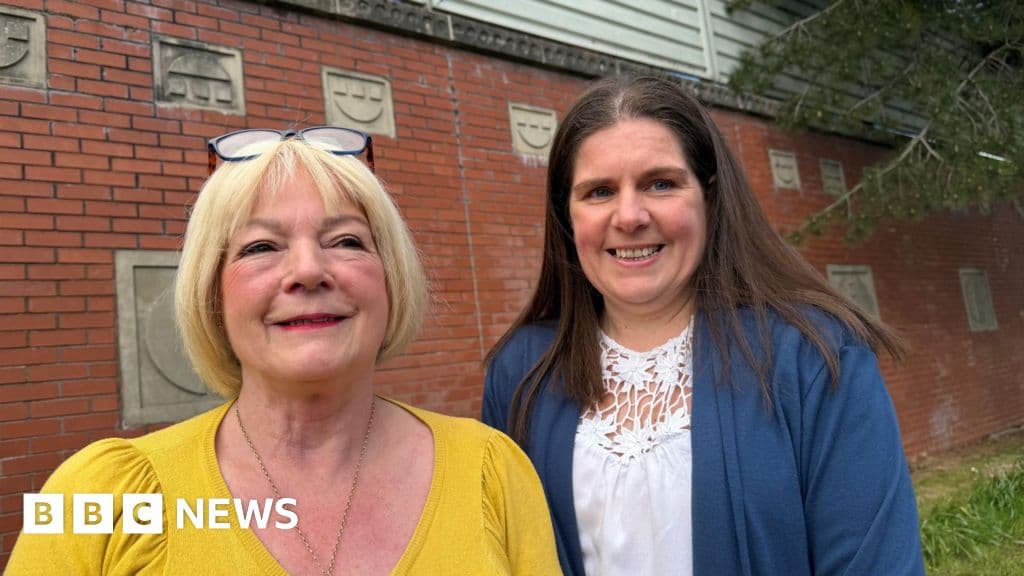
A peace wall in Belfast separates friends Lily Brannon and Michelle Bradley, making their two-minute walk turn into a 20 to 30-minute journey. The wall symbolizes the division between nationalist Catholic and unionist Protestant communities.
Mentioned in this story
If there was not a peace wall between Lily Brannon and Michelle Bradley's homes the friends would be a mere two minute walk away from each other.
But a huge brick wall on the Springfield/Springmartin Road in Belfast effectively stops them being neighbours and makes that a 20 to 30 minute walk.
So-called peace lines separate some nationalist Catholic and unionist Protestant areas of the city.
Lily, 73, is a Protestant and Michelle, 46, is a Catholic, and the two have had to overcome a psychological as well as a physical barrier to form their friendship.
They were brought together by a cross-community scheme in west Belfast.
The project takes place at the Black Mountain Shared Space building and is funded by the International Fund for Ireland's peace barriers programme.
Michelle says that when they first met there was some "reservedness".
Lily called it "suspicion".
It did not last long. They have formed a close bond and have become good friends.
"She's just a great wee girl," says Lily, and briefly holds Michelle's hand.
"If we need anything done, Michelle will sort it out for us."
Lily was born before the start of the Troubles, the 30 years of violence which ended with the 1998 peace agreement, while Michelle was born as violence raged in the 1980s.
Looking back, she said: "There was a bit of fear in me, but it was more the fear of the unknown - not a hatred.
"We were never taught to hate anybody, but there was a real fear.
"I think the fear was you thought they hated you before you met them."
The International Fund for Ireland (IFI), which funds the cross-community work, is currently celebrating its 40th anniversary.
The fund was established as an independent organisation by the British and Irish Governments in 1986 to build peace in Northern Ireland and the border counties. Around £780m has been raised including financial contributions from America, the European Union, Canada, Australia and New Zealand.
As part of its peace barriers programme, Catholics and Protestants from the peace line in the Springfield Road area come together to talk and do activities.
Michelle remembers meeting Lily for the first time.
She said: "There was so much more that joined us together than divided us, because a lot of our programmes at the start would have been art-based and very relaxed.
"That's something me and Lily are both into. We're very creative people, so it kind of bonded us a bit.
"But there's been a lot of tense times through some of the critical engagement talks, where we have had opposing views.
"We've had to just learn how to listen to each other, understand each other and still walk away with our own identity - but with a better understanding of where somebody else is coming from."
The peace wall symbolizes the division between nationalist Catholic and unionist Protestant communities in Belfast, impacting friendships and daily life.
The peace wall makes the walk between their homes take 20 to 30 minutes instead of the two minutes it would take without the wall.
They were brought together by a cross-community scheme in west Belfast aimed at fostering friendships across divided communities.
Peace lines are barriers that separate nationalist Catholic and unionist Protestant areas in Belfast, intended to reduce conflict and promote safety.
How a Military Family Navigates the Challenges of the Iran War

Experts warn the U.S. may be shifting to competitive authoritarianism.

Are short regional flights in the U.S. on the decline? Explore the trends.

How the Trump administration has weakened the fight against public corruption.

Wes Streeting met with Keir Starmer at Downing Street amid a leadership crisis in Labour, as calls for Starmer's resignation grow. The meeting lasted about 16 minutes, with speculation surrounding Streeting's future in the party.

Australia joins international efforts to reopen the strait of Hormuz with military plane deployment.
See every story in News — including breaking news and analysis.
Lily added: "I've learned a wee bit of Irish (language)."
Michelle is an Irish speaker and involved with the GAA (Gaelic Athletic Association) which has traditionally had a mainly Catholic membership.
They do not just meet as part of the programme. Lily has been to Michelle's GAA club.
As for the distance they would have to walk to meet each other Michelle says it is "mad".
"We live either side of the peace wall and without the project and the funding from IFI, we would never have met.
"So it's crazy the fact that we would never have met, but now we would consider ourselves friends."
More than 20 miles of peace walls - or peace lines – were built across Northern Ireland as a result of divisions within society.
There are 39 so-called peace walls remaining in Northern Ireland, according to new figures released by the Department of Justice.
When powers were devolved to the department in 2010, there were 59.
Some of those which remain have been reduced in size or redesigned.
IFI chair Shona McCarthy said the organisation would continue its peace-building efforts beyond its 40th anniversary.
She said: "We seek to unearth quiet peacebuilders - individuals and organisations whose work in arts, culture, sport and enterprise contributes to social cohesion, even if they do not traditionally define themselves as peacebuilders."