
Dua Lipa and Callum Turner wedding divides Palermo: ‘I could understand if it was for the pope’
Dua Lipa and Callum Turner celebrate their wedding in Palermo, drawing mixed reactions from locals.
The Guardian World1 min read
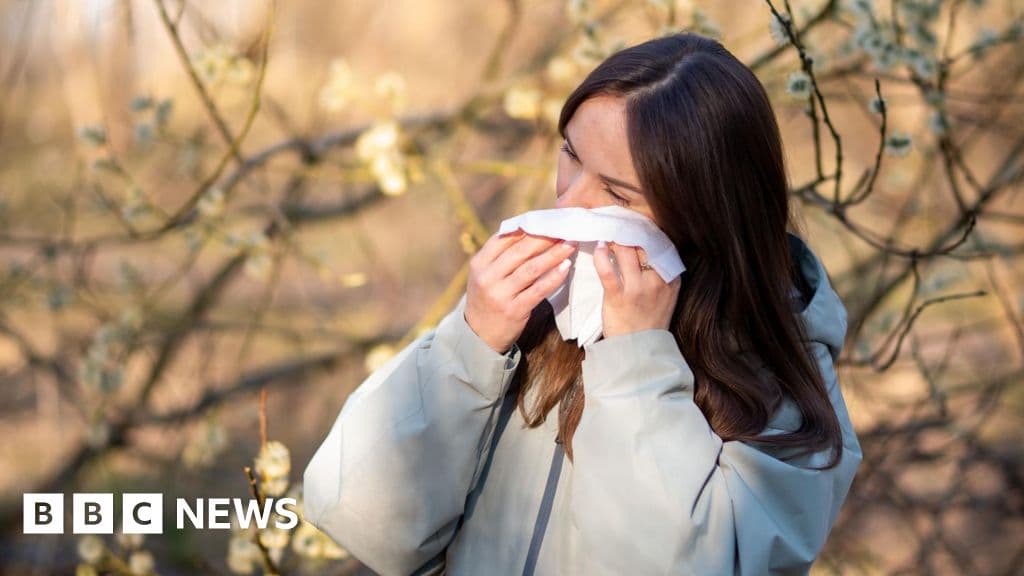
Hay fever symptoms now last up to two weeks longer than in the 1990s due to climate change, according to a new report by 65 scientists. This prolonged pollen season affects millions of allergy sufferers worldwide.
Hay fever sufferers must now put up with symptoms for up to two weeks longer than they would have done in the 1990s, according to a major review.
A new report by 65 scientists from around the world found that climate change has "prolonged the pollen season".
The fine powder released by certain grasses, trees and plants can cause chaos for those who are allergic, with itchy eyes, sneezing and headaches all common symptoms.
So what does this mean for millions of people living with hay fever, and is there anything they can do to cope?
The new report, published in the journal Lancet Public Health, says climate change is extending the flowering season of some plants.
It looked at three trees common in Europe - birch, alder and olive - and found pollination started one to two weeks earlier between 2015 and 2024, compared with 1991 to 2000.
"We are seeing a prolonged season – an earlier onset of pollination in both the north and south [of Europe]", says Professor Joacim Rocklov, from the University of Heidelberg, one of the authors of the paper.
He told the Today Programme on BBC Radio 4 that more research is needed to see if climate change could also be increasing the amount of pollen circulating and making hay fever symptoms more severe.
Early summer is often peak pollen season, when the number of grains of pollen in the air multiplies.
The warm weather seen in the UK over the last two years means conditions have been ideal for birch tree pollen - a major hay fever trigger.
Warm, dry days help spread pollen through the air, creating what's been dubbed a "pollen bomb".
Any extension of the pollen season could have an impact on millions of people across the UK.
"While for some their symptoms can be mild, for many their hay fever symptoms impacts their quality of life," says Anne Biggs, deputy head of clinical services at Allergy UK.
"It can mean missed days at work, poor sleep and, for some teenagers and young people, active hay fever symptoms can mean they drop an academic grade in their exams."
Pollen can also trigger asthma attacks and allergic reactions in people living with other respiratory conditions.
Hay fever symptoms now last up to two weeks longer than they did in the 1990s.
Climate change is causing the pollen season to be prolonged, according to a major review by scientists.
Common symptoms of hay fever include itchy eyes, sneezing, and headaches.
Hay fever sufferers can explore various coping strategies, though specific recommendations were not detailed in the report.
Dua Lipa and Callum Turner celebrate their wedding in Palermo, drawing mixed reactions from locals.

New analysis reveals half of California's waterways are tainted with PFAS pesticides linked to health risks.

Senate passes a $70 billion immigration enforcement bill after 18 hours of debate.

Hamas refuses to surrender arms, stating only police will carry weapons in Gaza.

A 21-year-old man has been charged with attempted murder after a staff member was shot with a crossbow at the University of Surrey. The suspect, Almunthir Daqamah, is a former student and is due in court on Friday.

UN warns US-Iran war is pushing millions into hunger crisis
See every story in News — including breaking news and analysis.
"If people are allergic to pollen, it can inflame their airways and cause terrifying breathing conditions, which can lead to life-threatening asthma attacks and COPD flare-ups," says Dr Samantha Walker, director of research and innovation at Asthma and Lung UK.
There's no cure for hay fever, but there are medicines which can relieve symptoms and help you feel a bit better.
Allergy expert Professor Stephen Till, from Guy's and St Thomas' Hospitals in London, recommends "a cocktail approach", which means taking:
"They all work in different ways and are all very safe for most people - just go to a pharmacy for advice," Prof Till says.
These products can all be bought over the counter in your local chemist.
Avoiding hay fever triggers is essential too, says pharmacist Ashley Cohen from Leeds.
"I always say it's about good hygiene - pollen sits on your face and arms when you go outside, so have a shower and change your clothes when you come in."
And he warns that pets are "brilliant vehicles" for bringing pollen into your house.
The NHS also recommends:
Also, try to avoid:
"Ninety percent of people with hay fever can be managed with over-the-counter medication," says pharmacist Ashley Cohen.
If your hay fever becomes really debilitating, your GP can refer you to a specialist - but that will take a while.
Allergy expert Prof Adam Fox says the provision of specialist allergy services and even knowledge among GPs about allergies "is not as good as it could be".
"For a significant minority, it has a genuine impact on quality of life - on productivity at work and performance at school."
Immunotherapy treatment might be available for the worst affected. That's when tiny amounts of pollen are injected into the body over time to get it used to the substance, so that it no longer overreacts.