
A powerful US surveillance law is set to expire – what happens now?
Key FISA provision set to expire as Trump faces backlash over DNI appointment
The Guardian World1 min read
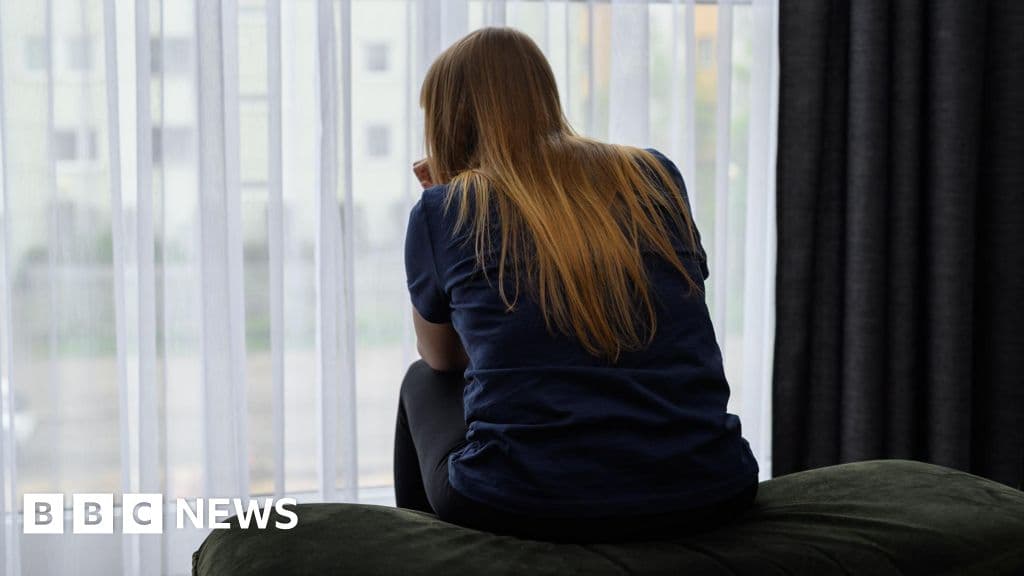
The Supreme Court has denied a woman's request to revoke her adoption of two sisters, emphasizing that adoption is a final and permanent decision. The case arose after the sisters, now 18 and 19, sought contact with their birth mother.
A woman has lost an attempt to undo her adoption of two sisters after Supreme Court judges said to do so would go against the long held principle that adoption is "final and permanent".
The woman made clear in her submission that she had not rejected the children, who are now 18 and 19 and have not been named.
She said she brought the case because of their wishes after they resumed contact with their birth mother, who also supported the application at the UK Supreme Court.
Child protection experts were concerned that if the court had ruled in favour of ending the adoption, it would have destabilised the adoption system itself and made it harder to find potential adopters.
But the judges decided in favour of the principle that the state should have the power to decide matters of adoption.
The court said "parens patriae" or "father of the people" powers, existed "to secure a child's protection and safety from serious harm where there is no adequate mechanism available".
The ruling from UK's highest court said adoption should be "permanent and irrevocable" except in cases where an adoption decision had been wrongly taken.
The two children, known as X and Y, had made their own decision to move back in with their birth mother.
The court decided that allowing the appeal would have cut across "detailed and comprehensive" laws passed by parliament to protect children.
The local authority supported the application to revoke the adoption order in respect of Y but not X, while the Department for Education (DfE) also lodged a written case arguing that adoption orders could only be revoked in highly exceptional circumstances.
It said that allowing them to be revoked "based simply on welfare" could undermine their permanency.
"It would It would leave adopters, birth parents and, perhaps most significantly, children in a state of uncertainty," the DfE's written submission said.
"That would inevitably have an impact on the recruitment of prospective adopters and could either make adopters less committed to their adopted children if difficulties arise or conversely less willing to support ongoing contact with birth families as a consequence."
The children's adoptive mother brought the case because of the children's "wishes and feelings" about the breakdown of the adoption, according to written submissions to the court.
She felt they had been forced to live a "legal fiction", despite the fact their "de facto parent" was again their birth mother.
"This is not because [the adoptive mother] has rejected the children. Her appeal is driven by their welfare alone" the submission says.
The girls were adopted in 2012 aged four and five after a period in foster care - but later resumed contact with their mother, which was supported by their adoptive mother.
The woman sought to revoke the adoption due to the sisters' wishes after they resumed contact with their birth mother.
The Supreme Court ruled against revoking the adoption, reinforcing that adoption is a final and permanent arrangement.
Child protection experts were concerned that revoking the adoption could destabilize the adoption system and hinder the ability to find potential adopters.
The judges emphasized the principle that the state should have the power to decide matters of adoption.
Key FISA provision set to expire as Trump faces backlash over DNI appointment

Watford legend Kenny Jackett passes away at 64

Nineteen people arrested, including a teen, after violence in Northern Ireland and an arson attack.

David Hockney, the iconic British artist known for his diverse work, has passed away at 88.

David Hockney, the revolutionary British artist, has passed away at 88.

Exploring the Historical Roots of Torture Against Palestinians
See every story in News — including breaking news and analysis.
In 2021, they left their adoptive mother and moved to live with their birth mother. One sister later decided to live with her father.
In February 2023, the local authority issued care proceedings on the basis that the girls were "beyond parental control" and conferred parental responsibility onto their birth parents.
In April 2023, the adoptive mother made an application in the High Court seeking revocation of the adoption order.
A judge then found the court had no power to revoke the adoption orders and refused the application, but the judge made orders allowing both girls to change their surnames to that of their birth mother.