
World Cup 2026 opening day takeaways: Red cards, VAR and hydration breaks
Highlights from the thrilling opening day of the 2026 World Cup: goals, red cards, and hydration breaks.
Al Jazeera English1 min read

A 10-day ceasefire between Israel and Hezbollah begins, but many displaced Lebanese remain skeptical about returning home. While some, like Abu Haidar, plan to go back, most are hesitant due to distrust in the ceasefire's enforcement.
Mentioned in this story
Beirut, Lebanon – Abu Haidar’s legs dangled out the passenger side of his car onto the pavement at Beirut’s waterfront. He had folded up his mattress – the one he’s slept on for the last six weeks – and packed it on top of his car.
It was a few hours before the midnight start of a 10-day ceasefire between Hezbollah and Israel was set to take effect. Abu Haidar’s car was packed, and he planned to head to his village, Kherbet Selem, about 25 kilometres (15 miles) from the border.
“At 11pm, I’m going home, not at 12,” he told Al Jazeera. He said he would find a way around the fact that Israel had bombed the last working bridge to the south earlier on Thursday.
Few others, however, planned to follow suit. Displaced people in downtown Beirut told Al Jazeera they didn’t trust the Israelis to uphold the ceasefire and would wait before returning to their homes. And that’s if they had homes to go back to at all.
All but one room of Fadal Alawi’s home in the Hay el-Sellom neighbourhood of Beirut’s southern suburbs was destroyed. Next to him stood Haytham Dandash and his wife, Ruwayda Zaiter, whose home was completely knocked down.
“We’re going to stay here the whole 10 days,” Dandash said. Only when a longer agreement is put into effect will they go home, he added.
When a previous ceasefire came into effect in the early hours of November 27, 2024, after a year of war, the mood was joyous. Families packed their belongings into their cars, and by the early hours of the morning, most centres hosting the displaced were empty as traffic jammed the roads to Beirut’s suburbs and the south.
This time, however, the mood is less joyous. Displaced people near Beirut’s waterfront said very few people had packed their things and left. Some said they would wait for the morning hours to see if the ceasefire held to go check on their homes in the heavily-attacked Beirut suburbs. But some, like Ali Jaber, a tuk-tuk driver from Mayfadoun near Nabatieh in south Lebanon, said he didn’t trust the Israelis not to strike cars on the highway.
Earlier on Thursday, United States President Donald Trump had announced a ceasefire would be implemented at 5pm Eastern Time (midnight Beirut time) after speaking to Lebanon’s President Joseph Aoun. The announcement came after six weeks of fighting between Israel and Hezbollah, with battles raging in the south after the Israelis invaded in early March.
The city of Bint Jbeil, where then-Hezbollah leader Hassan Nasrallah made a historic speech following the end of Israel’s occupation of southern Lebanon in 2000, has been the site of an intense battle in recent days. On Thursday, the Israeli military heavily bombed villages and towns all over southern Lebanon, following a pattern of intensifying attacks before the proposed ceasefire. The Israeli military has also published videos of its forces detonating entire villages in southern Lebanon in recent days.
The ceasefire between Israel and Hezbollah is set to last for 10 days.
Many displaced Lebanese are wary of the ceasefire and distrustful of Israel's commitment to uphold it, leading them to delay their return.
Many homes in Beirut, including those of Fadal Alawi and Haytham Dandash, were either destroyed or severely damaged due to the conflict.
Kherbet Selem is located about 25 kilometers (15 miles) from the Israeli border.
Highlights from the thrilling opening day of the 2026 World Cup: goals, red cards, and hydration breaks.

Al Carns resigns as UK defence minister, calls plans outdated and underfunded.

Starmer's leadership faces pressure as defence ministers resign

One year after the Air India Flight 171 crash, grieving families like Sita Patni's continue to seek justice.
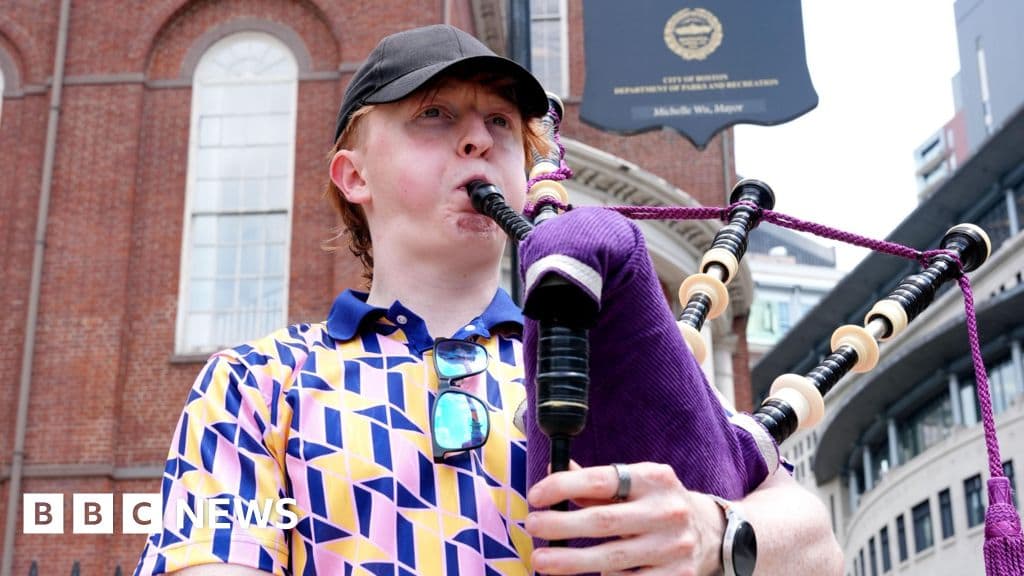
Tartan Army feels the heat in Boston as World Cup kicks off with Scotland's match against Haiti!

Cross-border attacks between Ukraine and Russia result in three deaths.
See every story in News — including breaking news and analysis.
The ceasefire announcement also comes after the first direct diplomatic talks between Israel and Lebanon in decades on Tuesday, an event that has deeply divided Lebanon’s population. Many in the areas most impacted by the war opposed the negotiations and have a dim view of the Lebanese government.
“We’re going home because of the resistance,” Abu Hussein, who was seated next to Abu Haidar, said, referring to the Lebanese group Hezbollah. “Not because of the state.”
The terms of the agreement are still unclear, which may be contributing to people’s doubts about it.
Israel’s Prime Minister Benjamin Netanyahu said his military’s troops would not withdraw from southern Lebanon during this period. Hezbollah responded by saying any ceasefire must “include a comprehensive halt to attacks across all Lebanese territory, with no freedom of movement for Israeli forces”. Should Israel continue to occupy Lebanese territory, Hezbollah said it would maintain “the right to resist”.
With this seeming bypass at hand, Hezbollah and its close ally Nabih Berri, Lebanon’s parliamentary speaker and leader of the Amal Movement, released statements asking their supporters not to return to their homes at the immediate start of the ceasefire.
“We ask everyone to refrain from returning to the towns and villages until matters and developments become clear in accordance with the ceasefire agreement,” Berri said.
In its statement, Hezbollah said Israel “has a history of violating pledges and agreements”.
“With the announcement of the ceasefire, and in the face of a treacherous enemy that has a history of violating pledges and agreements, we call on you to remain patient and not to head towards the targeted areas in the south, the Bekaa [Valley], and the southern suburbs of Beirut until the course of events becomes fully clear,” the group said.
Some people said they would wait for assurances from Berri or Hezbollah before returning home.
In the meantime, Dandash said he and his wife will stay put in their tent, where they sleep on slim mattresses placed on a wooden pallet, which gives him back pain.
People here are getting more desperate, he said. A woman talking to Alawi pulled out her phone and showed a video of people sprinting after a white jeep that had come to distribute money to people before driving away in panic.
“There was a lot of aid distribution at first, especially during Ramadan,” he said. “But now, there’s no help.”
Not from the state, nor from any political party. “We don’t get anything from them, nor do we want anything from them,” Ruwayda, Dandash’s wife, said. “Any of them.”