
Dua Lipa and Callum Turner wedding divides Palermo: ‘I could understand if it was for the pope’
Dua Lipa and Callum Turner celebrate their wedding in Palermo, drawing mixed reactions from locals.
The Guardian World1 min read
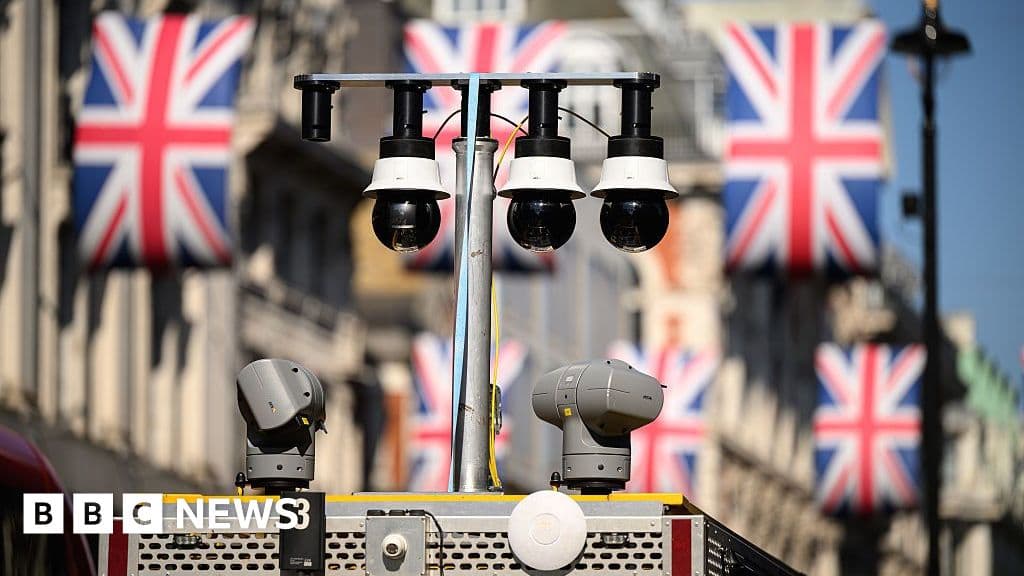
A High Court challenge against the Metropolitan Police's use of live facial recognition technology has been lost by two claimants. Concerns were raised about potential arbitrary and discriminatory use of the technology.
Mentioned in this story
Two people have lost a High Court challenge against the Metropolitan Police over its use of live facial recognition technology (LFR) in London.
Youth worker Shaun Thompson and Silkie Carlo, from campaign group Big Brother Watch, brought the claim over concerns that facial recognition could be used arbitrarily or in a discriminatory way.
Lawyers for the pair told a hearing earlier this year that facial recognition was "similar to a DNA profile".
Scotland Yard defended the legal challenge, brought over its LFR from September 2024, telling the court in London that the policy was lawful.
One of the claimants, Thompson, was misidentified by the technology.
Lawyers argued the plans to mount permanent installations in the capital would make it "impossible" for Londoners to travel without their biometric data being taken and processed.
Lord Justice Holgate and Mrs Justice Farbey said in a judgment that "in the context of promoting law and order in a large metropolis, the policy provides the claimants with an adequate indication of the circumstances in which LFR will be used and enables them to foresee, to a degree that is reasonable in the circumstances, the consequences of travelling in an area of London where LFR is in use".
The 74-page ruling added that the "risk and potential scope for discrimination on grounds of race was no more than faintly asserted".
The judges also said that Thompson and Carlo's human rights had not been breached.
Plans set out by the Home Office in January will increase the number of vans from 10 to 50 and make them available to all forces across the two nations.
The Metropolitan Police Commissioner, Sir Mark Rowley, said the High Court ruling was a "significant and important victory for public safety".
He added: "The courts have confirmed our approach is lawful. The public supports its use. It works. And it helps us keep Londoners safe.
"The question is no longer whether we should use live facial recognition, it's why we would choose not to."
Listen to the best of BBC Radio London on Sounds and follow BBC London on Facebook, X and Instagram. Send your story ideas to
The High Court challenge was lost by the claimants, Shaun Thompson and Silkie Carlo.
Concerns included the potential for arbitrary and discriminatory use of the technology.
The claimants were youth worker Shaun Thompson and Silkie Carlo from the campaign group Big Brother Watch.
Dua Lipa and Callum Turner celebrate their wedding in Palermo, drawing mixed reactions from locals.

New analysis reveals half of California's waterways are tainted with PFAS pesticides linked to health risks.

Senate passes a $70 billion immigration enforcement bill after 18 hours of debate.

Hamas refuses to surrender arms, stating only police will carry weapons in Gaza.

A 21-year-old man has been charged with attempted murder after a staff member was shot with a crossbow at the University of Surrey. The suspect, Almunthir Daqamah, is a former student and is due in court on Friday.

UN warns US-Iran war is pushing millions into hunger crisis
See every story in News — including breaking news and analysis.