
US veteran dubbed highway ‘angel’ for using combat first aid to save crash survivor
Veteran James Brown saves fellow truck driver, honored as 'angel' of highways
The Guardian World1 min read
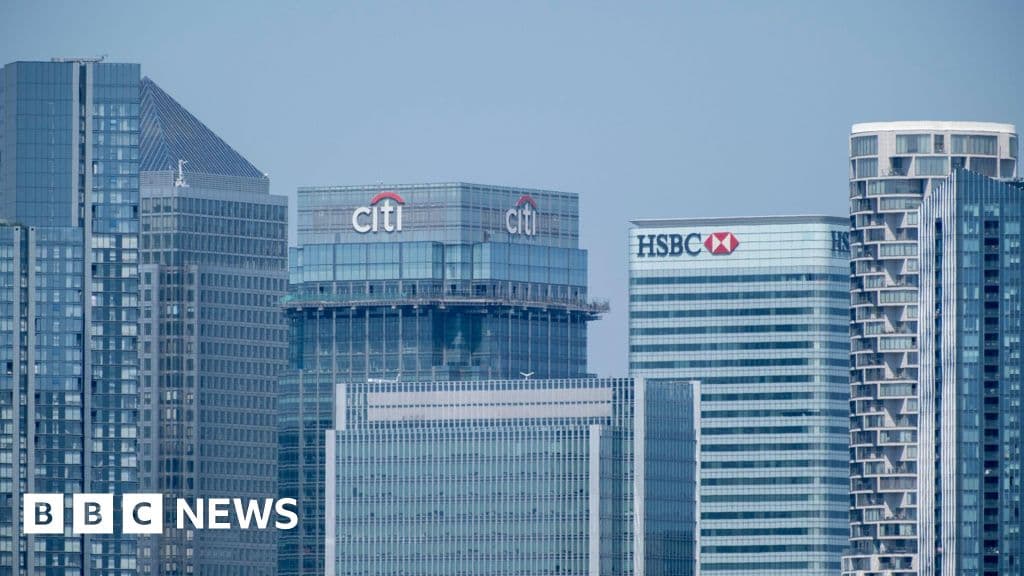
The UK economy has suffered a 6% decline due to Brexit, as per analysis of Bank of England data. The downturn is attributed to uncertainty post-referendum and increased trade barriers since leaving the EU.
The UK economy has taken a 6% hit from the effects of Brexit, according to economists' analysis of internal Bank of England data about the decisions, views and financial results of thousands of British companies since the referendum a decade ago.
Examining data that the Bank uses to decide on interest rates, the study analysed lost growth by trying to reconstruct how the UK would have grown if it had not voted to leave the EU.
It found that about half the economic hit came from the sheer surprise and uncertainty of the post-referendum period while the rest was from rising trade barriers after the UK left the customs union and single market in 2021.
But some critics say the study does not fully account for the outperformance of the US investment and tech industries or the European energy shock four years ago.
Co-author of the study, British professor Nick Bloom from Stanford University, said the UK was growing fast in the years before Brexit and could have at least partially kept up with the US without the disruption. He argued the Bank of England company data offered important corroboration.
His paper concludes: "In the case of Brexit, there was a substantial economic impact on the United Kingdom, but it arose gradually over the subsequent decade".
It comes as the Bank's top officials have in recent months become increasingly candid in explaining the economic consequences of Brexit in speeches and interviews.
Recently, the Bank's governor Andrew Bailey told journalists that as a consequence of Brexit: "I think the level of activity and growth in the economy has been lower.
"And the reason for that is that if you reduce the size of the markets that we trade with, so we reduce our export markets, then that does tend to have a negative impact on growth," he said, adding that productivity and the size of the market were also affected.
However, Bailey said that although the impact on financial services was "not good", it was "nowhere near as detrimental as many people predicted at the time".
Some policy economists have argued that it is difficult to model how much the UK would have grown without Brexit, and that such studies overstate Brexit's impact, especially at a time of so many global crises.
The latest version of the study has been published just ahead of the 10 year anniversary of the referendum.
It used the company data alongside five more traditional analysis methods. While the company level data point to a 6% hit over 10 years, the wider studies suggest an average of 8%.
The study is co-authored by Bloom and economists at the Bank of England, with access to all the Bank's data - but the paper officially has a disclaimer that "the views expressed do not necessarily represent those of the Bank of England".
While various attempts have been made to isolate the impact of the extra uncertainty, and trade barriers with the EU on UK economic growth numbers, this study is the first time key Bank of England information about the British corporate sector has been used in this way.
Brexit has resulted in a 6% decline in the UK economy, according to economists' analysis.
The economic hit is mainly due to uncertainty following the referendum and rising trade barriers after leaving the customs union and single market.
The study was co-authored by British professor Nick Bloom from Stanford University.
The Bank of England provided internal data regarding the decisions, views, and financial results of thousands of British companies since the Brexit referendum.
Veteran James Brown saves fellow truck driver, honored as 'angel' of highways

In a surprising turn, Scottish Conservatives take Aberdeen South from SNP.

John Edwards, the UK's top AI regulator, resigns after inappropriate humor claims.

Could Andy Burnham's victory lead to major changes in UK utilities?

British Syrian activist Hassan Akkad detained in Damascus over online comments.

Indian court rejects Telegram's appeal against app ban over leaked exam questions
See every story in News — including breaking news and analysis.
The Decision Maker Panel data is normally used to help inform the setting of interest rates, but it was actually set up by the Bank of England in 2016 specifically to give some insight into the economic impact of Brexit. The authors used years of answers to track firms' exposure to different aspects of Brexit, reported Brexit impacts, and any change in their financial accounts.
Prime Minister Keir Starmer announced that he will meet his EU counterparts at a summit in July to agree deals on food and farm exports, as well as electricity and emissions trading. Further areas of cooperation and alignment are expected to also be discussed.
The BBC has contacted political parties for comment.