
Barclays to buy GoHenry kids’ debit card and money app
Barclays is buying GoHenry, a kids' debit card app, to target young users.
The Guardian World1 min read

Palestinian children in Umm al-Khair are blocked by barbed wire from reaching their school, prompting protests. After a ceasefire, they found their path obstructed, leading to violent clashes with soldiers.
Mentioned in this story
Umm al-Khair, occupied West Bank – Just old enough to utter complete sentences in a small, wavering voice, Masa Hathaleen, five, stands before the barbed wire fence blocking her path to school. “I am Masa,” she pleaded. “Please open the road for us. We want to go to school. We are not doing anything wrong. We just have our books. We love our school.”
Masa was one of dozens of children, book bags in tow, who marched on Sunday morning towards the fence that now blocks the route the youngsters of the Bedouin community of Umm al-Khair have used for decades to reach their school in the Israeli-occupied West Bank. The schoolchildren held up posters, sang songs and chanted in English at soldiers who watched from the other side: “Open the road!”
For more than 40 days during the US-Israeli war on Iran, Palestinian schools were closed in the area. But last week when a ceasefire allowed Palestinian schools in the West Bank to reopen – even if for only three days a week – the children in Umm al-Khair arrived to find the fence blocking the path to their school a kilometre (0.6 miles) away.
When the children tried to go around the fence, soldiers launched tear gas and sound grenades at children as young as five years old.
“It was a very violent situation,” said Khalil Hathaleen, the head of the Umm al-Khair village council, whose young children are among those attending the school. “Until now, some children haven’t returned to the site because of fear. They can’t sleep.”
Security camera footage recorded by community members showed settlers coming during the night to erect the barbed wire fence. Despite being erected without legal authorisation, soldiers have refused to take down the barrier in a community that faces imminent Israeli demolition orders later this month due to a lack of building permits. Such permits are almost never granted to Palestinians in Area C of the West Bank, which is entirely under the control of Israel.
Shortly after the fence went up, a large Star of David was built with stones by settlers on the side of the fence that the Palestinian schoolchildren can no longer access.
Desperate to get their children back in school, the community launched Sunday’s march as part of a new initiative, “the Umm al-Khair Freedom School”.
![Khalil and Tareq hold banner with kids [Jacob Lazarus/Al Jazeera]](/_next/image?url=https%3A%2F%2Fwww.aljazeera.com%2Fwp-content%2Fuploads%2F2026%2F04%2FKhalil-and-Tareq-hold-banner-with-kids-PC-Jacob-Lazarus-1776615077.jpg%3Fw%3D770%26resize%3D770%252C513%26quality%3D80&w=3840&q=75)
Children in Umm al-Khair were blocked by barbed wire from reaching their school, leading to protests and violent clashes with soldiers.
Palestinian schools in the West Bank faced closures due to the US-Israeli war on Iran, which lasted over 40 days.
The children marched towards the fence, held up posters, sang songs, and chanted for the soldiers to open the road.
Soldiers responded by launching tear gas and sound grenades at the children, creating a violent situation.
Barclays is buying GoHenry, a kids' debit card app, to target young users.

Key FISA provision set to expire as Trump faces backlash over DNI appointment
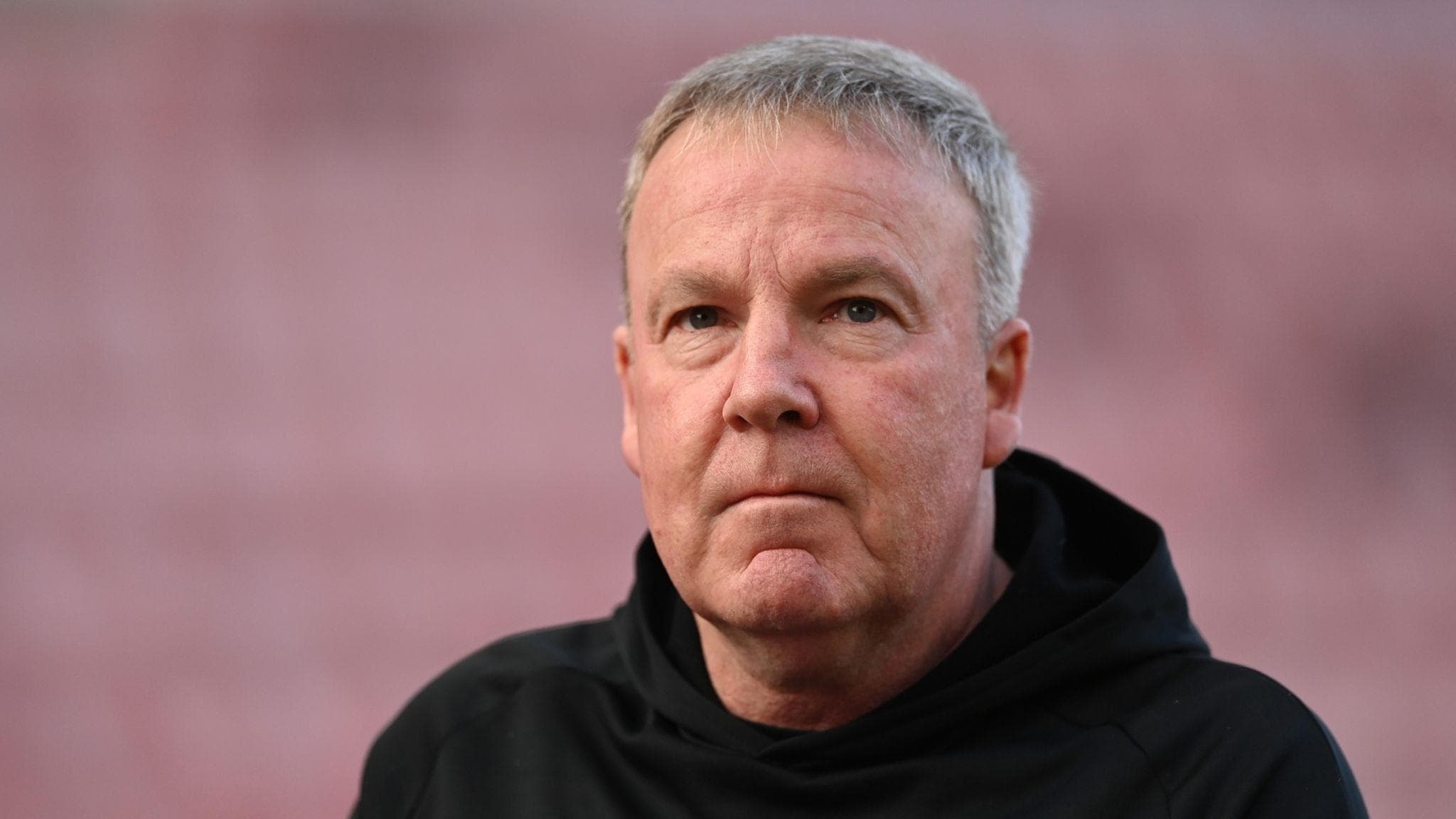
Watford legend Kenny Jackett passes away at 64
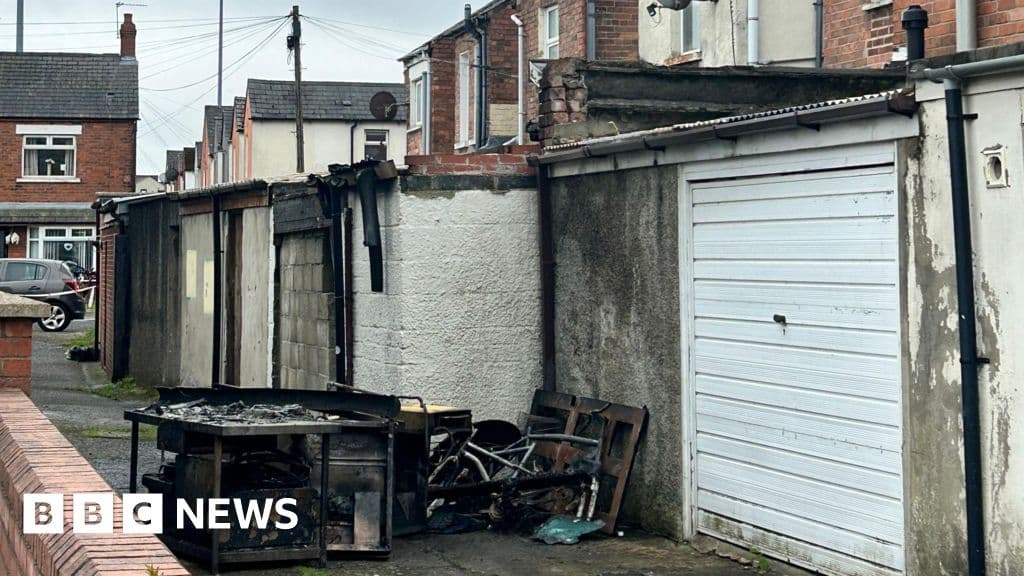
Nineteen people arrested, including a teen, after violence in Northern Ireland and an arson attack.

David Hockney, the iconic British artist known for his diverse work, has passed away at 88.

David Hockney, the revolutionary British artist, has passed away at 88.
See every story in News — including breaking news and analysis.
Village council head Khalil Hathaleen and teacher Tareq Hathaleen hold a banner with the children of the Umm al-Khair [Jacob Lazarus/Al Jazeera]
At 7am, parents, teachers and community members walked beside their children who held a banner declaring “Umm al-Khair Freedom School” before reaching the fence. On the other side, several Israeli soldiers stood and watched – at times waving mockingly and mimicking the children’s songs along with a security guard of the adjacent illegal Israeli settlement of Carmel, which villagers said had erected the barrier.
For several hours, the children banged on drums and sang defiant songs while soldiers watched metres away. For stretches of time, the children sat down on rocks adjacent to the barbed wire, took out their books and began working on schoolwork they’ve been deprived of for more than 50 days.
“Education is a right for everyone, including the children of Umm al-Khair,” said Tareq Hathaleen, who teaches grades four through eight at the blocked school. “It’s not right to block their road.”
According to Khalil Hathaleen, the path was established in 1980 and is recorded on both Israeli Civil Administration and Palestinian maps as a designated pedestrian route for students. It also serves women walking to a nearby health clinic and worshippers heading to the mosque, which they also can no longer access.
Since settlers erected the fence, Israeli authorities have offered an alternative, longer route, roughly 3km (2 miles) in length, but residents unanimously rejected this new route because it would force children to pass through new settler outposts erected next to their community. Israeli settlements and outposts on occupied land are illegal under international law. Since last summer, several settler caravans have been installed on that same road.
Last summer, Awdah Hathaleen was killed in that area. Yinon Levy, an internationally sanctioned settler, was arrested and charged in his fatal shooting. Levy worked to clear land in Umm al-Khair to prepare for the arrival of the caravans, which now sit directly behind the village’s community centre and family homes. Even after being filmed shooting Awdah Hathaleen, Levy kept returning to the village to complete the land-clearing work.
![Kids at fence at Umm al-Khair telling soldiers to open road [Steven Davidson/Al Jazeera]](/wp-content/uploads/2026/04/Kids-at-fence-angrily-telling-soldiers-to-open-road-PC-Jacob-Lazarus-1776615071.jpg?w=770&resize=770%2C513&quality=80)
Children at the fence tell soldiers to open the road to their school [Jacob Lazarus/Al Jazeera]
The dangers in the area have only grown since. According to Eid Hathaleen, a parent of three school-age children, settlers have scattered wooden planks with protruding nails along the roadside, damaging cars. Settlers’ vehicles, sometimes driven at speed by teenagers, move unpredictably through the area.
“You can’t leave a child, six years old, to walk near the caravans,” Eid Hathaleen said. “Settlers drive their cars fast. Settlers drive their ATVs in bad behaviour, without control. Some have no licence. I will not be endangering any kid to go through there because it’s dangerous.”
Those fears were sharpened last month when five-year-old Siwar Hathaleen was struck by a settler’s car while crossing through Umm al-Khair. She survived but was admitted to hospital with a head injury.
Now, with the army refusing to remove the barbed wire fence, Eid Hathaleen has struggled to find solutions for his own children. “You feel useless that kids can’t reach their school because of this blockade,” he said. “The kids try to show their voice, try to make the best of the situation, but they’re frustrated. They do some lessons in their homes, but it’s not enough.”
![Boy in UAK holding sign [Jacob Lazarus/Al Jazeera]](/_next/image?url=https%3A%2F%2Fwww.aljazeera.com%2Fwp-content%2Fuploads%2F2026%2F04%2FBoy-in-UAK-holding-sign-PC-Jacob-Lazarus-1776615082.jpg%3Fw%3D770%26resize%3D770%252C513%26quality%3D80&w=3840&q=75)
A boy in Umm al-Khair protests for his right to an education [Jacob Lazarus/Al Jazeera]
Mira Hathaleen, 10 years old and the daughter of Khalil, said at the Sunday protest that she wants to be a doctor. “If I want to be a doctor, I must learn and have knowledge,” she reasoned. But blocked from school by a fence guarded by soldiers, the situation seemed to her just plain wrong: “We are children like the children of the rest of the world. They go to school, and we don’t. Why?”
When the soldiers fired tear gas on Sunday as they had the week before, some children began to tremble as the soldiers approached from the other side of the fence, even as their songs and chants grew louder in response. Sara Hathaleen, 13, began to panic and cry.
“I am scared. I am scared,” she said, wiping away tears. But she caught herself after a moment and regained her composure. “It is a challenge to come here because we have to break the fear just to go to our school,” she said. She wants to be a lawyer someday, she added, “to defend the Palestinian cause and specifically the cause of Umm al-Khair”.
For Sara and her classmates, the fence is only the latest obstacle in years of interrupted schooling – the result of Palestinian Authority budget cuts after Israel withheld West Bank tax revenues and a wave of school closures brought on by successive wars in recent years.
“You aren’t talking about one or two children. You are talking about 55 students,” Khalil Hathaleen said. “In any other country, if this many children couldn’t reach school, the president would resign. But here, there are no solutions apparently.”
Tariq, the teacher for many of the children, sees the fence as part of a broader pattern. “We see the Israeli authorities are really complicit in what is happening here,” he said. “This fence, this blockade, is also on private land, and yet they are not doing anything.”
Khalil was unambiguous about the settlers’ intent. “They want to build new caravans and bring more settlers, so they closed the road to confiscate the land and pressure the families, telling them they won’t be able to learn,” he said.
The community is also facing the looming demolition orders affecting nearly the entire village. Khalil Hathaleen issued an appeal to human rights organisations and international observers to intervene, framing both struggles – blocking the school road and the demolition orders – as part of the same campaign by settlers and Israeli authorities to erase the community of Umm al-Khair, which sits on the same hill as the illegal Israeli settlement of Carmel.
Until the path to school is reopened, Khalil said, the community will hold daily peaceful demonstrations with lessons, music and activities conducted in the open air at the spot where the path is blocked. “We will do all the teaching in the sun,” he said. “This is the only way. If we stay silent, no one will hear us.”
Before departing, the children pressed their handmade signs against the barbed wire, turning them to face the taunting soldiers and settlers on the other side:
“We like to go to school”
“Let us learn!”