20 resultsfor “what strain of Ebola is spreading now”
spread" of the outbreak. The current strain of Ebola is caused by the Bundibugyo virus
strain, a type of Ebola virus first identified in neighbouring Uganda, is highly lethal and is spreading
Ebola strain in the Democratic Republic of Congo that has killed more than 80 and for which there is no vaccine. Fears of further spread
spread to neighbouring countries. “The Bundibugyo strain has no vaccine, no specific treatment,” DRC’s Health Minister Samuel-Roger Kamba said on Saturday. “This strain has a very high lethality rate, which can reach
spreading, officials said. There have been two previous outbreaks of this strain of the virus, called Bundibugyo, but because it is less common than the Zaire strain of Ebola
spreading, officials said. There have been two previous outbreaks of this strain of the virus, called Bundibugyo, but because it is less common than the Zaire strain of Ebola
Ebola in West Africa, the largest outbreak of the virus since its discovery in 1976. It was caused by the Zaire strain, for which there is an approved vaccine. The disease spread
strain. “The fear is that this disease may spread to many other areas.” Residents of Ituri province in eastern DRC, where the World Health Organization announced an outbreak of [Ebola
spread into neighbouring provinces, as far as 200km (125 miles) away from what has been identified as the epidemic’s ground zero and also beyond the DRC’s borders. The Bundibugyo strain of Ebola
strain of Ebola as a rare one and says the outbreak could have started months before it was detected. "This is an example of a perfect storm," says Dr. Abraar Karan, an infectious disease physician
strain of Ebola. DR Congo - which is currently facing its 17th outbreak of Ebola - is more familiar with the Zaïre species. Bundibugyo has caused only two outbreaks before - in 2007 and 2012 - where it killed
Ebola River in what is now the DRC. The virus is believed to originate in wild animals, particularly bats, before spreading to humans. The disease spreads through direct contact with bodily fluids such as blood
spread to Uganda. Nearby countries are now on alert. WHO Director-General Tedros Adhanom Ghebreyesus said in a statement that the declaration "does not meet the criteria of pandemic emergency" and [advised countries against closing
spread in eastern Kivu and Ituri province. 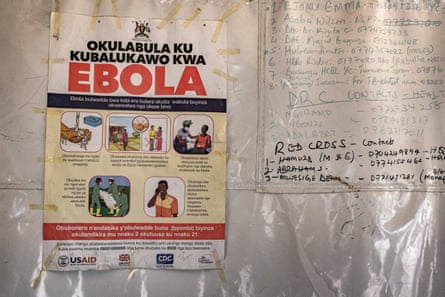 A poster displaying Ebola emergency contact numbers in a tent at the Busunga border crossing between Uganda
spreads through direct contact with body fluids such as the blood or vomit of infected people, or dead bodies, such as during funeral preparations. The DRC’s national research laboratory has detected the [Ebola
strain for which there is no vaccine and the cases have been found in an area affected by conflict. Ebola is a rare but deadly disease caused by a virus. Ebola viruses normally infect animals
spread. According to Congolese authorities, Mongbwalu is where the first cases of the new Ebola outbreak were reported. Residents describe daily deaths in the village, while local health services struggle to respond. The recurring epidemics
strain of Ebola is caused by the Bundibugyo virus, for which there are no approved drugs or vaccines. There are also two confirmed cases and one death in Uganda, according
Ebola. The National Quarantine Unit was completed in late 2019. It cost nearly $20 million, [according to the Associated Press](https://omahadailyrecord.com/content/officials-saw-need-20-years-ago-quarantine-facility). Both facilities were used during the COVID-19 epidemic. [![An aerial view
Ebola outbreak in the DRC and Uganda, the WHO has deployed experts, personal protective equipment (PPE), laboratory support and emergency funding while coordinating regional preparedness efforts. But these sorts of efforts are at risk with