158 resultsfor “increase in gas prices since Iran war”
price of medicines increased? Since the early days of the war, Iran has blocked the Strait of Hormuz, through which 20 percent of the world’s oil and liquefied natural gas
increased cost in gas and food over the next year because of Iran?” Khanna asked. As the US continues with its blockade of Iranian ports, and Tehran controls the Strait of Hormuz, gas prices
since the three months to October 2020. After taking inflation into account, wages grew by just 0.3%. Including bonuses, wages increased by 4.1%, from a rise of 3.8% in the previous quarter. The Iran war
increase is devastating’: US readers on toll of rising gas prices With the US and Israel’s war on Iran now in its seventh week, with a [fragile ceasefire](https://www.theguardian.com/world/2026/apr/08/middle-east-ceasefire-doubt-israel-lebanon-iran-oil-tankers) in place since
since being sworn in for his second term. Most Americans said the economy isn't working for them. The war in Iran — which has directly led to higher gas prices — is increasingly
Iran threatened ships in the area and maritime insurers cancelled [war risk cover](https://www.theguardian.com/business/2026/mar/02/maritime-insurers-war-risk-cover-gulf-iran-shipping-strait-of-hormuz). Trump also pointed out that gas prices remain lower than during the Biden administration, “and he wasn’t stopping
Iran war pressure** 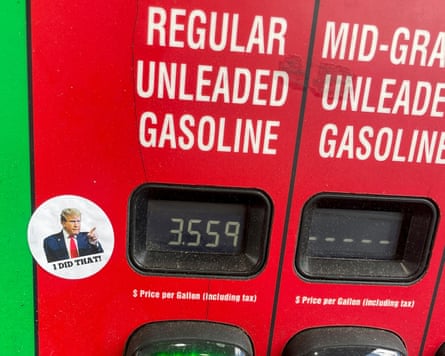 Someone adds a sticker of Donald Trump saying, ‘I did that
war with Iran has pushed inflation to its highest level in almost three years. Consumer prices in April were up 3.8% from a year ago, according to a report Tuesday from the Labor Department. That
increase. Iranian attacks on oil and gas facilities in the Gulf in the early weeks of the war impacted energy supplies. Since early March, Iran has also restricted passage through the [Strait of Hormuz](/news/2026/5/9/on-level-of-atomic-bomb-iran-highlights-hormuz-importance-amid-us-talks
Gas prices have jumped by well over a dollar a gallon since the war began, strangling shipping traffic in the Strait of Hormuz — a critical pathway for much of the world's oil supply
Gas prices are the highest they’ve been in four years, since late July 2022.” California, home to nearly 40 million people, saw petrol prices hit more than $6 per gallon on Thursday. The spike
increasingly become conjoined, as Iran insists that any potential truce in the war there must also quell the fighting in Lebanon. Israel and the U.S. maintain the fighting in Lebanon is separate from the Iran
gas supplies are normally shipped. The price of jet fuel has more than doubled in certain markets since the US-Israeli war on Iran began in late February. European aviation companies are particularly affected
since the start of the US-Israel war with Iran. Iran's threats to ships using the strait - through which some 20% of the world's oil and gas flows - has led to large increases
Iran on 28 February. The [strait of Hormuz](https://www.theguardian.com/world/strait-of-hormuz), which usually carries a fifth of the world’s oil and liquid gas supplies, has since been all but closed – sparking vast economic disruption
price rises in oil and gas since the US and Israel’s attack on Iran in February, Oslo has also given its approval for oil and gas companies to explore in 70 new locations
increased significantly since the conflict began on February 28, resulting in the effective closure of the Strait of Hormuz, where around a fifth of the world’s oil and gas is normally shipped. “Americans
since Trump called Iran’s response to US peace proposals “totally unacceptable” over the weekend. Top oil and gas companies have pulled in big profits as these fuel prices increased. [Analysis for the Guardian
since the start of the war. “Reforming and increasing the price of energy is currently not feasible and logical due to the current economic conditions and social concerns,” Esmail Saghab Esfahani, a vice president
price disruption caused by the ongoing Iran war could last longer than initially thought. Global energy costs have rocketed since the US and Israel attacked Iran on 28 February. In response, Iran has effectively blocked