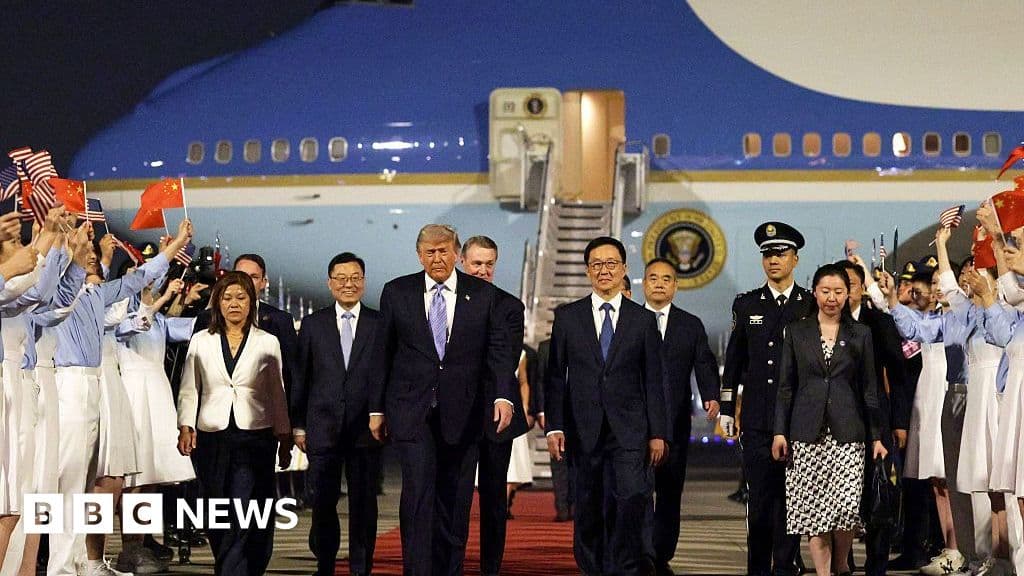
Trump arrives in China for high-stakes meeting with Xi Jinping
Trump arrives in China for crucial talks with Xi Jinping on tariffs and tech.
BBC News1 min read

President Trump has backed Ali al-Zaidi as Iraq's prime minister, aiming to prevent a pro-Iran candidate from taking office. This decision follows a pressure campaign against the Coordination Framework, which initially supported Nouri al-Maliki.
Mentioned in this story
The decision by United States President Donald Trump to back Ali al-Zaidi as Iraq’s next prime minister may have surprised some quarters. But when one looks into whom Trump was trying to keep out, his motivation becomes clear.
Iraq’s dominant parliamentary bloc, the Coordination Framework, a coalition of Shia parties aligned with Iran, had initially thrown its weight behind former Prime Minister Nouri al-Maliki. For Washington, the nomination of an openly pro-Iran premier was a red line, especially amid continuing attacks by pro-Iran Iraqi militias on US assets in the country and the region. Trump publicly announced his opposition to al-Maliki and threatened to cut off all aid to Iraq if he were appointed.
The pressure campaign was swift and severe. Washington suspended cash payments from Iraq’s oil revenues, which are held at the Federal Reserve Bank of New York, representing a lifeline to the Iraqi economy dating back to the 2003 US-led invasion. It also halted security assistance and suspended cooperation with Iraqi security agencies while issuing a stark warning against any government influenced by Iran-linked figures and armed factions. US Treasury Secretary Scott Bessent added his voice, warning that those who enable militia violence “will be held accountable”.
Faced with that wall of pressure, the Coordination Framework blinked first. After trying and failing to approve Bassem al-Badry, a candidate backed by al-Maliki, it convened for a final decisive meeting. Within 25 minutes, Ali al-Zaidi, a 40-year-old banker with no previous experience in political office, was unanimously approved as the compromise candidate.
The US president wasted no time in claiming the outcome as a victory. He called al-Zaidi, extended an invitation for a visit to Washington, DC, and posted on Truth Social, wishing him success in forming “a new Government free from terrorism that could deliver a brighter future for Iraq”. To reporters at the White House, Trump was even more blunt: “With our help, he won.”
But why al-Zaidi specifically? Washington’s confidence in him stems from three primary factors. First, he is a business-oriented outsider, having served as the chairman of Al-Janoob Islamic Bank. Analysts noted that al-Zaidi’s lack of political history was, paradoxically, his greatest asset. In a deeply polarised landscape, his “blank slate” makes him a palatable choice both domestically and internationally.
Second, while Al-Janoob Bank was among those banned by Iraq’s central bank from dollar dealings in 2024 amid US pressure to crack down on money laundering and sanctions evasion on behalf of Iran, neither the bank nor al-Zaidi personally is under US sanctions. This means Washington has reason to believe he is not fully entangled in Iran’s networks in Iraq.
Trump supported al-Zaidi to block the nomination of Nouri al-Maliki, a pro-Iran candidate, amid concerns over Iranian influence in Iraq.
The US suspended cash payments from Iraq's oil revenues and halted security assistance to pressure the Coordination Framework against supporting a pro-Iran government.
Ali al-Zaidi is a 40-year-old banker with no prior political experience, chosen as a compromise candidate for prime minister in Iraq.
Trump claimed al-Zaidi's appointment as a victory, expressing hope for a government in Iraq that is free from terrorism and capable of delivering a brighter future.
Trump arrives in China for crucial talks with Xi Jinping on tariffs and tech.

Could Southampton be expelled from the play-offs due to Spygate allegations?

An 85-year-old woman recalls her experience as an ICE detainee.

Gunfire erupts in Philippine Senate as police try to arrest senator wanted by ICC.
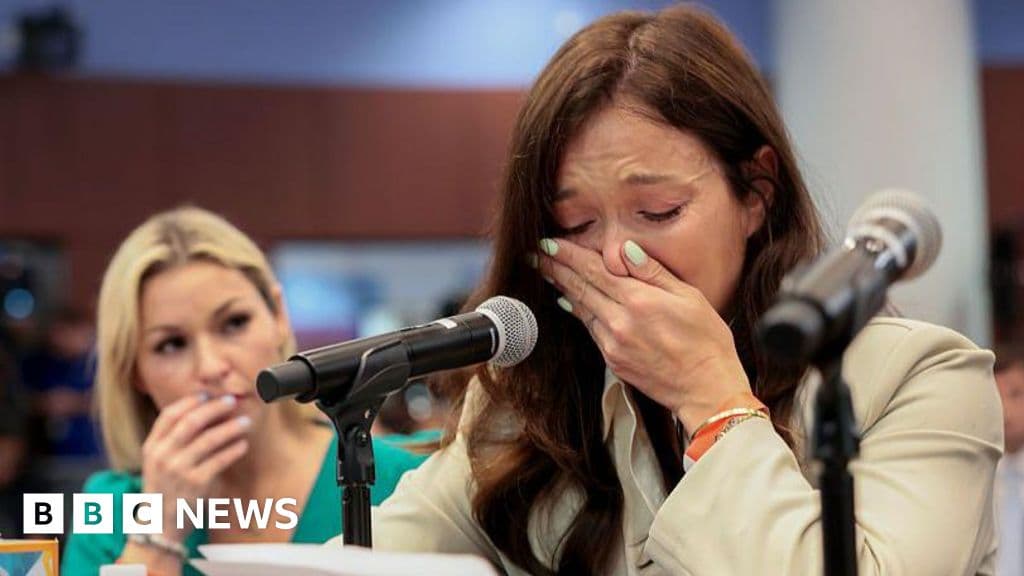
Survivor reveals Epstein's abuse while he was under house arrest at a hearing in Florida.

California's Santa Clara County sues Meta for profiting from scam ads on Facebook and Instagram.
See every story in News — including breaking news and analysis.
Finally, al-Zaidi allows for a wider bargain to take place. The cordiality of Trump’s congratulations suggests Washington may have traded its support for substantial concessions. This shift reflects a new reality: Because of the US-Israeli war, a weakened Iran has left its Iraqi partners with little room to manoeuvre or resist Western demands.
That brings Washington’s demands sharply into focus. A senior US Department of State official told the AFP news agency that Trump’s blessing is conditional. The US is seeking “concrete actions” from al-Zaidi’s government to distance the Iraqi state from Iran-backed militias before it will fully resume financial shipments and security aid. Resuming full support, the official said, would begin with “expelling terrorist militias from any state institution, cutting off their support from the Iraqi budget and denying salary payments to these militia fighters”.
The scale of what is being asked should not be underestimated. US facilities in Iraq have sustained more than 600 attacks from Iran-aligned militias since February 28 when the US and Israel launched their war against Iran.
State Department spokesperson Tommy Pigott said plainly: “The United States will not tolerate attacks on US interests and expects the Iraqi government to immediately take all measures to dismantle the Iran-aligned militia groups in Iraq.”
Al-Zaidi has 30 days under the Iraqi Constitution to present a cabinet to the Iraqi parliament, where he needs 167 votes for it to be approved. He has promised to make Iraq “a balanced country, regionally and internationally,” a careful choice of words for a politician navigating between two powerful patrons.
With all that, al-Maliki’s political obituary seems to have already been written. The pointed intervention by Trump in effect signalled the end of his relevance, and al-Zaidi – a shrewd reader of the new regional architecture – knows it. In the coming months, US pressure on militia-linked powerbrokers is expected to intensify, and some figures will, in all likelihood, be quietly neutralised. The space al-Maliki once occupied is closing fast.
But major challenges lie ahead for al-Zaidi.
Washington has made its expectations unambiguous: It wants the new government to dismantle the Iran-affiliated militias. That could prove to be a difficult task but not impossible. Al-Zaidi could approach it from the economic side: cutting salaries paid from the state for tens of thousands of fighters, which would cause many factions to simply disband. A select few could be absorbed into the formal Iraqi army.
Another challenge is the paralysis of oil exports due to the closure of the Strait of Hormuz. However, Baghdad may get some relief if Washington releases the Iraqi funds that were supposed to be transferred from the Federal Reserve Bank. This would be contingent, almost certainly, on progress on the militia file. Either way, painful structural adjustments lie ahead. A bloated public sector and an overextended budget can no longer be sustained.
In the coming months, the situation in Iraq will certainly remain tense. That would certainly test al-Zaidi’s ability to survive the complicated process of governing Iraq.
The views expressed in this article are the author’s own and do not necessarily reflect Al Jazeera’s editorial stance.