
Barnaby Joyce claims people who ‘look like’ recent arrivals dominate auctions. Who is he talking about?
Barnaby Joyce claims recent arrivals are outbidding Australians at home auctions.
The Guardian World1 min read

The Royal Family's income comes from the Sovereign Grant, which funds official duties, and rental income from royal properties. Andrew Mountbatten-Windsor earns money from sub-letting cottages on the Royal Lodge estate.
Mentioned in this story
The first report into royal residences for 20 years has revealed that Andrew Mountbatten-Windsor received rental income from sub-letting three cottages on the Royal Lodge estate.
The report, by public spending watchdog the National Audit Office (NAO), also said that the King pays the rent for accommodation in royal palaces for Mountbatten-Windsor's daughters Princesses Eugenie and Beatrice.
The Royal Family receives tens of millions of pounds each year from the Sovereign Grant and uses it to cover the cost of official duties, but this is not the only source of their income.
The Sovereign Grant provides public funding for the running costs of the monarchy.
This includes core staff costs, running expenses of the King's official household including receptions, maintenance of palaces in England and travel costs for royal engagements.
For 2026-27, the Sovereign Grant stands at a record £137.9m**,** in the second year of a two-year hike to pay for building work at Buckingham Palace.In 2025-26, it stood at £132.1m and in 2024-25 it was £86.3m.
The grant has more than tripled in real terms since it was introduced, at £31m a year, in 2012. It brought together public funding into a single payment, replacing a mix of grants from a range of government departments.
However, the funds could soon be reduced for the first time.
"The government is committed to bringing forward legislation to reset the grant to a lower level from 2027-28 once Buckingham Palace reservicing works are completed," Financial Secretary to the Treasury Lord Livermore told the House of Lords in March.
The Treasury has said the forthcoming legislation would allow for a cut to the grant for 2027-28, but only as a one-off measure. It is not known how much the reduction would be.
Separately, the Royal Household's annual financial statement said additional income increased to £21.5m in 2024-25, following a record number of visitors to Buckingham Palace.
Profits of the Crown Estate - a property business owned by the monarch but run independently - go to the Treasury.
The level of profit is used to calculate the funding given by the government to the Royal Family.
The Crown Estate had assets worth £15bn in 2024-25, with billions of pounds worth of properties in London, including Regent Street, as well as nearly half the land along the coast of England, Wales and Northern Ireland.
The estate is not the King's private property but belongs to the monarch for the duration of their reign. The King cannot sell its assets or keep any profits for himself.
The Sovereign Grant is public funding that provides tens of millions of pounds each year to cover the costs of the monarchy's official duties.
Andrew Mountbatten-Windsor earns rental income by sub-letting three cottages on the Royal Lodge estate.
The King pays the rent for the accommodation of Princesses Eugenie and Beatrice in royal palaces.
The Sovereign Grant covers core staff costs, running expenses of the King's household, palace maintenance, and travel costs for royal engagements.
Barnaby Joyce claims recent arrivals are outbidding Australians at home auctions.

Donald Trump receives boos at NBA finals in New York City

Karim Khan, ICC chief prosecutor, suspended amid misconduct allegations.

Karim Khan, ICC chief prosecutor, suspended amid misconduct inquiry.
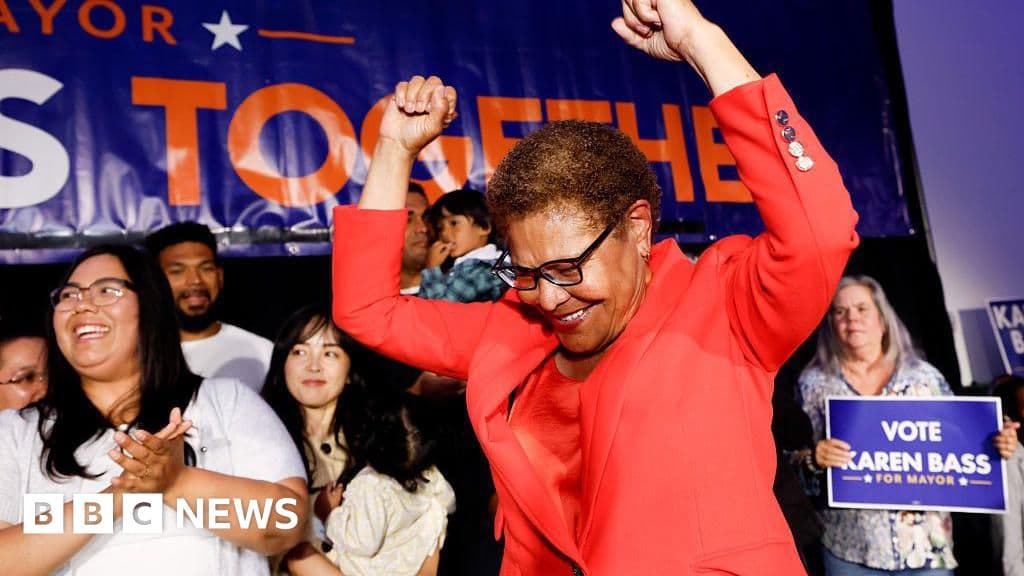
Spencer Pratt exits LA mayoral race as Nithya Raman moves forward against Karen Bass

Nithya Raman defeats Spencer Pratt, faces Karen Bass in LA mayoral election
See every story in News — including breaking news and analysis.
The Sovereign Grant was initially worth 15% of the Crown Estate profits generated two years previously. That increased to 25% in 2017-18, to help pay for the Buckingham Palace repairs, before reducing to 12% since 2024-25.
However, soaring profits from the Crown Estate have still led to large increases in the Sovereign Grant, including a £45m increase in 2025-26.
Under the Sovereign Grant Act 2011, if the Crown Estate's profits fall, the monarch still currently receives the same amount as the previous year, with the government making up the difference.
The King and other working members of the Royal Family use the money to pay for expenses related to their official duties.
The vast majority is spent on the upkeep of properties and staffing, but it also covers costs such as travel to royal engagements.
Members of the Royal Family carry out about 2,000 official UK and overseas engagements each year.
Buckingham Palace says that about 70,000 people are entertained at dinners, lunches, receptions and garden parties at the Royal residences.
The King also receives money from a private estate called the Duchy of Lancaster, which is passed down from monarch to monarch. This income is known as the Privy Purse.
The Duchy of Lancaster covers over 18,000 hectares of land in areas such as Lancashire and Yorkshire, as well as property in central London.
Whoever holds the title of Duke of Cornwall (currently the Prince of Wales) benefits from the Duchy of Cornwall.
It mainly covers land in south-west England. In the year to the end of March 2025 it had assets worth £1.1bn and had made annual profits of £22.9m.
The King and Prince William receive the profits from the duchies personally, and can spend them as they wish. However, they are not entitled to any proceeds from the sale of any estate assets, which must be reinvested.
The monarch also owns the royal palaces (which are not part of the Crown Estate) and part of the Royal Collection of art, but these do not generate income.
Some palaces are looked after and funded by the Royal Family itself. Others - such as the Tower of London - are managed by Historic Royal Palaces, an independent charity.
The King also privately owns properties such as Balmoral and Sandringham. The King's brother, Andrew Mountbatten-Windsor, moved to Sandringham, in Norfolk, earlier in 2026.
In addition, some Royal Family members have private art, jewellery and stamp collections which they can sell or use to generate income as they wish.
In 1992, Elizabeth II volunteered to pay income tax and capital gains tax on her personal income, and the King does the same.
The two duchies are exempt from corporation tax, but the King and Prince William voluntarily pay income tax on the revenue they generate. However, the amount of tax they pay is not made public.
They do not pay capital gains tax because they do not benefit personally from any increase in the duchies' assets.
Members of the Royal Family pay tax on any income generated from privately-owned assets.
King Charles does not have to pay inheritance tax on the money he received when the late queen died, under the "sovereign to sovereign" exemption agreed in 1993 by then Prime Minister John Major.
The Sovereign Grant does not cover the Royal Family's security arrangements, which are usually paid for by the Metropolitan Police, although the cost is not disclosed.
Some major events are also not included. The late queen's funeral in 2022 cost the government an estimated £162m.
The Coronation of the King cost taxpayers £72m, including £22m for policing.
Republic, a group campaigning for an elected head of state, has argued that factors such as security need to be included in the cost of the Royal Family.
The group claims that the total cost of the monarchy is about £510m a year.