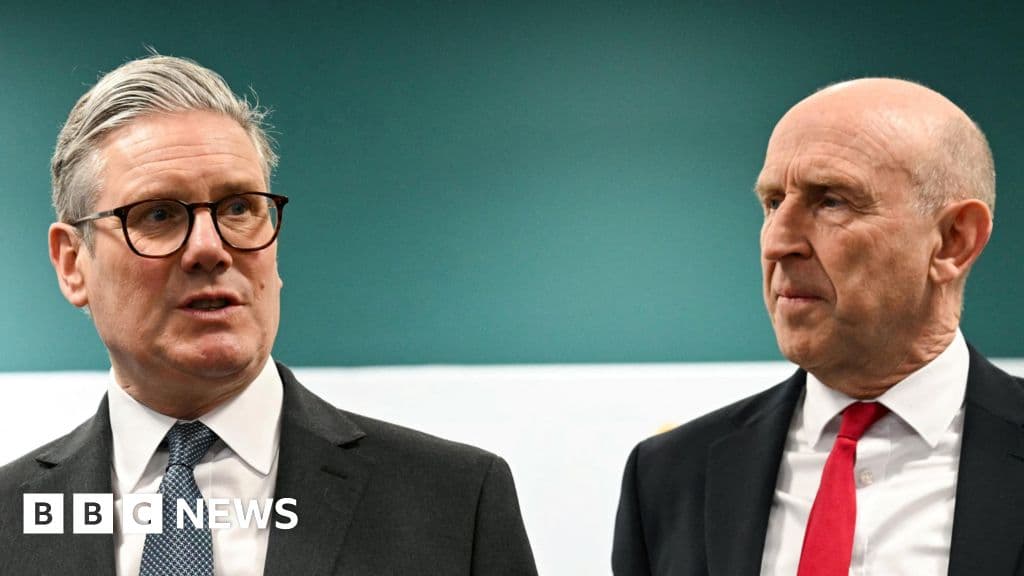
Chris Mason: What John Healey's resignation means
John Healey's resignation highlights issues in Starmer's government.
BBC News1 min read
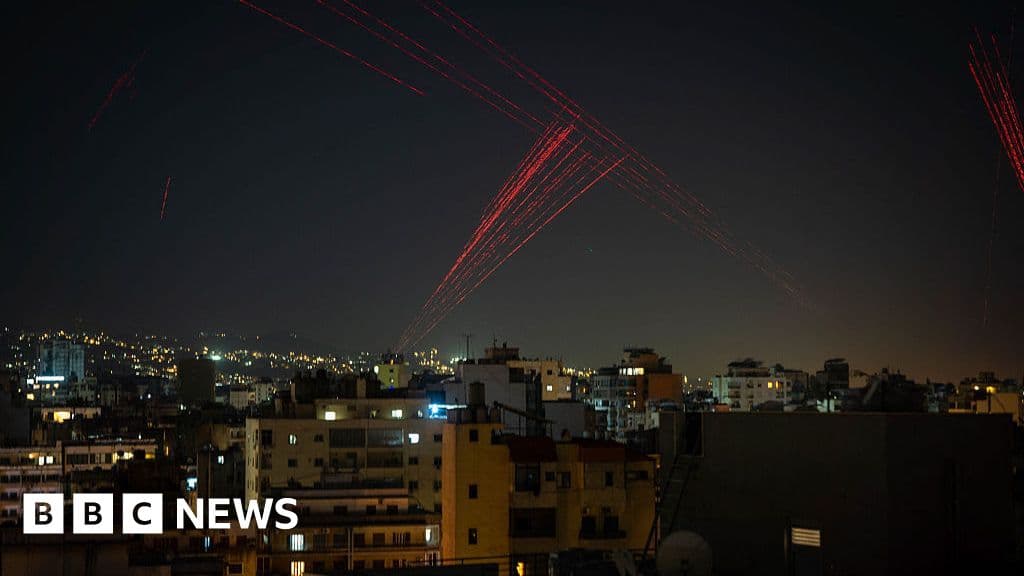
Israel and Lebanon have agreed to a 10-day ceasefire effective from April 16, announced by US President Donald Trump. The ceasefire may be extended if negotiations progress.
Mentioned in this story
US President Donald Trump has announced that the leaders of Israel and Lebanon have agreed to a 10-day ceasefire, which took effect from 17:00 EST (21:00 GMT; midnight local time) on 16 April.
There was no mention in Trump's statement of Hezbollah, the Iran-backed militant group in Lebanon, with which Israel has been exchanging fire for the past six weeks. But in a later post on Truth Social, Trump urged the group to abide by the ceasefire, saying, "I hope Hezbollah acts nicely and well during this important period of time."
Following the announcement, the US president also invited Israeli Prime Minister Benjamin Netanyahu and Lebanese President Joseph Aoun to the White House for further talks.
Here is what we know about the truce.
The terms of the deal specify that the ceasefire is set to last 10 days, with the possibility it being "extended by mutual agreement" if negotiations show signs of progress.
According to further details provided by the US State Department:
The statement added that the truce was a "gesture of goodwill" by Israel intended to enable "good-faith negotiations towards a permanent security and peace agreement" between the two parties.
Israel and Lebanon's leaders have both welcomed the truce, with Netanyahu calling it an "opportunity to make a historic peace agreement".
Lebanese Prime Minister Nawaf Salam said he hopes the agreement will allow those have been displaced by the conflict to return to their homes.
Hezbollah have also signalled a willingness to participate in the ceasefire, but said it must include "a comprehensive halt to attacks" across Lebanon and "no freedom of movement for Israeli forces".
The Iran-backed group, while deeply embedded in Lebanon, is not part of the Lebanese government's security apparatus.
Iran's foreign ministry welcomed the ceasefire, with spokesperson Esmail Baghaei expressing his "solidarity" with Lebanon. Tehran had insisted that its own two-week ceasefire with the US should include Lebanon while the US and Israel said it did not.
UN Secretary General António Guterres commended the role of the US in facilitating the ceasefire, and urged all parties to "fully respect" and "comply with international law at all times".
President of the European Commission Ursula von der Leyen called the deal a "relief", saying Europe will continue to "call for the full respect of Lebanon's sovereignty and territorial integrity".
The ceasefire is set to last for 10 days, with the possibility of extension by mutual agreement if negotiations show progress.
The ceasefire took effect at 17:00 EST on April 16, 2023.
Trump urged Hezbollah to abide by the ceasefire, hoping they would act nicely during this important period.
The leaders involved are Israeli Prime Minister Benjamin Netanyahu and Lebanese President Joseph Aoun.
John Healey's resignation highlights issues in Starmer's government.

BT CEO Allison Kirkby sees pay package more than double to £5.6m.

Japan restarts its largest nuclear power plant amid energy crisis, but faces nuclear waste storage issues.
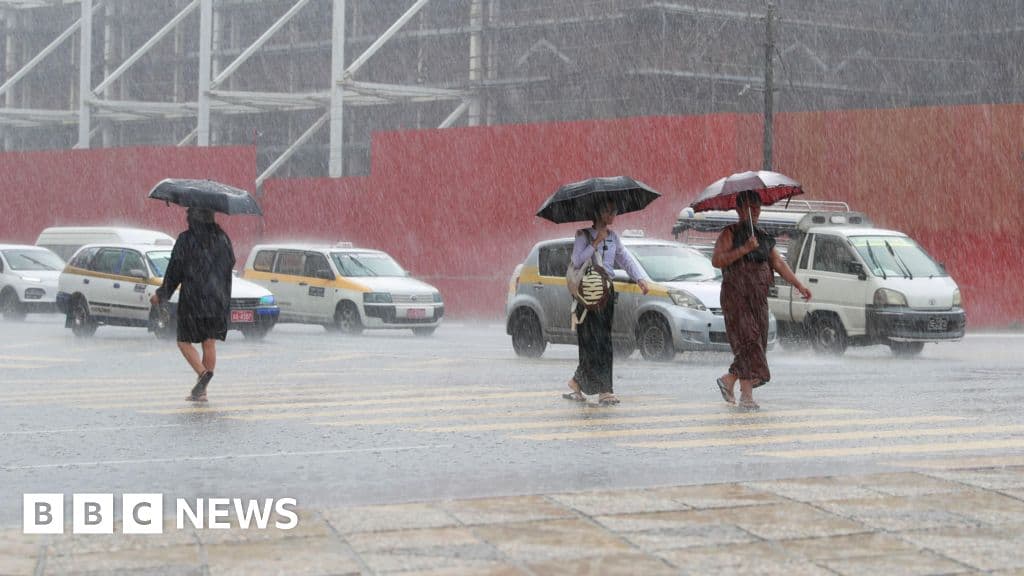
El Niño is officially underway, with scientists warning of extreme weather and record temperatures ahead.
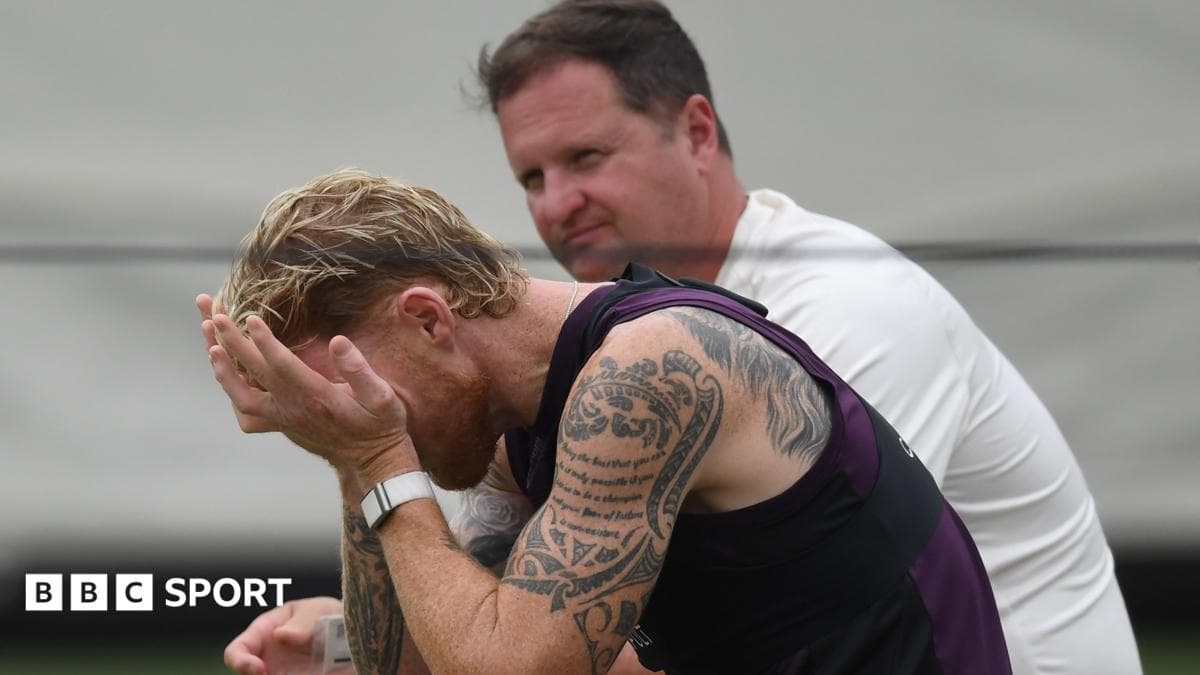
Rob Key considers an alcohol ban for the England team after recent nightclub incident involving Stokes and Atkinson.

Four Palestine Action activists could be sentenced as terrorists in the UK.
See every story in News — including breaking news and analysis.
EU foreign policy chief Kaja Kallas added that the ceasefire must be used to "step back from the violence" and create space for talks for "a more lasting peace".
Despite the agreement, Netanyahu said Israeli troops would maintain a 10km-deep (6.2 mile) "security zone" in southern Lebanon, saying: "We are there, and we are not leaving."
He added that the buffer zone needed to remain to "block the danger of invasion".
Israel re-entered southern Lebanon after strikes by Hezbollah in early March, creating a buffer zone it said was necessary to protect communities in northern Israel.
A previous ceasefire deal between Israel and Hezbollah - ending 13 months of conflict - still saw near-daily cross-border strikes.
Israel and Lebanon held rare direct talks in Washington earlier this week week aimed at easing the war, which has seen deadly air strikes on part of the Lebanese capital of Beirut and fighting in the country's south.
Trump's announcement said the deal came about after "excellent conversations" with Aoun and Netanyahu, but did not mention whether Hezbollah was directly involved in the talks.
He later urged Hezbollah to "act nicely and well during this important period of time" on social media.
Netanyahu, while welcoming the truce, also made clear also made clear that he was making few concessions on the ground.
He said Hezbollah had insisted on two conditions: the withdrawal of Israeli forces from Lebanon, and a principle of "quiet for quiet".
However, it appears ceasefire announcement has taken Israel by surprise - reportedly even within the government's own security cabinet.
A widely respected Israeli news outlet tonight described Netanyahu convening a security cabinet meeting with just five minutes notice, shortly before the ceasefire announcement was made.
Leaks from that meeting say ministers were not given a vote on the ceasefire.
When the ceasefire with Iran was announced, there were mixed messages on whether Lebanon was involved. Pakistani officials, who helped negotiate the deal, and Iranian officials, said it was, but Israel said it was not. US President Donald Trump's press secretary Karoline Leavitt also later said Lebanon was not part of the deal.
Israel launched strikes on Lebanon on 2 March in response to strikes launched by Hezbollah. This was after the US and Israel launched strikes on Iran – prompting retaliation from Tehran against US allies in the Gulf, and from Iran's proxies, which includes the Lebanese militant group.
Israel and Hezbollah have continued to exchange fire since then, despite pleas from Lebanon's Prime Minister for both sides to stop doing so.
More than 2,100 people have been killed and 7,000 others wounded in Israel's attacks on Lebanon since 2 March, according to the country's health ministry, which does not distinguish between combatants and civilians. The number includes at least 260 women and 172 children. The ministry says 91 health professionals have been killed and 208 other wounded in the war, with more than 120 Israeli attacks recorded on ambulances and medical facilities. BBC Verify analysis found more than 1,400 buildings in Lebanon had also been destroyed.
Hezbollah attacks have killed two civilians in Israel over the same period, while 13 Israeli soldiers have been killed in combat in Lebanon, Israeli authorities say.
On Thursday, the Israeli military destroyed the last bridge linking the south to the rest of the country, further isolating the region and renewing fears among many Lebanese that this could lead to a long-term occupation of some areas.