
World Cup kicks off in Canada with Alanis Morissette and Michael Bublé performing in opening ceremony
Canada kicks off the 2026 World Cup with Alanis Morissette and Michael Bublé!
BBC News1 min read

Mali faces severe unrest following attacks by Jama’at Nusrat al-Islam wal-Muslimin and the Azawad Liberation Front, resulting in multiple casualties including Defence Minister Sadio Camara and his family. The violence has spread across northern and northeastern regions, with ongoing explosions reported near Bamako.
Mentioned in this story
Mali is reeling from attacks on army bases over the weekend that killed Defence Minister Sadio Camara, his wife, two children and an unclear number of other people.
Intermittent explosions continued around Senou International Airport, south of the capital, Bamako, late on Monday, according to reports.
At least 16 people were injured in the coordinated offensives, which began on Saturday, by Jama’at Nusrat al-Islam wal-Muslimin (JNIM) and secessionist fighters from the Azawad Liberation Front (FLA).
Videos showed scores of fighters on motorcycles riding with little resistance into cities across northern and northeastern regions: Kidal, Gao, Sevare, Kati and Bamako.
The FLA is fighting for self-determination. Here’s what we know about the movement seeking autonomy in northern Mali and what its latest move means for its future and for Mali:

Defence Minister Sadio Camara was killed in an attack on his home in the garrison city of Kati near Bamako on April 25, 2026 [File: Maxim Shipenkov/AP]
Azawad is a self-declared autonomous region in northern Mali proclaimed during the 2012 Malian civil war.
The roots of the independence movement go back decades. Ethnic Tuaregs have fought for an independent state since the early 1900s. After French colonisers exited Mali – then French Sudan – in 1960, that demand intensified.
Tuaregs and Arabs predominantly occupy northern Mali. They have closer ties with populations in Algeria, northern Niger and parts of Mauritania than with the Bambara people, who make up the majority of Mali’s population.
In 1962, Tuareg rebels began attacking government positions in northern Mali in uncoordinated offensives. The rebellion was crushed, forcing many civilians to flee to neighbouring countries and causing resentment. Droughts in the north, which killed livestock and severely affected the nomadic lifestyle of its people, added to the anger.
In 1990, the rebels attacked again with Tuaregs from northern Niger. The groups in Mali were the Popular Movement for the Liberation of Azawad (MPLA), founded by Iyad Ag Ghaly; the Arab Islamic Front of Azawad (FIAA); and the United Movements and Fronts of Azawad (MFUA).
A peace deal was struck with some of the rebels in 1995, but attacks continued sporadically in northern Mali.
The attacks were part of coordinated offensives by the Azawad Liberation Front and Jama’at Nusrat al-Islam wal-Muslimin, aiming to assert their influence and push for self-determination in northern Mali.
The Azawad Liberation Front is fighting for self-determination and autonomy for the northern regions of Mali.
The attacks resulted in the deaths of Defence Minister Sadio Camara, his wife, two children, and at least 16 other injuries.
The violence impacted northern and northeastern regions, including Kidal, Gao, Sevare, Kati, and the capital, Bamako.
Canada kicks off the 2026 World Cup with Alanis Morissette and Michael Bublé!

A UK court has sentenced four Palestinian Action activists to 5 to 8 years in prison for a raid on an Israeli arms company, labeling it a 'terrorist act'. The group aimed to dismantle weaponry they believed would be used against people in Gaza.

What can be done to prevent women from dying from postpartum bleeding?

Ant Middleton's endorsement of Robert Kenyon sparks criticism in Makerfield byelection

Gulf states prepare for new security strategies as U.S.-Iran ceasefire nears.
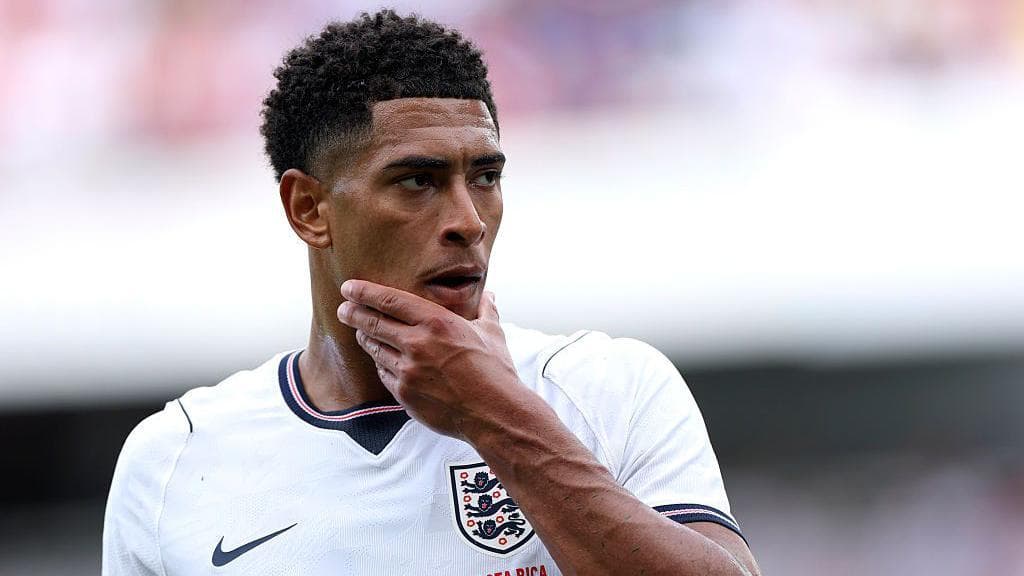
Jude Bellingham set to start in No 10 role for England's World Cup opener, but Marc Guehi is out.
See every story in News — including breaking news and analysis.
In January 2012, a new wave of attacks by Tuaregs and armed groups ignited the Malian civil war.
It was led by the National Movement for the Liberation of Azawad (MNLA), made up of Tuareg fighters who had earlier taken refuge in Libya and fought for Muammar Gaddafi. Bilal Ag Cherif led the movement.
The MNLA partnered with a newly formed ideological group Ansar Dine, led by Iyad Ag Ghali, at the start of the war. Although they were partners, fighting also broke out between the two groups.
They succeeded in seizing swaths of territory across the north, including Kidal, Timbuktu and Gao after a March military coup in Bamako created a power vacuum.
On April 6, 2012, Bilal Ag Cherif declared Azawad’s independence.
The next month, both sides announced a formal coalition. However, fighting again broke out between the MNLA and Ansar Dine.
While the rebels wanted to declare self-governance, Ansar Dine and its allies in al-Qaeda in the Islamic Maghreb (AQIM) wanted to establish strict Islamic law. Eventually, those elements hijacked the rebel cause, isolating the MNLA.
In 2013, 4,000 French soldiers were deployed to Mali at Bamako’s request.
Bamako eventually signed a fragile peace deal, the Algiers Accords, with an organised Tuareg coalition, the Coordination of Azawad Movements (CMA), in May 2015.
Mali agreed to give more autonomy to the north, integrate former fighters and invest in the region to reduce poverty.
A United Nations peacekeeping mission consisting of about 11,000 soldiers was deployed to the area.

Men from northern Mali who fled attacks by the Malian army and the Russian paramilitary Africa Corps sit in a makeshift camp in Douankara, Mauritania, on November 8, 2025 [Caitlin Kelly/AP]
Although the rebellion cooled, fighting by Ansar Dine and similar emerging groups continued.
In 2017, JNIM was formed by a merger of four al-Qaeda-allied groups: Ansar Dine, AQIM, Katina Macina and al-Mourabitoun. It is led by Ag Ghaly and operates with about 10,000 fighters across the border areas of Mali, Niger and Burkina Faso.
As attacks by JNIM worsened and the group began seizing swaths of northern Mali, the military again seized power in Bamako in August 2020, promising an end to the crisis.
France and many other countries condemned the coup, causing Bamako’s stance against Paris and other international partners to become more hostile.
Popular anger was also growing in affected Sahelian countries as many people claimed the French military presence was not helping.
In 2021 as French troops were asked to withdraw from Mali, Russian mercenaries from the Wagner Group arrived in Bamako to fill the security gap.
Mali, now suspended by the Economic Community of West African States (ECOWAS), also requested the exit of the UN peacekeepers in 2023, accusing them of failing to stabilise the area. About 310 peacekeepers had been killed in the crisis at that time.
Fighting between the Malian army and Tuaregs flared up over who would control the peacekeepers’ vacated bases, leading to dozens of civilian deaths and pushing thousands of people into Mauritania.
Bamako tore up the Algiers Accords in January 2024 and began attacking JNIM and Tuareg positions, reigniting another rebellion.
In November 2024, the Azawad Liberation Front formed from components of past rebel groups. It is led by Alghabass Ag Intalla, and the group is once more calling for self-determination.

Malian President Assimi Goita, seen here meeting with Russian President Vladimir Putin at the Kremlin in June 2025, has not been seen since last weekend’s attacks [File: Pavel Bednyakov/Reuters]
Tuareg separatists have again partnered with armed groups who have a different objectives but with whom they share a common enemy: the Malian government.
Since their movement was hijacked in 2012, Tuareg rebels were careful not to associate with armed groups. But they are intertwined. Both draw fighters from the same northern communities that have long decried marginalisation.
The rebels are now “throwing caution to the wind”, however, Beverly Ochieng, a Senegal-based West Africa analyst at the intelligence firm Control Risks, told Al Jazeera.
“This alliance is not surprising,” Ochieng said, explaining that both sides have always coexisted in the north. “FLA has had to gauge what works, and this is more tactically advantageous to them because they have the same interests. FLA cannot defeat the Malian army alone.”
Their political interests are aligning too, Ochieng said, as JNIM in recent years has softened its rhetoric around strict religious rules and focused on campaigning against the Malian army’s rights violations.
JNIM has also been accused of violations. Its fighters, like those from the Mali-Russia alliance, have been accused of attacking civilians, but the Armed Conflict Location & Event Data monitoring group found that in 2024 and 2025, the government and its allied forces killed three to four times more civilians.
In July 2024, rebels attacked a convoy of Malian and Russian fighters in the northern town of Tinzaouaten. The rebels said they killed 47 Malian soldiers and 84 Russian fighters although the Malian government said it suffered losses but that it also killed 20 rebels. JNIM claimed it was a part of the attacks. The Tuareg rebels publicly denied it.
This past weekend’s attacks marked the first time that JNIM and the FLA officially coordinated their operations.
Russian fighters were allowed to exit the city of Kidal after negotiations by Algeria. In a statement, JNIM said it wished for a “balanced future relationship” with Moscow.
Ochieng added that while Russia will likely work with any group in power to keep its foothold in the Sahel, JNIM is unlikely to hold political office in Bamako because it lacks legitimacy.
“None of the countries in the region will want JNIM in power, especially the AES states,” she said, referring to the Alliance of Sahel States, consisting of Mali, Burkina Faso and Niger.
JNIM could ally with exiled political parties in the south and the FLA in the north, she said.
The FLA now claims control of Kidal, a Tuareg stronghold. JNIM claims it jointly controls Kidal and Mopti.
According to videos on social media, FLA fighters were seen disarming Malian soldiers in Kidal. The fate of the leader of Mali’s military government, President Assimi Goita, is unknown. He has not been seen since Saturday.