
Faithful line streets as Pope Leo to bless Sagrada Família on centenary of Gaudí’s death
Pope Leo XIV will bless the Sagrada Família, marking Gaudí’s centenary and the tower's completion.
The Guardian World1 min read

Weight-loss drug users save over £400 annually on grocery bills, with GLP-1 usage tripling to 1.9 million adults in Great Britain. Households with GLP-1 users spent £780 million less on groceries than expected in the past year.
Weight-loss drugs are saving users’ households more than £400 a year on grocery bills, according to new research, which found use of GLP-1s has nearly tripled in the past two years to 1.9 million adults.
Just more than 6.3% of households in Great Britain now include at least one GLP-1 user, according to the survey from Worldpanel by Numerator. This marks a sharp rise from 4.1% of households in 2025 and 2.3% in 2024.
The research showed that in the year after starting taking the drugs, households with at least one GLP‑1 user spent £780m less on groceries than expected compared with similar households.
The increase in use of drugs such as Mounjaro and Wegovy is also having a significant impact on grocery spending, according to a survey of more than 11,600 households, as GLP-1 users buy less food at the supermarket.
Grocery spend by households that include a weight-loss jab user has declined by £780m, with 299m fewer grocery packs bought during February, when the analysis took place. This equates to a £418 drop in grocery spending for user households compared with non-user ones.
More than half (52%) of GLP-1 users described their approach to eating as “mindful”, meaning that their food consumption was guided by hunger, rather than being linked to habit, routine or restriction.
More than half (54%) of weight-loss jab users reported that they experienced fewer cravings and less “food noise”, while one in 10 (11%) users said they no longer enjoyed their usual favourite foods or drinks.

Just more than 6.3% of households in Great Britain include a user of GLP-1 drugs such as Mounjaro and Wegovy, the survey found. Photograph: Niall Carson/PA
GLP-1 users said they were cutting back on treats: three-quarters (75%) reported eating less chocolate and a similar number (72%) reduced their consumption of crisps. The survey found this claim was supported by their shopping habits, as chocolate confectionery spend fell by 18 percentage points more in GLP-1 user households compared with non-user households.
The change in eating habits among GLP-1 users was not just confined to the home. Two-fifths (40%) of people taking weight-loss drugs said they wanted to see smaller portion sizes on restaurant menus, while more than a quarter (26%) requested a GLP-1-friendly section of the menu to choose from when eating out.
Weight-loss drug users save over £400 a year on grocery bills.
There are currently 1.9 million GLP-1 users in Great Britain.
Households with GLP-1 users have spent £780 million less on groceries than expected.
Just over 6.3% of households in Great Britain now include at least one GLP-1 user.
Pope Leo XIV will bless the Sagrada Família, marking Gaudí’s centenary and the tower's completion.
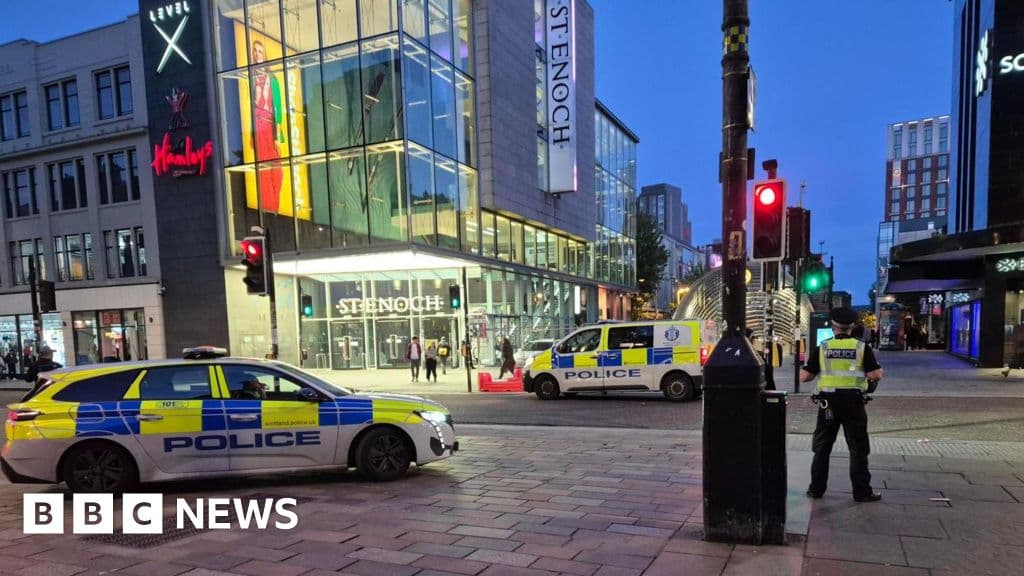
Three men arrested in Glasgow after violence and racist assaults following a Belfast knife attack.

Julian Alvarez is the center of a fierce transfer battle in La Liga, with a €150 million bid from Real Madrid.

Michael Vaughan argues that Ben Stokes should not be removed as England Test captain despite breaking curfew after a victory celebration. Stokes and teammate Gus Atkinson are under investigation following an incident involving a security staff member.

US inflation jumps to 4.2% in May, the highest since 2023, driven by energy prices.

Iran considers pulling out of peace talks after US airstrikes escalate conflict.
See every story in News — including breaking news and analysis.
A common side-effect of weight-loss jabs, a dry mouth and bad breath – known as “Ozempic mouth” – drove some users to buy more mouthwash and chewing gum to counter this, with sales up 20 percentage points and 24 percentage points respectively in GLP-1 user households compared with non-user households.
Chantel Kennaugh, the head of public sector and nutrition GB for Worldpanel by Numerator, said: “What was once a specialised treatment, primarily prescribed for type 2 diabetes, has in just a few short years become a mainstream force. Now, 68% of users are taking GLP-1s specifically to lose weight, opening them up to a much wider audience.
“These drugs are fundamentally disrupting how people engage with food and drink, with ripple effects already being felt across grocery and lifestyle, forcing brands and businesses to adapt at pace.”
Some retailers have already begun to offer products specifically targeted at consumers taking weight-loss jabs.
Marks & Spencer introduced a new range of “nutrient dense” food at the start of the year, aimed at satisfying customers who are eating less, while online supermarket Ocado has created a virtual “weight management” aisle.
Price has re-emerged as the primary barrier to taking the medication, Worldpanel found, with two-fifths (41%) of users reporting stopping in 2026 because of the cost.