
News
FBI arrests California man shot by ICE on ‘assault’ charges
California man shot by ICE agents faces assault charges after incident
The Guardian World1 min read

JD Vance faced a challenging week, failing to secure support for Viktor Orbán in Hungary and unsuccessful negotiations regarding Iran. These failures highlight significant setbacks for Trump's foreign policy agenda.
Shortly before JD Vance’s ill-fated week crisscrossing the world, Donald Trump asked him during a private Easter brunch about how the Iran negotiations were shaping up. “If it doesn’t happen, I’m blaming JD Vance,” Trump said to laughs in the room. “If it does happen, I’m taking full credit.”
The joke at Vance’s expense contained an unfortunate nugget of truth: this is not an administration that rewards failure.
The odds were already against the US vice-president when he flew to Hungary one week ago to help rally for Viktor Orbán, the Maga movement’s closest ally in Europe, who was facing electoral defeat after 16 years in power. Then Vance traveled on to Islamabad, where he held last-ditch negotiations in order to reopen the strait of Hormuz and end Iran’s nuclear programme, as Trump threatened to bomb the country “back to the stone ages”.
Vance went 0 for 2 in one of the most bruising weeks of his term in office.
Orbán is out in a historic landslide and negotiations have failed to end the war in Iran, leading Trump to impose his own blockade on the strait of Hormuz. Vance’s ill-fated road trip exposed severe setbacks for his Maga foreign policy – first to empower rightwing populism in Europe, and second to extract the US from its latest foreign policy intervention in the Middle East.
Along the way, Vance blew through longstanding conventions for US leaders not to interfere in allies’ elections abroad and failed to secure a landmark foreign policy achievement that could buffet his expected 2028 run for the presidency.
Among the damaging visuals were images of him on stage with Orbán, one of Europe’s most illiberal leaders, who sought to marshal support from both the US and from Russia in order to stave off a challenge from his former minister Péter Magyar, who had accused Orbán of turning Hungary into a “mafia state”.
Hungarian officials had been lobbying Trump to visit. Instead, they got Vance, whose travel during a major US conflict in Iran raised eyebrows in DC. The first time Vance sought to get Trump on the phone to address the crowd in , it went to voicemail.
JD Vance failed to rally support for Viktor Orbán in Hungary and could not negotiate a resolution regarding Iran's nuclear program.
Trump jokingly blamed Vance for the failure of the Iran negotiations, indicating that the administration does not tolerate failure.
Viktor Orbán suffered a historic defeat in the Hungarian elections, losing after 16 years in power.
Following the failed negotiations, Trump imposed a blockade on the strait of Hormuz.
California man shot by ICE agents faces assault charges after incident

Eric Swalwell resigns amid fifth sexual misconduct allegation
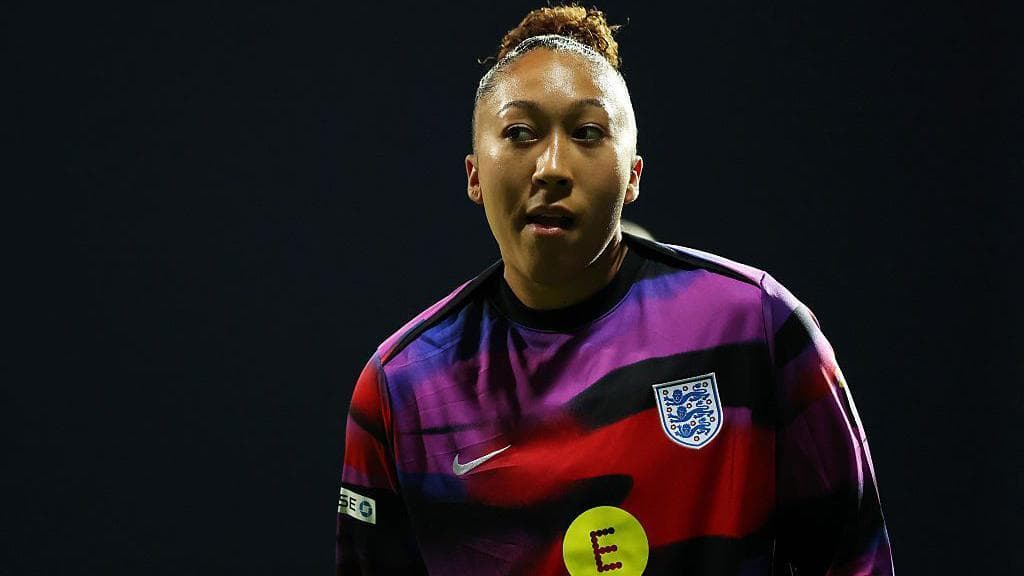
England's 1-0 win over Spain highlights Lauren James' potential.

Former UCLA gynecologist James Heaps pleads guilty to 13 sexual abuse charges and sentenced to 11 years.

Wes Streeting unveils new women's health strategy to combat medical misogyny

Atletico Madrid edges out Barcelona to reach Champions League semifinals!
See every story in News — including breaking news and analysis.
On stage at an Orbán campaign rally, Vance railed against interference from European Union officials in Brussels and ended the speech by saying: “Go to the polls on the weekend, stand with Viktor Orbán, because he stands for you.”
Somehow, the people of Hungary did not heed Vance’s advice.
In a landslide victory, Peter Magyar’s Tisza party was set to win 138 seats in Hungary’s 199-seat parliament, offering a coveted two-thirds majority that would allow Hungary’s next government to reverse many of the constitutional changes passed under Orbán’s rule.
It also threatens to disrupt a major hub for global conservatism, with Hungary hosting government-backed rightwing thinktanks and conventions that have attracted ultra-conservatives from the US, Russia, and elsewhere around the world.
Long before the votes were in, Vance was already off to Islamabad, where he headed a delegation with envoys Steve Witkoff and Jared Kushner, Trump’s son-in-law, and Iran’s leadership. The marathon talks, which lasted 21 hours, did not lead to a breakthrough, and Vance was left to announce the “bad news” that “we did not reach an agreement, and I think that is much worse news for Iran than for the United States”.
Vance was an unlikely choice for the assignment. The vice-president is, with Tulsi Gabbard, among the most anti-war members of Trump’s cabinet and actively campaigned against a return to the “forever wars” he had fought in as a soldier in Iraq. His position heading the delegation made him the highest-ranking US official to meet with an Iranian delegation since the 1979 revolution in Iran.
Vance was said to speak with Trump regularly during the negotiations, indicating to some on the Iranian side that he was not empowered to make decisions about whether to accept Iran’s terms. And during the talks, Trump played down the chances for a deal, saying that “maybe they make a deal, maybe they don’t, it doesn’t matter. From the standpoint of America, we win.”
With the talks now in tatters, Vance risks becoming the face of two foreign policy failures in a single week. And with Trump now taking aim at Pope Leo XIV as “weak on crime” and “terrible”, Vance, a Catholic convert, may find himself ensconced in yet another international incident.