US to cut troop levels in Germany by 5,000 amid Trump spat with Merz
TL;DR
The US plans to withdraw 5,000 troops from Germany amid tensions between President Trump and Chancellor Merz over the Iran conflict. This decision follows Trump's criticism of Merz's handling of US-German relations.
Key points
- US to withdraw 5,000 troops from Germany
- Tensions between Trump and Merz over Iran
- Trump criticized Merz's performance
- More than 36,000 US troops in Germany
- Decision ordered by Secretary of Defence Pete Hegseth
Mentioned in this story
The US Department of Defence plans to withdraw 5,000 troops from Germany, amid a spat between US President Donald Trump and German Chancellor Friedrich Merz over the war with Iran.
The decision comes a day after Trump criticised Merz, who suggested the US had been "humiliated" by Iranian negotiators.
In social media posts on Thursday, Trump said Merz was "doing a terrible job" and had "problems of all kinds", including on immigration and energy. Trump has also suggested pulling US troops from Italy and Spain.
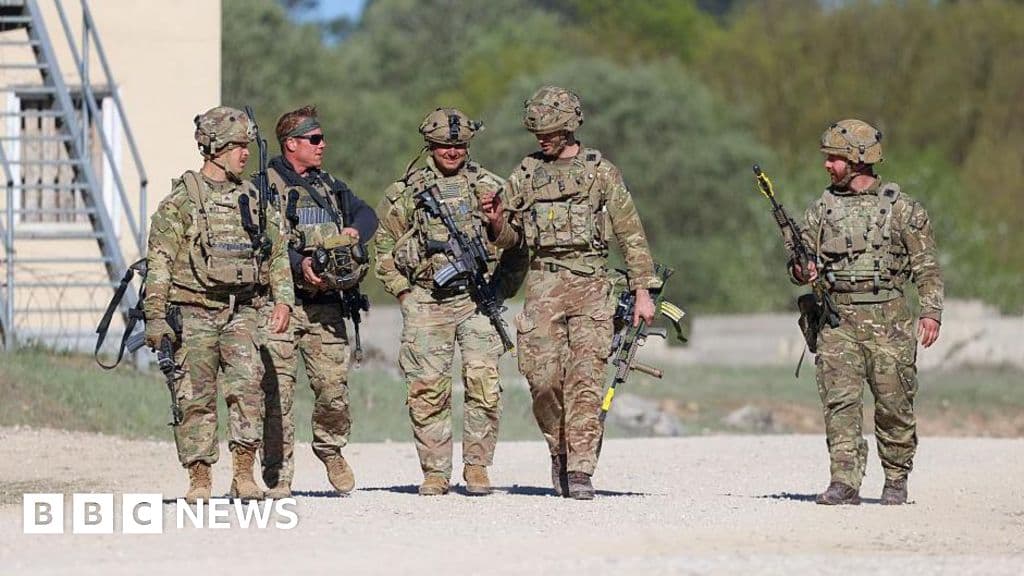
The US has a significant military presence in Germany, with more than 36,000 active duty troops assigned to bases across the country as of last December.
In a statement, Pentagon spokesman Sean Parnell said the order had come from Secretary of Defence Pete Hegseth.
"This decision follows a thorough review of the Department's force posture in Europe and is in recognition of theater requirements and conditions on the ground," he said.
"We expect the withdrawal to be completed over the next six to twelve months."
Trump, a longtime critic of the Nato alliance, has been lashing out at allies over their refusal to participate in operations to reopen the Strait of Hormuz.
Asked on Thursday whether he would also consider pulling US troops from Nato allies Italy and Spain, Trump responded: "I probably will - look, why shouldn't I?"
"Italy has not been of any help to us and Spain has been horrible," he added, criticising them for their response to the war in Iran.
"In all cases they said, 'I don't want to get involved.'"
Merz told university students earlier this week that "the Americans clearly have no strategy" and he could not see "what strategic exit" they might choose.
"The Iranians are obviously very skilled at negotiating, or rather, very skilful at not negotiating, letting the Americans travel to Islamabad and then leave again without any result," he said.
He added that the "entire nation" was being "humiliated" by the Iranian leadership.
In response, Trump took to his platform Truth Social, where he said Merz thought it was "OK for Iran to have a Nuclear Weapon" and "doesn't know what he's talking about".
"No wonder Germany is doing so poorly, both Economically, and otherwise!" the post read.
The US military deployment in Germany is by far its biggest in Europe, with about 12,000 troops in Italy and a further 10,000 in the UK.
Many are stationed at Ramstein Air Base outside the south-western German city of Kaiserslautern.
And while Trump has proposed US troop reductions in Germany before, they have so far not come in to effect.
Only Japan hosts a larger US troop presence.
In 2020, a proposal to move 12,000 US troops from Germany either to other Nato countries in Europe or back to the US was blocked by Congress and then reversed by President Joe Biden.
At the time, Trump had accused Germany of being "delinquent" because its military spending was well below Nato's target of 2% of economic output (GDP).
But that has changed dramatically under the Merz government.
Germany is projected to spend €105.8bn (£91bn) in 2027 - with total defence expenditure next year set to reach 3.1% of GDP.
Q&A
Why is the US reducing troop levels in Germany?
The US is reducing troop levels in Germany due to escalating tensions between President Trump and Chancellor Merz regarding the war with Iran.
How many US troops are currently stationed in Germany?
As of last December, there were more than 36,000 active duty US troops stationed at bases across Germany.
What did Trump say about Chancellor Merz?
Trump criticized Merz for doing a 'terrible job' and suggested he had various problems, including issues related to immigration and energy.


