
Musk’s Grok accused of violating Canadian privacy laws on deepfakes
Musk's Grok faces accusations of violating Canadian privacy laws with deepfake images.
Al Jazeera English1 min read

The World Bank warns that the US-Iran conflict will slow global economic growth to its lowest since the COVID-19 pandemic, cutting the 2026 forecast to 2.5%. Rising energy prices, inflation, and higher borrowing costs are key factors impacting the economy.
The conflict in the Middle East is set to bring global economic growth to its slowest since the COVID-19 pandemic, the World Bank has warned.
In its latest Global Economic Prospects report, published on Thursday, the Washington-based institution cut its global growth forecast for 2026 to 2.5 percent from the 2.9 percent it had predicted in January, citing surging energy prices, rising inflation and higher borrowing costs.
The report highlights the significant economic costs of the conflict, which is at risk of flaring up again, as the fragile ceasefire between the United States and Iran is tested on both sides.
The analysis warns that the outlook could decline further if supply disruptions worsen. Iran’s closure of the Strait of Hormuz – a vital passageway for oil and gas transit – in response to the hostilities launched by the US and Israel has put huge stress upon global energy and other supply chains.
The World Bank estimates that Brent crude prices — the international oil benchmark — will average $94 a barrel this year, 36 percent above last year’s average. Fertiliser prices are forecast to increase significantly this year, with knock-on effects for food prices.
Overall, the closure of the strategic waterway will help to push global inflation to 4 percent this year, a substantial increase from last year’s rate of 3.3 percent.
However, the World Bank cautions that global growth could plummet to as low as 1.3 percent this year, should energy supply disruptions worsen, with inflation pushing to 4.4 percent.
The World Bank report also cautions that developing countries are on the front line of the potential impact.
In its report, the institution has downgraded its growth forecasts for two-thirds of countries since January. Global growth is expected to improve to 2.8 percent in 2027, but will remain 0.4 percentage points below the average during the 2010s, during which the world economy was recovering from the global financial crisis.
Excluding China and India, the report worries that developing countries have made little progress towards narrowing their per capita income gap with wealthy nations over the past decade.
“Developing countries have faced a series of challenges over the last decade,” said Ajay Banga, president of the World Bank Group. “The impact differs by country, but the basic test is the same: protect people and preserve stability today, without giving up on growth and jobs tomorrow.”
The World Bank has reduced its global growth forecast for 2026 to 2.5% due to the economic impacts of the US-Iran conflict.
Rising energy prices, increasing inflation, and higher borrowing costs are the main factors contributing to the economic slowdown.
The closure of the Strait of Hormuz has stressed global energy and supply chains, significantly affecting oil and gas transit.
Musk's Grok faces accusations of violating Canadian privacy laws with deepfake images.

Trump urges Republicans to pass a $350 billion bill, causing division over voting restrictions.
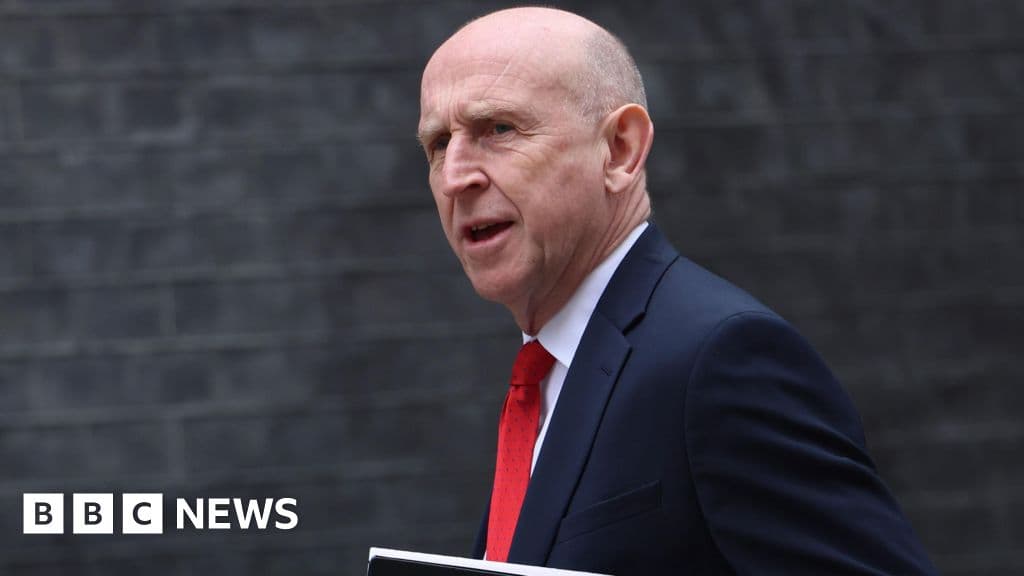
John Healey quits as defence secretary amid military funding row

The Israeli government has allocated $51 million for construction plans of 69 illegal settlements in the West Bank, with a potential $338 million funding proposal postponed for further review. This could lead to one of the largest expansions of settlements in decades.
NHS inquiry finds children at risk from gender care failures at Brighton GP clinic.

Toronto police officer shot and killed while investigating US consulate attack
See every story in News — including breaking news and analysis.
The World Bank is pledging to assist any developing country experiencing the economic fallout of the Middle East conflict. The organisation says it has set aside up to $60bn to help. It added that if the conflict persists, it can increase its support to $100bn.