
US charges Cuba's Raúl Castro with murder over 1996 downing of two planes
Raúl Castro charged with murder by US over 1996 plane downing, reviving old charges.
BBC News1 min read
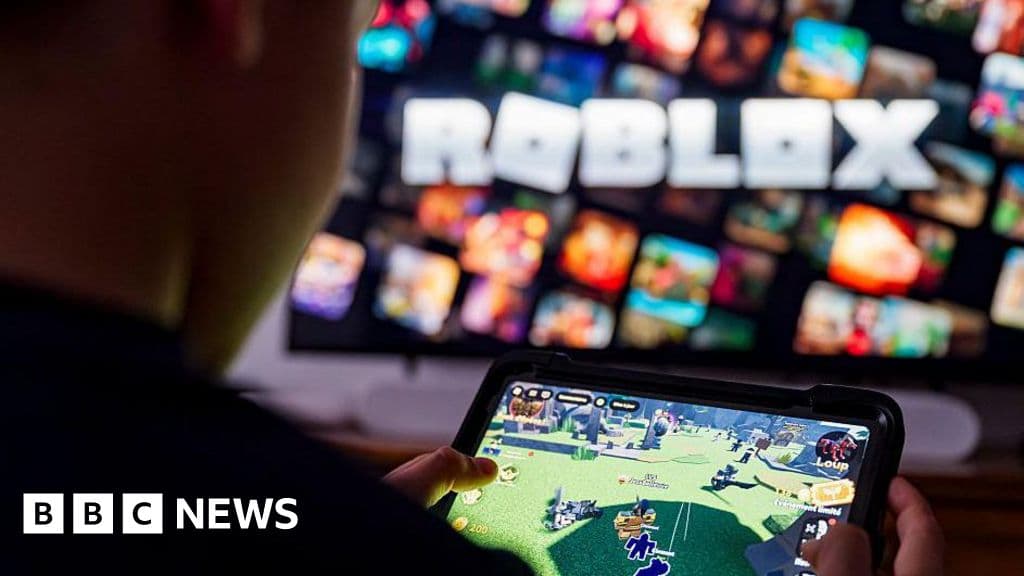
US advocacy groups have filed a complaint urging the FTC to investigate Roblox for potentially unsafe contact and deceptive spending practices targeting children. Roblox denies these claims, emphasizing its policies against gambling and the optional nature of in-game purchases.
Mentioned in this story
Children as young as five may be exposed to unsafe contact and pressured into spending money on Roblox, campaigners have claimed in a complaint to US regulators.
Advocacy groups have asked the Federal Trade Commission (FTC) to investigate the hugely popular gaming platform for alleged "unfair and deceptive" practices.
The filing raised concerns about in-game purchases, chat features and what it described as "engagement-maximising" design.
Roblox rejected the claims, saying the platform was "built for fun and connection, not short-term engagement". A spokesperson said it had "clear policies" banning actual and simulated gambling, as well as rules governing paid random items.
They said most games were free to play and users are not required to buy the in-game currency Robux.
"In the first quarter of 2026, only 1.4% of our 132 million daily active users were payers on the platform," they added.
After being accused of failing to protect its child users, Roblox has looked to resolve such concerns by blocking children from chatting to adults and using age-estimation tech to place them in age-appropriate accounts.
However, some campaigners and parents remain worried about the time and money spent by children on the site.
The complaint submitted by child safety organisations Fairplay and the National Centre on Sexual Exploitation on Wednesday centred on Roblox's in-game economy.
Its virtual currency Robux can be purchased and then used to buy game passes or upgrades for avatars, such as outfits.
The groups argued the system was too complex and difficult for children to understand.
According to the filing, it was "nearly impossible" to track the real-world cost of virtual items.
In one example included in the complaint, a parent said their 10-year-old daughter spent more than $7,000 (£5,200) in two months despite attempts to limit purchases.
The filing also alleged "engagement-maximising" design features were used to keep children on Roblox.
These included incentives such as daily reward streaks and systems which encourage social comparison by displaying other players' virtual possessions, it said.
Some experiences also use what the complaint described as "gambling-like" mechanics, such as loot boxes or chance-based rewards, which campaigners argue children may not fully understand.
The groups said these features exploit children's "developmental vulnerabilities", particularly around impulse control and peer pressure.
"Parents are doing everything they can to protect their children on Roblox, but it's not a fair fight," said Ashwin Verghese, Fairplay's communications director.
Advocacy groups claim that children may be exposed to unsafe contact and pressured into making in-game purchases on Roblox.
The investigation focuses on alleged 'unfair and deceptive' practices related to in-game purchases, chat features, and design aimed at maximizing engagement.
Roblox rejects the allegations, stating that its platform is designed for fun and connection, and emphasizes its policies against gambling and the optional nature of buying in-game currency.
The concerns primarily affect children as young as five, who may be exposed to unsafe interactions and spending pressures.
Raúl Castro charged with murder by US over 1996 plane downing, reviving old charges.

Young Americans demand court halt to Trump's pollution rollbacks

James Murdoch to acquire New York Magazine and Vox Media Podcast Network for over $300 million.

Egisto Ott, former Austrian intelligence officer, convicted of spying for Russia.

Michael Bay set to direct a film on US military rescue mission in Iran

UK finalizes a £3.7bn trade deal with six Gulf states, removing tariffs and boosting business.
See every story in News — including breaking news and analysis.
"The platform is designed to take advantage of kids' developmental needs and prey on their vulnerabilities."
He told the BBC parents "deserve to know that their children will be safe on Roblox, and we are calling on the FTC to make sure that happens".
Drew Benvie, chief executive of social media consultancy Battenhall and founder of the youth safety nonprofit Raise, said creating age limits for features will only go so far to keeping children safe on Roblox.
"While Roblox is rolling out new age-based protection features, young gamers are digital escape artists who easily bypass safety features," he said.
"What's needed is greater user and parental awareness of the impact social features in games can have on children, as well as wide scale legislative changes to address addictive or problematic features, not just the digital sticking plaster of age limits."
Another major focus of the complaint was Roblox's communication features.
It alleged text and voice chat systems could expose children to inappropriate content and contact from adults, despite existing safety measures.
Researchers using under-13 accounts reported encountering sexual references and offensive language within minutes of entering certain games.
The filing also referenced cases of grooming and exploitation on the site.
Roblox generated $4.9bn (£3.7bn) in revenue in 2025, according to company figures - a 36% increase on the previous year.
The FTC has not indicated whether it will open a formal investigation.
It comes as regulators increasingly examine how gaming and social media platforms protect younger users and generate revenue.
Following the success of a California lawsuit arguing Meta and YouTube were liable for the addictive design of their platforms, more platforms could face scrutiny over techniques used to keep people engaged - such as auto-play and infinite scroll.
Sign up for our Tech Decoded newsletter to follow the world's top tech stories and trends. Outside the UK? Sign up here.