
Why Hull's US Open near-miss shows major win is close
Charley Hull's strong finish at the US Women's Open shows she's close to a major win.
BBC News1 min read

The US Congress has passed a 10-day extension of a controversial surveillance law after failed attempts for a longer renewal due to Republican infighting. The law allows warrantless surveillance of communications involving foreigners and has faced criticism for potentially infringing on Americans' privacy.
Mentioned in this story
Both chambers of Congress voted in quick succession Friday to pass a brief 10-day extension of a controversial warrantless surveillance law after Republican infighting tanked plans for a much longer renewal of the law with no changes.
Donald Trump had repeatedly demanded that Republican holdouts “UNIFY” behind Mike Johnson, the US House speaker, in favor of an extension of section 702 of the Foreign Intelligence Surveillance Act (Fisa) without changes. But chaos ensued late Thursday as Republican leadership tried and failed twice in votes attempting to reauthorize the surveillance program, before resorting to a stopgap measure.
The law was originally set to expire on 20 April because of a sunset provision that requires it be periodically reauthorized.
Section 702, first enacted in 2008, allows national security agencies to collect and review texts and emails sent to and from foreigners living outside the US without a warrant. If Americans are talking to a non-US target living abroad, their communications can get swept up, too. Privacy advocates say that while the law is intended to facilitate the surveillance of foreigners outside the US, the government also uses it as a tool to spy on Americans without a warrant. Intelligence agencies say they need the program to prevent terror attacks and foreign espionage.
A rare coalition of progressive Democrats and hardline Republicans had joined forces against an unchanged extension. One of their biggest demands – echoed by privacy advocates – is a warrant requirement for Americans’ communications “incidentally” collected under Fisa. An amendment that would have included such a warrant requirement in the last Fisa renewal, two years ago, failed to pass after a dramatic 212-212 tie.
As lawmakers were called back to Congress to vote in the middle of the night, discussions grew heated.
“Are you kidding me? Who the hell is running this place?” said Jim McGovern, a Democratic congressman from Massachusetts, during a tense floor debate. Twenty Republicans blocked their own leadership’s attempts for a procedural vote to push a clean 18-month extension through, while four Democrats crossed party lines to vote with the Republican majority. Lawmakers eventually agreed to a 10-day extension of the surveillance program shortly after 2am ET; the Senate passed the measure the following morning.
Ro Khanna, a CaliforniaDemocratic congressman, claimed victory after the late-night vote in the House: “We just defeated Johnson’s efforts to sneak through a 5 year FISA authorization tonight. Now, they will have to fight in daylight tomorrow!”
Section 702 allows national security agencies to collect and review communications involving foreigners outside the US without a warrant.
Congress passed a 10-day extension due to Republican infighting that derailed plans for a longer renewal without changes.
Privacy advocates are concerned that the law allows the government to spy on Americans without a warrant through incidental collection of their communications.
Privacy advocates are demanding a warrant requirement for Americans' communications that are incidentally collected under the surveillance law.
Charley Hull's strong finish at the US Women's Open shows she's close to a major win.

Xi Jinping visits North Korea to strengthen ties amid US military concerns.

Trump repeats rigged election claims about California gubernatorial race

Which European nation is favored to win World Cup 2026?

Unions call for government intervention on Tata Steel's year-long grid delay
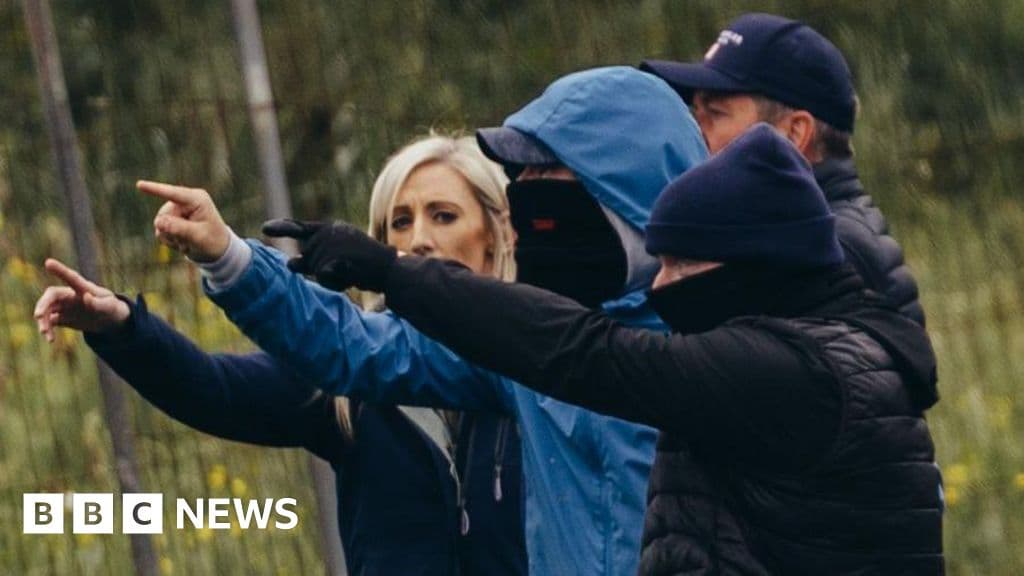
DUP leader defends MP Carla Lockhart for attending counter-demonstration against Palestine solidarity walk.
See every story in News — including breaking news and analysis.
Privacy advocates and dissenting lawmakers felt the version of the bill put to a vote simply restated existing law and did little to address their demands for a warrant requirement for Americans’ communications swept in through a backdoor.
“The shameful midnight smash-and-grab attempt to steal away Americans’ privacy rights failed,” said Jake Laperruque, deputy director of the security and surveillance project at the Center for Democracy and Technology. “Surveillance boosters tried to sneak a sham proposal through in the dead-of-night because they know they’ve lost the substance of this debate.” The only way forward, he said, is a warrant rule that will “close the backdoor search loophole and protect Americans from surveillance abuse”.
Privacy advocates believe the deadlock on section 702 suggests real reform could be on the table. “There are lawmakers in both parties – including a sizable cohort in the Republican party that want real reforms and that’s not what was put on table last night,” said Hannah James, counsel in the Brennan Center’s liberty and national security program. “A clean extension or fake reform is not going to cut it.”