
The Super Bowl winner's son stepping into spotlight with USA
USA qualifies for World Cup knockouts with Alex Freeman's goal against Australia!
BBC News1 min read

UK long-term borrowing costs have hit a 28-year high due to the ongoing Iran war and rising political uncertainty ahead of elections. Yields on 30-year and 10-year government bonds have surged as global markets react.
Long-term UK borrowing costs have reached their highest level since 1998 as the Iran war continues and concerns rise over political uncertainty in the lead-up to local and national elections.
Government bond markets for major economies have all fallen since the US-Israeli conflict with Iran began, meaning the effective cost of borrowing for governments has shot up.
There have been extra jitters in UK government debt markets ahead of Thursday's elections.
On Tuesday afternoon the yield on 30-year government bonds reached a 28-year high, while the yield on 10-year bonds reached an 18-year high.
The Iran war has led to the effective closure of the Strait of Hormuz. That closure has impacted the world's supplies of oil and liquid natural gas, and caused energy prices to skyrocket.
Markets have reacted to these events by factoring in higher inflation and borrowing costs, and those factors have led to a global rollercoaster on bond markets.
Over the weekend, bond markets went further in the wrong direction, reflecting assumptions of a prolonged blockage of the Strait of Hormuz.
However, the impact on UK markets has exceeded that in other G7 nations, which traders put down to a more inflation-prone economy, and, in the past few days the prospects of more political instability around the raft of elections.
The Labour Party is expected to lose hundreds of council seats, and face challenging national elections in Scotland and Wales.
Over the weekend there was also widespread speculation about possible leadership challenges.
The government points to an improvement in growth, inflation and borrowing figures earlier this year, before the onset of the war in Iran.
The 30-year UK bond yield peaked at around 5.78%, while the 10-year yield peaked at around 5.1%.
Rising yields on government bonds mean the government will face higher debt interest costs.
It also strains Chancellor Rachel Reeves' spending power as she works to keep to her budget rules. The two main ones are to not borrow to fund day-to-day spending by the end of this parliament, and to get government debt falling as a share of national income over the same period.
UK government borrowing fell to a three-year low for the year to March, dropping to £132bn, but analysts expect borrowing to worsen through the year if inflation picks up.
The 30-year gilt is a fairly niche product, effectively a 30-year loan to the government, which historically was mainly bought by defined benefit pensions funds. There are currently no active auctions at this term scheduled by the Debt Management Office (DMO).
At last year's Budget, the DMO changed its remit for sales of government debt to be less reliant on this type of borrowing.
The rise in UK long-term borrowing costs is primarily due to the ongoing Iran war and political uncertainty related to upcoming elections.
The yield on 30-year government bonds has reached a 28-year high, while the yield on 10-year bonds has reached an 18-year high.
The Iran war has led to the effective closure of the Strait of Hormuz, significantly impacting global oil and liquid natural gas supplies and causing energy prices to skyrocket.
Global government bond markets have fallen since the onset of the US-Israeli conflict with Iran, leading to increased borrowing costs for governments.
USA qualifies for World Cup knockouts with Alex Freeman's goal against Australia!
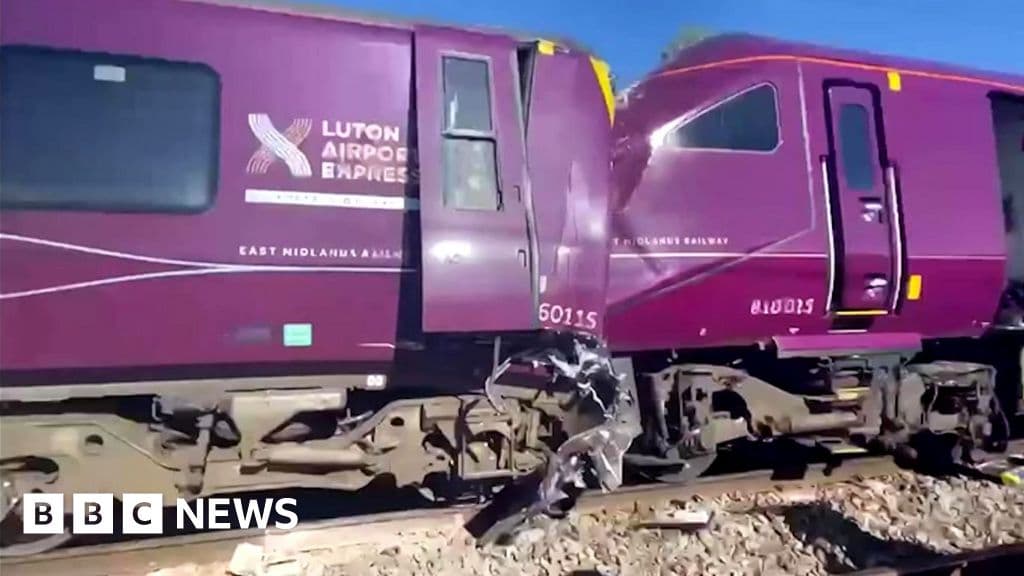
Tragic train crash in Bedford: driver dead, 89 injured in major incident

US judge rules against Biden, allowing memoir recordings release

Trump unveils new Air Force One, a converted Qatari 747, amid controversy.

USA beats Australia 2-0 to advance in World Cup knockout stage!

Eyewitnesses recount panic and injuries in Bedford train crash
See every story in News — including breaking news and analysis.
The 30-year does not, unlike in the US, have a direct impact on common fixed mortgage rates in the UK. The two- and five-year yields remain elevated but below 2023 peaks.
The governor of the Bank of England, Andrew Bailey, played down concerns about the gilt market in an interview with the BBC last week, pointing to the strong value of the pound.
"If you look at day to day... what's moving the market - in this respect, it's all to do with the conflict… also because what gets said about the conflict.
"The [sterling] exchange rate doesn't move much at all. That's one thing I look at when I'm judging, is there a particular UK story here? Is the UK somehow different to other countries? It's trading actually around the upper end of the band it's been in since Brexit."
The markets are, however watching events in the Gulf, alongside British ballot boxes, which is making for a delicate time for UK government debt.