
Russian drone and missile strikes hit Kyiv, leaving dozens dead and hundreds injured
Kyiv suffers deadly drone and missile strikes from Russia, over 20 dead.
NPR Topics: News1 min read

Donald Trump's delegation is set to return to Pakistan for talks aimed at resolving the US-Israeli war in Iran. This follows Iran's reimposition of restrictions on shipping in the Strait of Hormuz amid ongoing tensions.
Mentioned in this story
Donald Trump’s representatives will return to Pakistan on Monday for another possible round of talks aimed at ending the US-Israeli war in Iran, as the US president repeated his threats to Iranian infrastructure unless Iran agrees to a deal.
The return of a US delegation to Islamabad, led by vice-president JD Vance, along with Trump’s special envoy, Steve Witkoff, and his son-in-law, Jared Kushner, comes after Iran on Saturday reimposed tight restrictions on the transit of commercial shipping in the strait of Hormuz, reversing an agreement made hours before to reopen the strategic waterway, over the US’s refusal to lift its naval blockade.

Iran on Saturday reimposed tight restrictions on the transit of commercial shipping in the strait of Hormuz. Photograph: Asghar Besharati/AP
The war, entering its eighth week, has killed thousands in Iran and Lebanon and sent oil prices surging because of the strait’s closure.
As of early Sunday evening, Iranian media said Tehran had yet to decide whether it would take part in the talks, with the IRNA state news agency saying “there is no clear prospect of fruitful negotiations”. In an interview aired on state television late on Saturday Iran’s chief negotiator, parliament speaker Mohammad Bagher Qalibaf, had said “there will be no retreat in the field of diplomacy”, while acknowledging a wide gap remained between the sides.
Trump said on Sunday that any talks in Islamabad, which would come before a fragile two-week ceasefire expires on Wednesday, were the “last chance” for Iran to agree to a peace deal. “If Iran does not sign this deal, the whole country is getting blown up,” he told Fox News. Trump then reiterated a threat made earlier in the day that the US would specifically destroy Iran’s power plants and bridges if it does not sign the agreement.
He said the deal the US is offering, which entails reopening the strait and ensuring Iran does not have enriched uranium, is a “very fair and reasonable deal” and unless Iran accepts, he promised to knock out “every single Power Plant” and “every single Bridge”.
The delegation aims to engage in talks to potentially end the US-Israeli war in Iran.
Iran has reimposed tight restrictions on the transit of commercial shipping in the Strait of Hormuz.
The delegation is led by Vice President JD Vance, along with special envoy Steve Witkoff and Jared Kushner.
The war has resulted in thousands of deaths in Iran and Lebanon and has caused a surge in oil prices due to the closure of the Strait of Hormuz.
Kyiv suffers deadly drone and missile strikes from Russia, over 20 dead.

Voters in six states are casting ballots in crucial primaries today that could shape November's elections.

Spain cancels DR Congo vs. Chile warm-up match due to Ebola concerns.

Trump endorses absent NJ Republican Tom Kean Jr. ahead of primary.

Israeli attacks during Eid al-Adha result in dozens of Palestinian deaths.
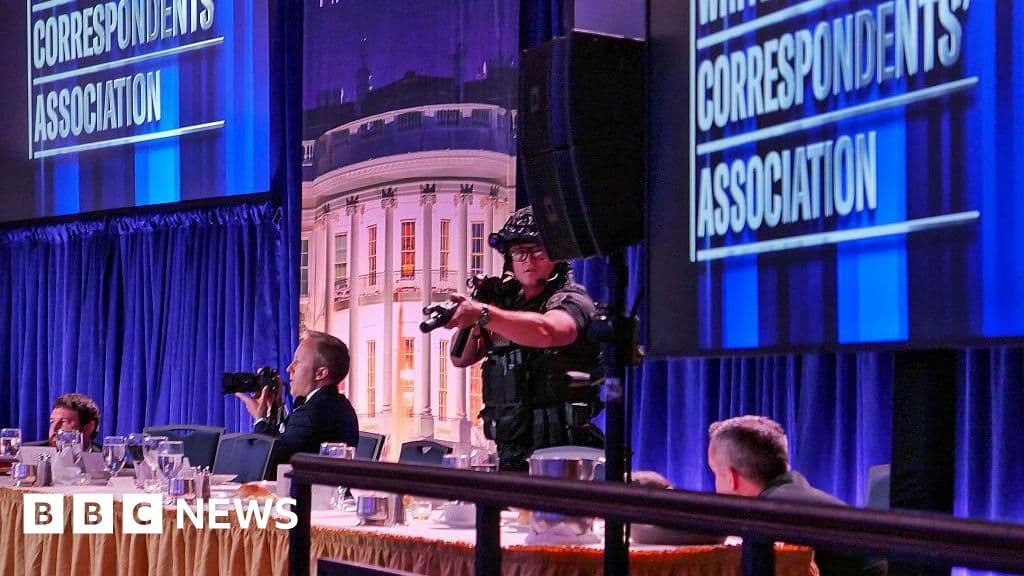
The White House Correspondents' Dinner has been rescheduled to July 24 after a shooting incident on April 25. Enhanced safety measures will be implemented, and President Trump is expected to attend.
See every story in News — including breaking news and analysis.
“NO MORE MR. NICE GUY!” Trump wrote on Truth Social. “They’ll come down fast, they’ll come down easy and, if they don’t take the DEAL, it will be my Honor to do what has to be done, which should have been done to Iran, by other Presidents, for the last 47 years.”
Pakistan’s foreign affairs ministry said the country’s deputy prime minister, Mohammad Ishaq Dar, had spoken on Sunday with Abbas Araghchi, Iran’s foreign minister, during a phone call that included discussion on “the need for continued dialogue and engagement as essential to resolving the current issues as soon as possible for promoting the peace and stability in the region and beyond”. A phone call was also planned between Iran’s president Masoud Pezeshkian and Pakistan’s prime minister, Shehbaz Sharif.

Army troops patrol to ensure security ahead of the second round of the US Iran officials talks, in Islamabad, Pakistan on Sunday. Photograph: MA Sheikh/AP
Washington’s envoy to the United Nations, Mike Waltz, told ABC News that he believed a new round of talks would lead to an “incredibly consequential” outcome.
For Tehran, the strait of Hormuz’s closure – imposed after the US and Israel launched the Iran war on 28 February during talks over Tehran’s nuclear programme – is perhaps its most powerful weapon, inflicting political pain on Trump.
The US president’s renewed threat to hit Iran’s power plants and bridges fits a pattern of such warnings throughout the war, several of which preceded moves to de-escalate. He abruptly announced the ceasefire two weeks ago, just hours after declaring that Iran’s “whole civilisation will die tonight”.
Trump accused Iran of violating the two-week ceasefire by firing at two merchant ships in the strait after a brief uptick in transit attempts on Saturday.
Esmaeil Baghaei, a spokesperson for Iran’s foreign ministry, said the US blockade of Iran’s ports or coastline had violated the ceasefire and was “both unlawful and criminal”. By “deliberately inflicting collective punishment on the Iranian population, it amounts to war crime and crimes against humanity,” Baghaei wrote on social media.
Roughly one-fifth of the world’s oil trade normally passes through the strait, and the global energy crisis threatens to deepen as the war drags on. Iran on Sunday held firm that ships would not pass while the US blockade remained in effect.

A man inspects his car damaged in a previous Israeli airstrike during a ceasefire between Hezbollah and Israel in the Hosh neighbourhood of Tyre, southern Lebanon. Photograph: Bilal Hussein/AP
Two liquefied petroleum gas tankers were seen on ship-tracking websites moving eastbound towards the strait early on Sunday morning, but the semi-official Tasnim news agency reported that Iran’s armed forces turned them back.
Friday’s announcement that the strait would reopen caused the sharpest one-day drop in oil prices in years, while stock markets hit all-time highs on the expectation the disruption would soon end. But with the strait yet to reopen, markets could face new volatility when they reopen on Monday.
Pressure for a way out of the war is mounting on Trump as his fellow Republicans prepare to defend narrow majorities in Congress in the November midterm elections.
Apart from the two-week ceasefire in Iran, Israel and Lebanon announced a separate ceasefire last week. More than one million Lebanese have been displaced by the Israeli invasion, which Israel said was in pursuit of Hezbollah, the powerful Shia armed group allied with Iran that fired across the border in support of Tehran.
Associated Press and Reuters contributed to this report