
Iranian group could be labelled national threat under proposed new law
UK legislation could soon label Iran's IRGC a national security threat.
BBC News1 min read
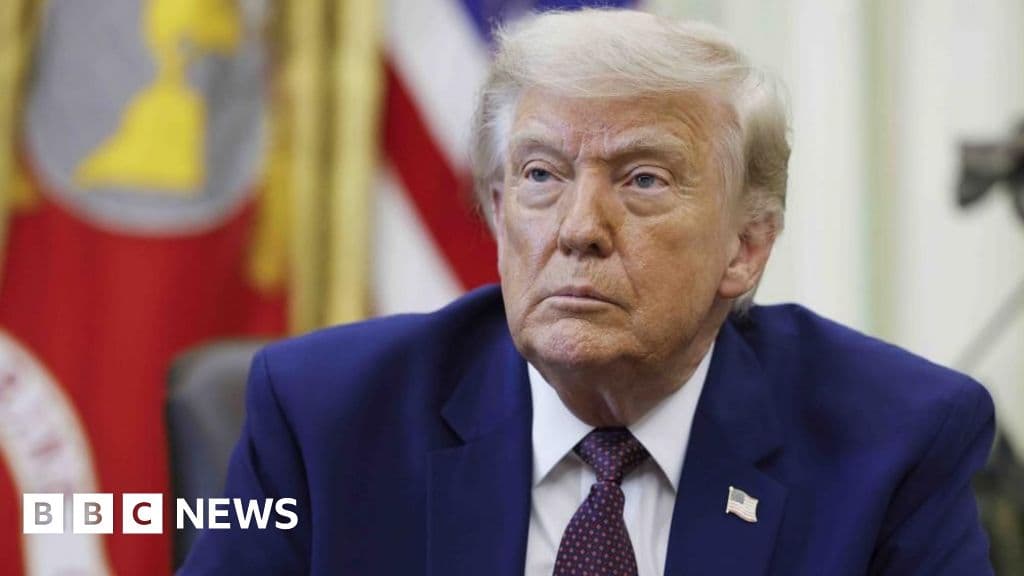
President Trump criticized lawmakers for rebuking him over military actions in Iran, calling them 'unpatriotic'. The House passed a measure to limit his war powers amid ongoing negotiations.
Mentioned in this story
US President Donald Trump has hit back at lawmakers who voted to send him a rebuke over the war in Iran, labelling the group "unpatriotic".
On Wednesday, the US House of Representatives passed a measure that seeks to halt Trump from taking further military action.
In a post on Truth Social, the president wrote: "Yesterday, in a meaningless vote, the House voted, 4 bad Republicans and all of the Dumocrats, to limit my War Powers, right in the middle of my final negotiations to end the War with the Islamic Republic of Iran. Who would do such an unpatriotic thing."
It is unclear how much legal force the House's measure will have. The White House has dismissed its merits.
It has also described the move as an unconstitutional attempt to restrict presidential power.
The vote, which passed 215-208, was to adopt the war powers resolution, which would require Trump to withdraw US forces or seek congressional approval for the conflict.
The measure considered was a concurrent resolution. If it is also passed by the Republican-controlled US Senate, it would not require the president's signature, though it could be subject to a legal challenge.
Trump's post on Thursday morning went on to say: "The Democrats are fueled by Trump Derangement Syndrome. They would rather have our Country fail than give me another, of many, victories.
"The four Republicans, that's a whole other story - They're GRANDSTANDERS! They should be ashamed of themselves."
This was the fourth attempt by the House to rein in Trump's war powers. The Senate advanced a similar resolution in May but has yet to hold a full floor vote.
Despite being seen as largely symbolic, the passage of Wednesday's resolution adds to the pressure on the White House to find an end to the war, as petrol prices have spiked and public opposition to the war has increased.
The vote also marked the latest sign of division within Trump's Republican Party, coming just days after a revolt by conservatives in Congress led his administration to pull back plans for a $1.8b "anti-weaponization" fund for political allies.
The four Republicans who attracted Trump's ire were Thomas Massie, Brian Fitzpatrick, Tom Barrett, and Warren Davidson, who joined a united front of Democrats. Democrat Jared Golden of Maine, who had previously voted against similar measures, gave his support this time.
"Congress alone declares war, that's something certainly we need to be protective of," Barrett, a Republican from Michigan, said. Asked if he was worried about retribution from Trump for his vote, he said: "I vote my conscience for what I think is right and willing to accept that."
The House passed a measure aimed at halting President Trump's ability to take further military action in Iran.
Trump labeled the lawmakers who voted for the rebuke as 'unpatriotic' and criticized the vote as meaningless.
The White House has dismissed the measure as lacking legal force and described it as an unconstitutional attempt to restrict presidential power.
UK legislation could soon label Iran's IRGC a national security threat.

Israeli air strikes hit Tyre, Lebanon, killing eight, despite Iran's warning to stop.

Palantir is suing London Mayor Sadiq Khan after he blocked a £50m police contract.

EU plans to ban Russian soldiers from entering the bloc as part of new sanctions targeting Moscow.

Craig Gordon, the oldest man at the World Cup, faced life-threatening surgery risks but is now preparing in Charlotte.
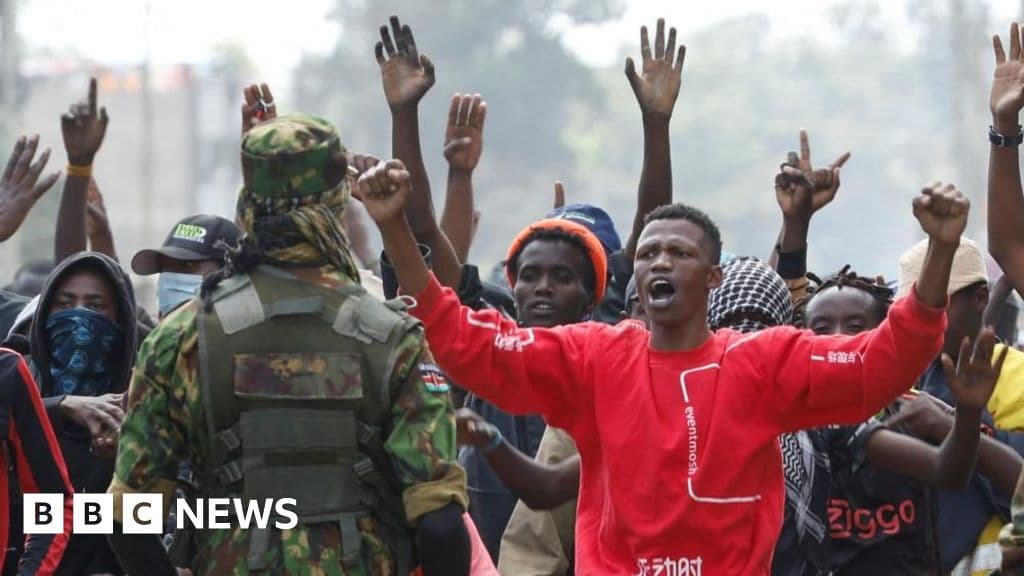
A demonstrator was shot during protests against a US Ebola quarantine centre in Nanyuki, Kenya.
See every story in News — including breaking news and analysis.