
Russian attack sets fire to religious site in Kyiv, kills 5 in Kharkiv
Russian attack in Kyiv sets fire to Dormition Cathedral, kills 5 in Kharkiv
NPR Topics: News1 min read
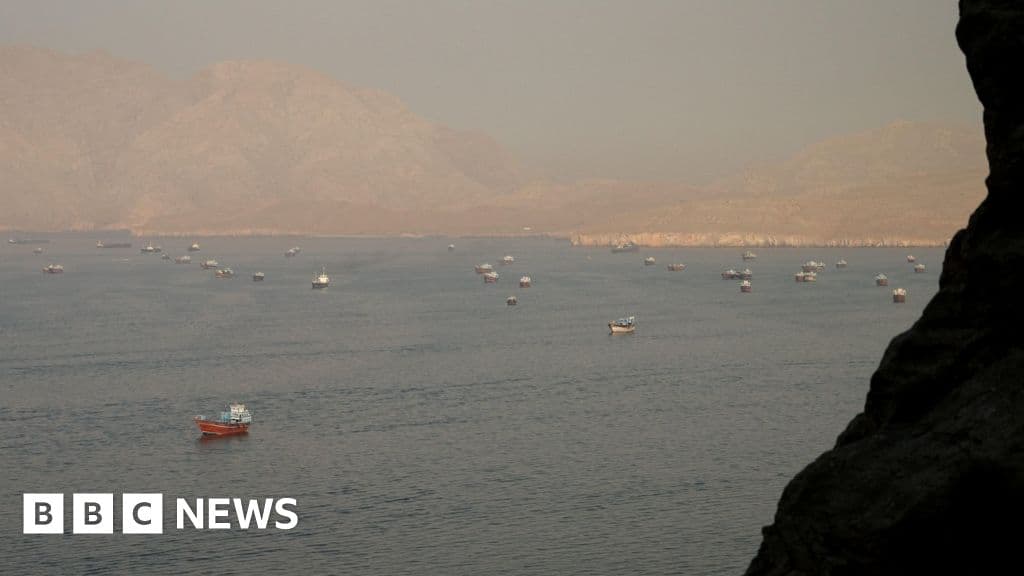
Donald Trump announced a deal to end hostilities between the US and Iran, celebrating it as a significant achievement. However, the agreement is surrounded by uncertainty and skepticism regarding its long-term impact.
Mentioned in this story
The announcement of a deal to end hostilities between the US and Iran has provided Donald Trump with a very welcome birthday present – although it's wrapped in a fair measure of uncertainty.
In his social media post heralding the agreement, the American president said that the Strait of Hormuz would be open to commercial shipping and the US would lift its naval blockade.
"Let the oil flow!" Trump exclaimed on Sunday.
He went on to declare that, in contrast with the failures of past American presidents, he secured a "great deal" that would bring "peace and security to the whole region".
Such hyperbole is nothing new for Trump, of course. His declarations about last year's agreement ending the Gaza War – "a peace for all eternity" and the "beginning of the age of faith and hope and of God" - were equally sweeping, even as the reality on the ground has fallen far short.
In such high-stakes diplomatic agreements, success or failure usually hinges on the details. And here, the details are scarce.
In a Sunday evening interview with Fox News, Vice-President JD Vance said that Iran never possessing a nuclear weapon was "built into this agreement" and that the US will be able to verify compliance.
Yet questions remain over crucial issues including what the restrictions on enrichment will be and what should happen to the stockpile of highly enriched uranium Iran has now.
Some of this is sure to be worked out in subsequent negotiations and "technical" talks conducted during a 60-day extension of the current ceasefire. But if anything is clear after decades of efforts to cajole and coerce Iran into giving up its nuclear ambitions, it's that there are no guarantees, no matter what the US believes is secured in this "memorandum of understanding".
As if to underscore this point, Iran's Supreme National Security Council released a statement on Sunday that "final negotiations will be postponed until after the implementation of the other party's commitments under the memorandum".
What those commitments are - and how Iran interprets them - will help determine whether this deal sticks.
Energy market experts warned that moving of oil through the strait is unlikely to immediately return to pre-war levels. Clearing a large backlog of tankers, removing mines, and restoring regular oil shipping and production could take weeks.
With several days to go before the official signing, Iran and the US have time to settle key details to ensure the deal's success - but there's also time for it to fall apart.
The deal aims to end hostilities between the US and Iran, allowing commercial shipping through the Strait of Hormuz and lifting the US naval blockade.
Trump claims he secured a 'great deal' that contrasts with the failures of previous American presidents in achieving peace and security in the region.
The deal is wrapped in uncertainty, raising questions about its effectiveness and the actual impact on peace and security in the region.
Trump stated that the Strait of Hormuz would be open to commercial shipping, emphasizing the importance of allowing oil to flow freely.
Russian attack in Kyiv sets fire to Dormition Cathedral, kills 5 in Kharkiv

OnlyFans creators are facing abuse and threats from agencies that control their earnings, with one creator reporting violent attacks. These agents take half of the creators' earnings while exerting control over their personal lives.

Disabled individuals with lifelong conditions face unnecessary PIP reassessments, harming their health and wasting public funds.

Michael Grade claims GB News critics want to restrict free speech to a liberal consensus.

High energy prices threaten Britain's industrial sector with collapse and bankruptcy.
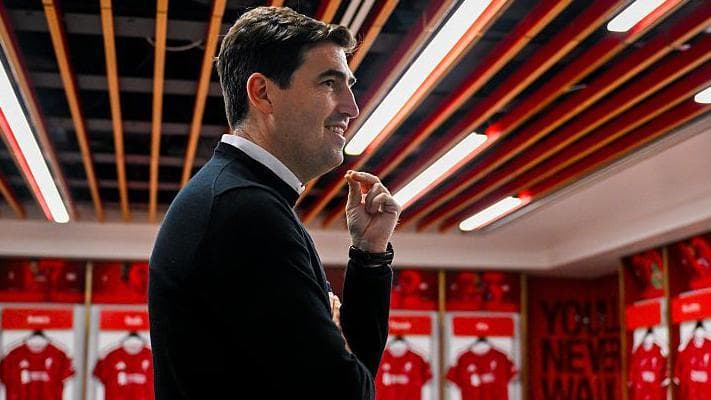
Iraola scouts players at World Cup to revive Liverpool's fortunes
See every story in News — including breaking news and analysis.
Another wildcard is Israel.
This was always a three-party war, and Trump told the Wall Street Journal on Sunday that he was furious at Israeli Prime Minister Benjamin Netanyahu for ordering strikes on Lebanon this weekend that he believed might torpedo the almost-completed Iran deal.
The deal held – at least long enough for it to be publicly announced. But if Israel begins new military operations in Lebanon, Iran could decide to close Hormuz again and again jeopardise the global economy.
In his comments, Vance also acknowledged the pain this war has caused many Americans because of higher energy prices and their knock-on economic effects.
"My primary message to the American people is thank you," he said, as he promised that energy prices would start coming down.
How quickly that happens, and how quickly that translates into lower consumer costs across the board for Americans confronting financial hardships, will go a long way in determining whether the growing political pressure on Republicans abates before November's midterm congressional elections.
According to recent polling, Trump and his party are facing an increasingly restive public. A YouGov survey found that 63% of Americans disapprove of his handling of the economy, with 57% feeling the economy was getting worse.
At minimum, however, Sunday's deal should help alleviate, if not entirely remove, some of the economic strain from the ongoing conflict. If petrol prices start dropping in earnest, it could be a tangible sign for Americans that things are getting better.
It's a notable step towards the way things were before the start of the war, even if Trump's larger goals remain unrealised for now and he still faces political peril at home.